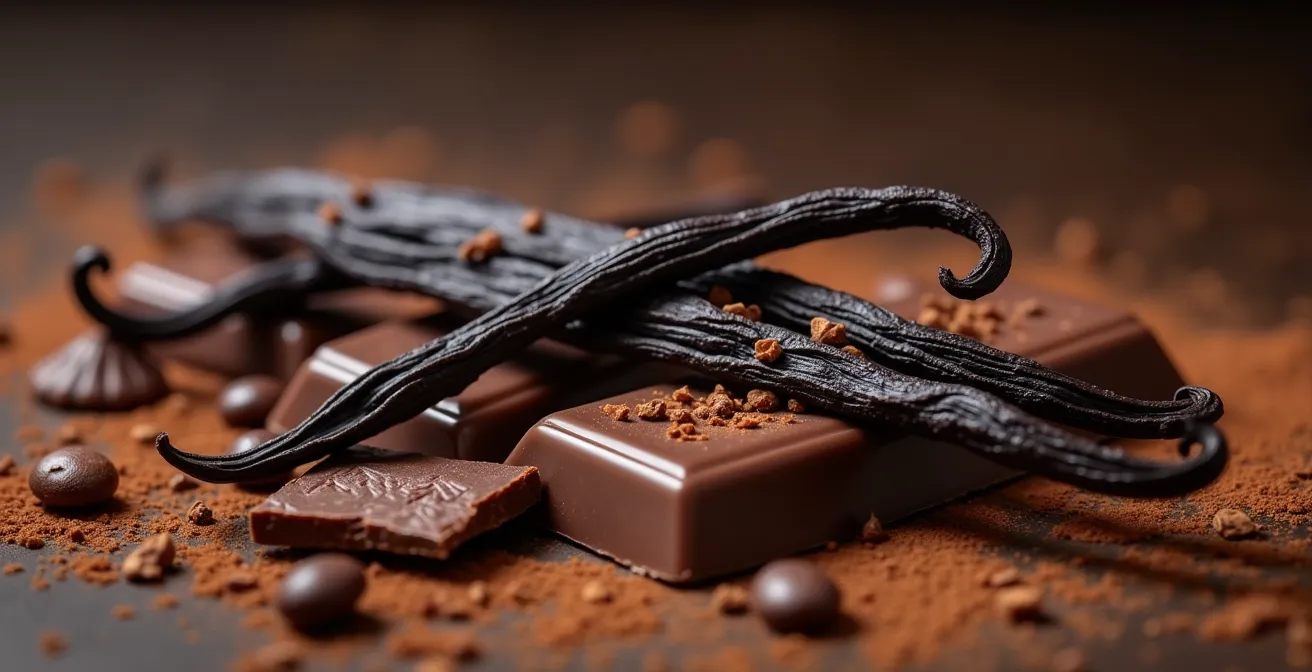
The true role of vanilla in professional patisserie is not to add flavor, but to act as an aromatic diplomat, harmonizing the complex notes of fine chocolate.
- It provides the olfactory architecture for cacao’s own unique notes to shine, rather than masking them.
- Precise, low-temperature infusion techniques are paramount to unlocking its full spectrum of volatile compounds.
- Overdosing with vanilla is the fastest way to mute a Grand Cru’s terroir and waste a precious ingredient.
Recommendation: Treat your vanilla pod not as a simple flavoring, but as a precision tool to sculpt the final sensory profile of your chocolate creations.
For any pastry chef who respects their ingredients, the relationship between chocolate and vanilla feels both primal and profound. We are taught they are a classic pair, an inseparable duo in the pantheon of patisserie. The common wisdom dictates that vanilla “enhances” or “rounds out” the flavor of chocolate. But this explanation, I find, is a disservice to both the pod and the bean. It reduces a complex, synergistic partnership to a simple platitude and fails to address the core concern of a professional: how to extract maximum impact from two of the most expensive ingredients in our larder.
The conversation often stops at “use good quality,” but what does that truly mean in practice? It’s not just about avoiding synthetic substitutes; it’s about understanding the very structure of aroma. As a purveyor of fine spices, I’ve seen chefs spend a fortune on Grand Cru chocolate only to dull its vibrant terroir with an ill-conceived application of vanilla. The secret lies not in the simple act of adding one to the other, but in a deeper understanding of vanilla’s role. Forget the idea of vanilla as a mere flavor. We must start to see it as an aromatic modulator, a strategic tool that can silence harsh notes, amplify desirable undertones, and build a cohesive sensory experience.
This article moves beyond the basics. We will deconstruct this partnership from a professional’s perspective. We will explore the chemical reasons why true vanilla is irreplaceable, master the precise techniques for full aromatic extraction in a ganache, and learn the art of dosage. Ultimately, we will reframe vanilla’s purpose: not to add its own voice, but to conduct the complex orchestra of flavors already present in your chocolate.
Explore this guide to master the subtle art of pairing vanilla and chocolate, transforming your creations from merely delicious to truly memorable. The following sections will provide the techniques and insights needed to achieve this aromatic mastery.
Contents: The Art of Marrying Vanilla and Chocolate
- Why artificial vanillin will never replace the complexity of a fat pod?
- How to extract 100% of the aromas from your pod in a hot ganache?
- Floral or woody notes: which vanilla to choose for a full-bodied dark chocolate?
- The mistake of adding too much vanilla, which kills the subtlety of a Grand Cru
- Empty pods: how to make your own vanilla sugar or homemade powder?
- How to marry the acidity of a Peruvian cacao with exotic fruits without a clash?
- Cinnamon and piment: when to add them for a subtle diffusion without bitterness?
- How to turn your white chocolate into caramelized gold in the oven in 45 minutes?
Why artificial vanillin will never replace the complexity of a fat pod?
The first step towards mastery is understanding the profound chasm between nature and imitation. On the surface, the allure of synthetic vanillin is its low cost and potent, one-dimensional punch. It delivers the “idea” of vanilla. However, for a professional, relying on it is akin to painting with a single, harsh color when a full palette is available. The primary aromatic compound in both is vanillin, but that’s where the similarity ends abruptly. A true vanilla pod is not a single note; it is a symphony.
Scientific analysis reveals the staggering difference: a natural vanilla bean is a complex tapestry woven from hundreds of distinct aromatic compounds. In fact, scientific research reveals that natural vanilla beans contain over 250+ chemical compounds. These include esters, aldehydes, and phenols that contribute floral, fruity, spicy, and even smoky “background” notes. It’s this intricate olfactory architecture that allows a real pod to interact with chocolate on a molecular level, smoothing bitterness and amplifying the cacao’s own subtle nuances.
Synthetic vanillin, a byproduct of the petrochemical industry or wood pulp, is a lone molecule. It can’t engage in this complex dialogue. Instead of harmonizing with the chocolate’s profile, it simply sits on top of it—a loud, monotonous shout that can completely overwhelm the delicate terroir of a single-origin bean. When you use a fat, glistening Bourbon vanilla pod, you are not just adding a flavor; you are deploying a sophisticated tool designed to build depth and complexity. Choosing artificial vanillin isn’t a shortcut; it’s a deliberate sacrifice of quality and artistry.
How to extract 100% of the aromas from your pod in a hot ganache?
Possessing a superior ingredient is only half the battle; unlocking its full potential is where true skill lies. A fatty, fragrant vanilla pod holds a universe of aromas, but many are volatile and easily destroyed by haste or excessive heat. A common mistake is to simply scrape the seeds into hot cream and boil it, a method that captures the base notes but incinerates the delicate, ethereal top notes.
The key is a two-stage, low-and-slow infusion. This method respects the different volatilities of the pod’s aromatic compounds. The goal is to create a full-spectrum infusion that captures everything from the deep, rum-like base to the light, floral whispers. For a ganache, temperature control is paramount. You are not just melting chocolate; you are creating a stable emulsion that must also serve as the perfect medium for aroma. To this end, professional chocolatiers recommend maintaining ganache at 95-105°F (35-40°C) during its creation to ensure a perfect emulsion without damaging delicate flavors.
This is where a patient, deliberate process makes all the difference. The following technique ensures you capture the full aromatic soul of the vanilla pod for your ganache. This visual shows the crucial steeping stage, where time and gentle warmth work together to draw out the pod’s complete aromatic profile.
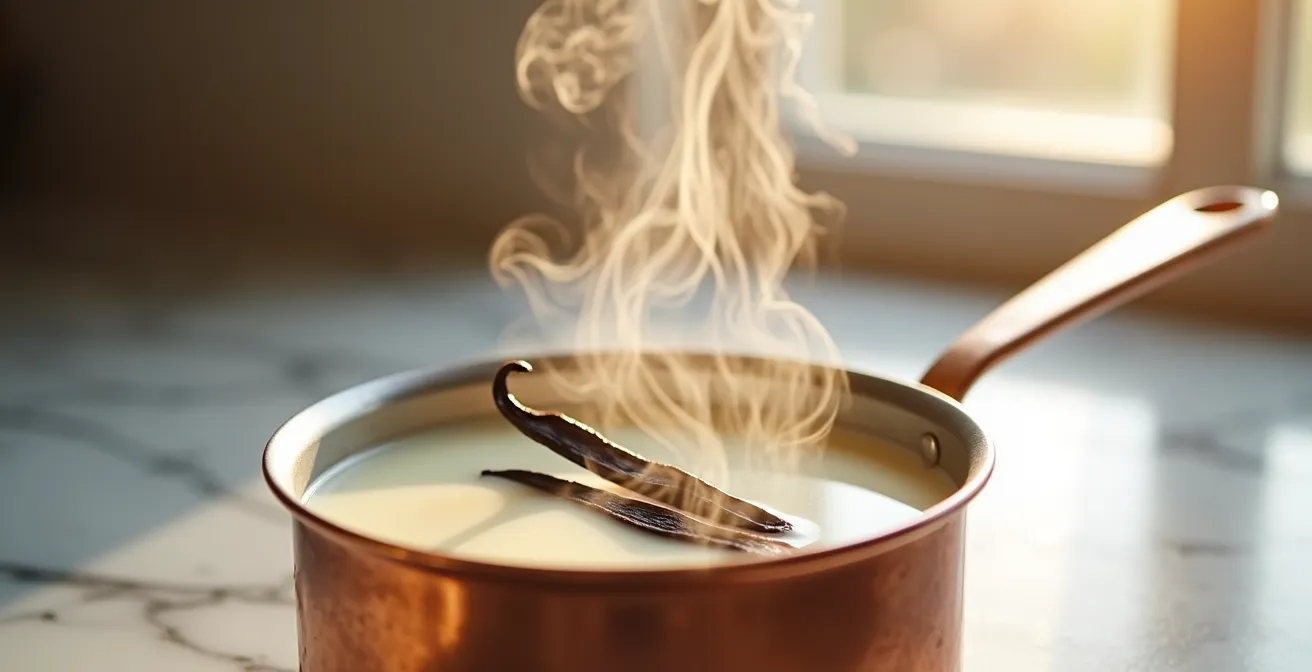
As you can see, the pod itself, not just the seeds, is the primary source of flavor. Letting it steep allows the cream to become saturated with the full spectrum of compounds, creating a ganache with unparalleled depth and a lingering, complex finish.
Action Plan: The Two-Stage Vanilla Infusion for Ganache
- Split and Scrape: Split the vanilla bean lengthwise and scrape the seeds directly into your cold cream. Add the scraped pod to the cream as well; it contains the majority of the aroma.
- First Infusion (Gentle Warmth): Bring the cream to a bare simmer, then immediately turn off the heat and cover the pan. Let the pod steep for a minimum of 15 minutes. This gentle, residual heat captures the most volatile, delicate top notes without destroying them.
- Second Infusion (Extraction): Remove the lid and bring the cream back to just under a boil. This second heating extracts the deeper, more robust flavor compounds from the pod.
- Strain and Pour: Immediately pour the hot cream through a fine-mesh sieve directly over your chopped chocolate, discarding the spent pod (or setting it aside for another use).
- Emulsify: Let the mixture stand for a minute before gently stirring to create a smooth, glossy ganache, now perfectly infused with the complete vanilla bouquet.
Floral or woody notes: which vanilla to choose for a full-bodied dark chocolate?
Once you’ve mastered extraction, the next level of artistry is selection. Not all vanilla is created equal, and thinking of it as a monolithic flavor is a novice’s mistake. The concept of terroir, so central to chocolate, applies just as strongly to vanilla. The origin of the pod dictates its aromatic profile, and choosing the right one is critical for a harmonious pairing, especially with a dominant, full-bodied dark chocolate.
The three most renowned vanilla varieties offer distinctly different bouquets. Madagascar Bourbon vanilla, the classic choice, is prized for its rich, creamy, and deeply sweet profile with notes of rum and dark fruit. It is the most versatile and a reliably brilliant partner for nearly any chocolate, its robustness holding up beautifully to the intensity of a 70%+ cacao. In contrast, Tahitian vanilla is more floral and fruity, with notes of cherry and anise. Its delicate, perfume-like quality can be lost against a powerful dark chocolate but sings when paired with white or lighter milk chocolates, where its nuances can shine. Finally, Mexican vanilla offers a spicier, warmer character, often with hints of cinnamon and clove, making it an exciting choice for bold dark chocolates or spiced preparations where you want to build layers of warmth.
As expert chocolatier Katrina Markoff of Vosges Chocolates notes, the choice is highly strategic:
Vanilla is a subtle and deep flavor that can have fruity notes—as with Tahitian vanilla—or spicy notes, as are in vanilla from Mexico. It pairs well with cacao, but is not always necessary.
– Katrina Markoff, Vosges Chocolates
For a pastry chef, this means a Grand Cru dark chocolate with its own complex profile of red fruit and earthy notes demands a vanilla that can complement without competing. A Madagascar Bourbon pod will provide a creamy, resonant bass note, while a Mexican pod could amplify its spicier undertones. The following table provides a clear guide for this strategic pairing.
| Vanilla Origin | Flavor Profile | Best Chocolate Pairing |
|---|---|---|
| Madagascar Bourbon | Rich, creamy, rum notes, dark fruit | All chocolates, especially 70%+ dark |
| Tahitian | Floral, fruity components | White chocolate, lighter milk chocolates |
| Mexican | Spicy, warm notes of cinnamon, clove | Bold dark chocolate, spiced preparations |
The mistake of adding too much vanilla, which kills the subtlety of a Grand Cru
In patisserie, as in perfumery, the most common and costly mistake is not one of omission, but of excess. With a powerful aroma like vanilla, the instinct can be “more is better.” This is a fatal error when working with fine chocolate. The goal is harmony, not dominance. An overpowering blast of vanilla is the quickest way to flatten the complex flavor profile of a Grand Cru chocolate, effectively erasing the very terroir you paid a premium for.
The power of vanillin is deeply rooted in our neurobiology. The human brain is exceptionally good at detecting and recalling this specific flavor; vanillin has dedicated receptor sites in the human brain, making its taste easily recallable and potentially overpowering. This means even a small amount can have a significant presence. When overused, it doesn’t just add its flavor; it acts like a blanket, smothering the delicate floral, fruity, or nutty notes inherent to the cacao bean. You lose the wine-like acidity of a Madagascan bean or the earthy, smoky notes of one from Papua New Guinea, all for the sake of a blunt, one-dimensional vanilla hit.
The role of vanilla is to be the sensory scaffolding upon which the chocolate’s character is built, not the entire edifice. It should be a whisper, not a shout. Professionals who understand this relationship treat vanilla with the same precision as salt in a savory dish: just enough to make the other ingredients taste more like themselves. As the experts at Cavasa Chocolatiers wisely state:
An overpowering vanilla presence can mask the subtle nuances of the cocoa. At Cavasa, we meticulously strike the perfect balance, ensuring the vanilla complements the chocolate without stealing the show.
– Cavasa Chocolatiers, Cavasa Chocolate Blog
For a professional, this means starting with less than you think you need. Infuse, taste, and then decide if more is required. The hallmark of an expert is not a powerful vanilla flavor, but a seamless integration where you can’t tell where the chocolate ends and the vanilla begins. It’s a balanced, resonant chord, not a solo.
Empty pods: how to make your own vanilla sugar or homemade powder?
In a professional kitchen, waste is an enemy, and an infused vanilla pod is far from “spent.” Tossing it out after a single infusion is like discarding a valuable asset. The scraped, used pod still retains a significant amount of residual aroma and flavor locked within its fibrous walls. Learning to repurpose these pods is a mark of a resourceful and sustainable pastry chef, transforming a byproduct into another high-value ingredient.
The two most effective methods for giving these pods a second life are creating vanilla sugar or grinding them into a potent homemade powder. Vanilla sugar is the simplest application: simply rinse and thoroughly dry the used pods, then bury them in a jar of granulated or caster sugar. Within a week, the sugar will be deeply infused with a delicate vanilla fragrance, perfect for finishing pastries, sweetening beverages, or adding a subtle aromatic layer to crèmes and custards.
Creating a homemade powder requires more effort but yields a more versatile and concentrated product. This technique is particularly valuable for recipes where adding liquid (like an extract) would disrupt the texture, such as in the conching stage of chocolate making or in dry rubs. This method involves completely dehydrating the pods until they are brittle and then grinding them into a fine dust.
- Rinse the used vanilla pods and pat them completely dry with a clean cloth.
- Place the pods in a food dehydrator set to 135°F (57°C) for 6-8 hours, or until they snap easily. Alternatively, air-dry them for 2-3 weeks in a cool, dry, well-ventilated area.
- Once brittle, break the dried pods into small pieces.
- Grind the pieces in a dedicated spice grinder or a clean coffee grinder until a fine powder is formed.
- For an ultra-fine texture, sift the powder through a fine-mesh sieve to remove any larger, fibrous pieces.
- Store the finished powder in a small, airtight container. It will retain its potency for up to a year.
Professional Application: Vanilla Powder in Chocolate Making
High-end chocolate makers often favor vanilla powder made from dried and ground vanilla beans. They utilize this as a dry ingredient alternative to liquid extract. This is especially valuable in precision-focused recipes where even a small amount of alcohol or water from an extract could negatively alter the final texture and viscosity of the chocolate during tempering.
How to marry the acidity of a Peruvian cacao with exotic fruits without a clash?
Pairing chocolate with fruit can be a delicate balancing act. When you introduce a third element, especially acidic exotic fruits like passion fruit, lime, or raspberry, the risk of creating a jarring, dissonant flavor profile increases. Cacaos from origins like Peru are often prized for their bright, acidic, and fruity notes. While beautiful on their own, when combined with more fruit, the acidity can stack up, leading to a sharp or “clashing” taste. This is where vanilla steps in, not as a flavor, but as a flavor diplomat.
In this context, vanilla’s primary role is to bridge the gap between the chocolate’s inherent acidity and the fruit’s tartness. Its creamy, round, and sweet aromatic compounds act as a buffer. They don’t erase the acidity but rather soften its edges, weaving the disparate sharp notes into a cohesive and harmonious whole. It tames the potential for a “sour” finish and coaxes out the deeper, complementary flavors in both the chocolate and the fruit.
As the chocolate experts at Cavasa eloquently put it, vanilla is a master harmonizer:
Vanilla’s delicate sweetness acts as a gentle amplifier, coaxing out the inherent richness and complexity of the cocoa bean. It rounds out any harsh edges, creating a smooth and luxurious flavour profile.
– Cavasa Chocolate Experts, Cavasa Blog on Vanilla and Chocolate Pairing
Think of it as adding a rich harmony line in a musical chord. The high notes of the fruit and the bright notes of the cacao are still present, but the deep, resonant tone of the vanilla provides a foundation that makes the entire composition feel more complete and luxurious. The image below perfectly illustrates this diplomatic role, with vanilla physically bridging the gap between the cacao and the fruit.
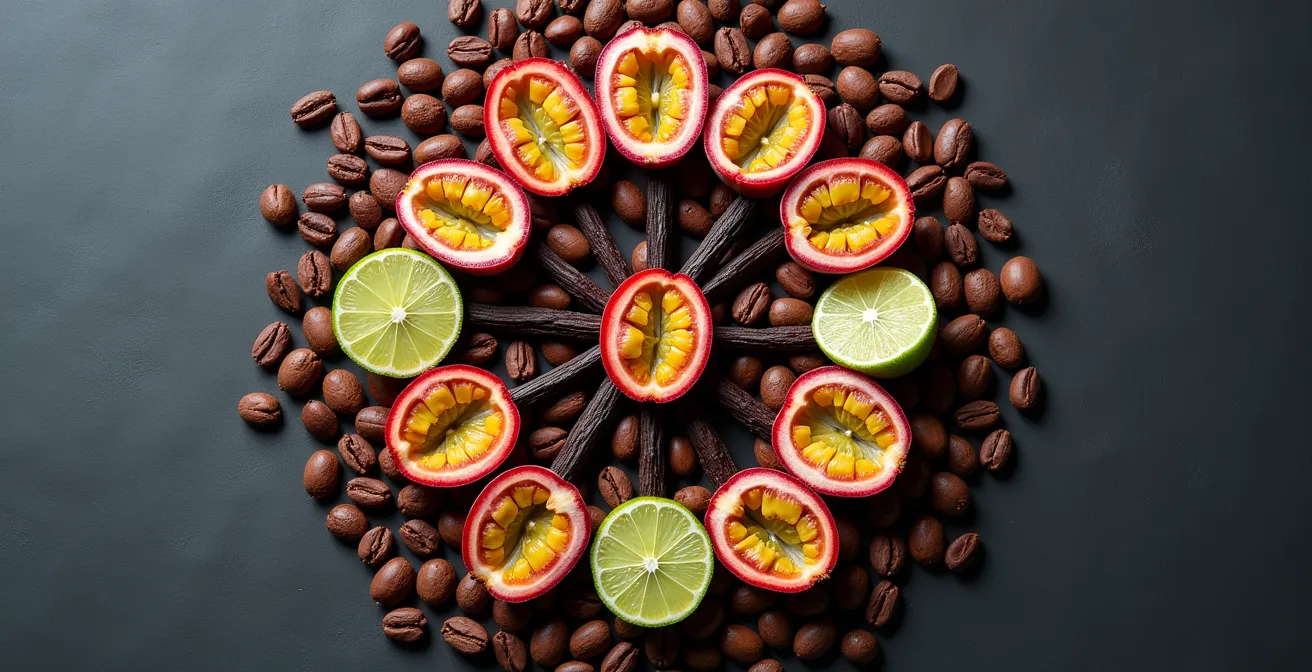
Without this vanilla “bridge,” the flavors might simply coexist or, worse, compete. With it, they engage in a dialogue, resulting in a ganache or mousse where the fruit lifts the chocolate, the chocolate grounds the fruit, and the vanilla ensures they speak the same language.
Cinnamon and piment: when to add them for a subtle diffusion without bitterness?
The historical roots of chocolate are deeply entwined with spice. The ancient Mayans and Aztecs consumed cacao as a bitter, frothy beverage, often flavored with chili (piment) and other botanicals. Recreating this trinity of chocolate, spice, and vanilla in modern patisserie requires a nuanced understanding of extraction timing. Adding spices like cinnamon and cayenne pepper is not a matter of simply stirring them in; the “when” is just as important as the “what” to avoid extracting unwanted bitterness.
Cinnamon, particularly cassia cinnamon, and the capsaicin in chilis contain compounds that can turn bitter and harsh when exposed to prolonged high heat. If you add them to your cream at the very beginning and boil them, you risk a final product with an acrid, medicinal aftertaste that overpowers the subtle aromatics of both the chocolate and the vanilla. The goal is a subtle, warming diffusion of flavor, not a raw, aggressive burn.
The professional technique, inspired by Mayan traditions, follows a precise infusion timeline. Vanilla, being more robust and complex, goes in first. It creates the foundational aromatic base. The more delicate and potentially bitter spices are added at the very end of the process, into the warm ganache after the emulsion has formed. This allows their aromatic oils to diffuse gently into the mixture without the harsh heat that extracts bitter tannins. A traditional guide for balance can be found in historic recipes, where traditional Mayan hot chocolate recipes maintain a careful balance with approximately 1 tsp cinnamon to 4 cups liquid, demonstrating a long-held respect for restraint.
Modern chocolatiers apply this logic with precision. A common professional workflow involves first scalding the cream with the vanilla pod to build the base. This hot cream is then poured over the chocolate and allowed to stand for several minutes to form the ganache. Only then are the ground cinnamon and cayenne gently stirred into the still-warm, but not boiling, ganache. This method ensures you get the warm, fragrant kiss of the spices and the gentle heat of the chili without any accompanying bitterness, allowing the full trio of flavors to exist in perfect, layered harmony.
Key Takeaways
- Complexity over Chemistry: A natural vanilla pod’s 250+ compounds provide an aromatic depth that single-molecule synthetic vanillin can never replicate.
- Precision in Extraction: A two-stage, low-heat infusion is crucial to capture both the delicate top notes and robust base notes of a vanilla pod without destroying them.
- Dosage is Artistry: Overusing vanilla is the most common mistake. Its role is to be a harmonizer that makes chocolate taste more like itself, not to dominate the flavor profile.
How to turn your white chocolate into caramelized gold in the oven in 45 minutes?
While Bourbon vanilla is the classic partner for dark and milk chocolate, its role evolves in the context of white chocolate, which technically contains no cocoa solids. Here, vanilla is not a harmonizer but a primary flavor pillar. A fascinating technique that elevates this partnership is the creation of caramelized, or “dulcey,” white chocolate. This process uses a slow, low-temperature roast in the oven to initiate the Maillard reaction, transforming the sweet, milky profile of white chocolate into something nutty, toasty, and deeply complex, reminiscent of dulce de leche or shortbread.
The process is remarkably simple. High-quality white chocolate (rich in cocoa butter) is spread on a baking sheet and roasted at a low temperature, typically around 250°F (120°C). Every 10 minutes, the chocolate is removed from the oven and stirred. Initially, it will become lumpy and seize, but as the roasting continues, the cocoa butter will render out, and it will become smooth again, gradually turning from ivory to a beautiful golden-amber color. This transformation is the Maillard reaction in action, the same chemical process that gives bread crusts and seared steaks their savory depth. It’s the sugars and milk proteins in the white chocolate that are browning and developing hundreds of new, complex flavor compounds.
Vanilla is a crucial player in this transformation. An infusion of a high-quality vanilla pod into the white chocolate *before* caramelization adds a foundational layer of aromatic complexity. As the Maillard reaction proceeds, the vanilla notes deepen and intertwine with the newly formed toasty, nutty flavors, creating a final product with extraordinary depth and a lingering, perfumed finish. This highlights a strategic choice, as noted by Certified Master Baker Dan Moats:
The choice of vanilla will depend on whether it will be a primary, secondary, complementary or background support flavor. It can work better to begin a batter or dough with a less expensive vanilla, then finish the cream or icing with a more pleasing flavor, since that is what will hit the taste buds first.
– Dan Moats, Swiss Colony Retail Brands Inc.
In this case, the vanilla is a foundational flavor, and a robust Madagascar Bourbon provides the perfect creamy, rich backbone for the nutty notes of the caramelized chocolate to build upon, resulting in a truly exceptional ingredient for mousses, ganaches, and ice creams.
To elevate your craft, start treating your vanilla not as a simple background note, but as the master conductor of your chocolate’s aromatic symphony. Apply these principles of selection, extraction, and dosage to unlock a new level of depth and harmony in your work.