
The key to a powerful winter energy drink isn’t sugar, but the right combination of high-fat cocoa powder and pure cocoa butter for slow-release fuel.
- High-fat (22-24%) cocoa powder is essential for creating a rich, velvety texture and delivering superior flavour.
- Cocoa butter provides dense, slow-metabolizing energy that supports endurance without the crash associated with sugar.
- Choosing natural, non-alkalized powder preserves the heart-healthy flavanols that typical chocolate bars lose in processing.
Recommendation: Start with 15-20g of fat per 250ml of liquid and always choose natural, non-alkalized cocoa powder to maximize both energy and health benefits.
When the cold bites and the trails are covered in snow, the instinctive reach for a warm drink is universal. For many, this means a sugary hot chocolate that provides a fleeting moment of warmth followed by an inevitable energy crash. Others might turn to coffee, only to deal with caffeine jitters that feel out of place in the serene winter landscape. This cycle leaves active individuals and comfort-seekers alike searching for a better solution: something that warms the body, lifts the spirit, and, most importantly, provides steady, lasting fuel.
The common advice often revolves around simply adding fat, a concept popularized by the “bulletproof” trend. However, this only scratches the surface. The true potential lies not just in adding any fat, but in harnessing the unique properties of cocoa itself. What if the ultimate winter fuel wasn’t about a quick hit of sugar or a jolt of caffeine, but about leveraging the profound synergy between high-quality cocoa fat and the potent micronutrients locked within the bean?
This is where high-fat cocoa, enriched with pure cocoa butter, transforms from a simple treat into a high-performance functional beverage. It’s a paradigm shift from temporary satisfaction to deep, sustained nourishment. This article will guide you through the science and practical steps to unlock this potential, exploring why the type of powder matters, how cocoa butter metabolizes differently for energy, and how to craft the perfect cup for your specific needs, avoiding the common pitfalls that can ruin the experience. It’s time to rediscover cocoa as the powerful, comforting ally it was always meant to be.
To help you master this comforting energy source, this guide breaks down every critical element, from choosing the right ingredients to perfecting your preparation technique. Discover the secrets to a truly superior winter beverage in the sections below.
Summary: Crafting the Ultimate High-Fat Cocoa for Energy and Comfort
- 10-12% or 22-24% Powder: Which to Choose for an Incomparable Velvety Texture?
- Why 20g of Cocoa Butter Supports Your Energy Better Than a Sugary Bar?
- How to Integrate ‘Bulletproof Cacao’ into a Hectic Morning Routine?
- The Dosing Error That Makes Your Drink Unpalatable After 3 Sips
- Whole Milk or Plant-Based Cream: Which Base Maximizes the Fat’s Creaminess?
- Raw Powder or Dark Chocolate Bar: Which Form Provides More Heart-Healthy Flavanols?
- Morning or Evening: Why Lighten the Cocoa Butter Dose After 4 PM?
- Which Cocoa Processing Method Preserves the Most Flavanols?
10-12% or 22-24% Powder: Which to Choose for an Incomparable Velvety Texture?
The first and most critical choice in crafting a superior high-fat cocoa is the powder itself. The numbers “10-12%” and “22-24%” refer to the percentage of cocoa butter remaining in the powder after the beans are processed. While it may seem like a minor detail, this difference is the foundation of your drink’s texture and flavour. A standard, lower-fat (10-12%) powder is drier and often has a more intensely bitter, almost astringent taste. In contrast, a high-fat (22-24%) powder retains significantly more of its natural fat, which acts as a powerful emulsifier and flavour carrier.
This higher fat content results in a drink that is naturally creamier, with a rounder, mellower chocolate flavour and a luxurious mouthfeel. The extra cocoa butter helps the powder dissolve more smoothly into liquid, preventing the clumping and gritty texture often associated with cheap hot chocolate mixes. For anyone seeking that deep, velvety comfort, choosing the 22-24% variety is non-negotiable. It transforms the beverage from a simple flavoured drink into a rich, satisfying experience.
The following table breaks down the key differences, illustrating why premium beverages and desserts almost exclusively rely on high-fat powder. Professional baking guidelines show that high-fat powder delivers a superior sensory experience that lower-fat alternatives simply cannot match.
| Property | 10-12% Fat | 22-24% Fat |
|---|---|---|
| Texture | Drier, more powdery | Richer, creamier mouthfeel |
| Flavor Profile | More intense, bitter notes | Smoother, mellower chocolate taste |
| Emulsification | Requires more blending | Natural emulsifier properties |
| Color (dry) | Lighter appearance | Darker, richer appearance |
| Best Use | Baking, dry mixes | Premium beverages, desserts |
Ultimately, starting with a high-fat powder is the single most impactful decision you can make to elevate your winter drink from good to exceptional.
Why 20g of Cocoa Butter Supports Your Energy Better Than a Sugary Bar?
When you’re out on a cold day, the temptation to grab a sugary snack for a quick energy boost is strong. However, that rush is fleeting and often followed by a crash that leaves you colder and more tired than before. This is where cocoa butter offers a profoundly different and more effective energy source. Unlike the simple carbohydrates in a candy bar, cocoa butter is a pure, plant-based fat composed primarily of stearic, palmitic, and oleic acids. These fats are metabolized by the body much more slowly, providing a steady, sustained release of energy rather than a quick spike and fall.
Think of it as the difference between burning newspaper (sugar) and a dense hardwood log (cocoa butter). The newspaper flares up brightly but burns out in moments, while the log provides consistent, long-lasting warmth and fuel. Scientific studies confirm this metabolic advantage. In fact, clinical studies demonstrate cocoa butter provides 37 kJ/g of digestible energy with an almost perfect 99% digestibility rate. This means your body can efficiently convert that fat into usable power for hours, making it ideal for endurance activities like winter hiking or simply getting through a long, cold day without energy slumps.
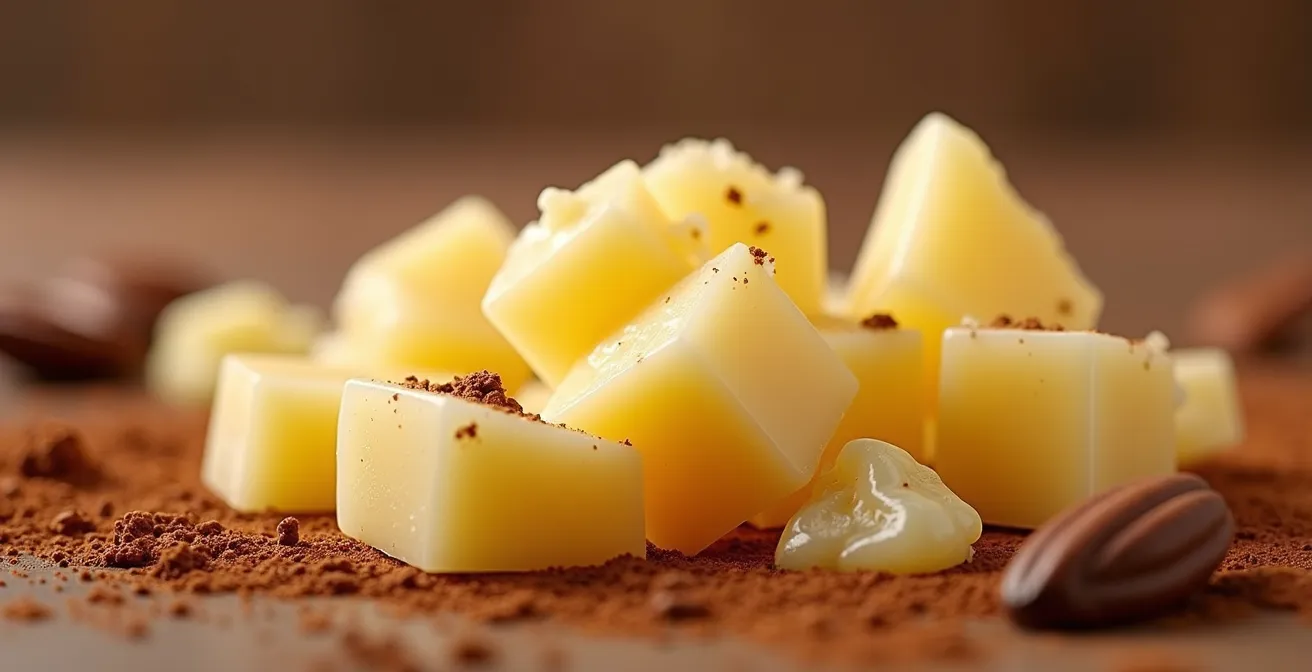
As you can see, pure cocoa butter is a dense source of fuel. Adding just 20 grams to your cocoa not only enhances the creaminess but also fortifies your drink with a powerful, long-burning energy source that supports you for hours, all while promoting satiety and keeping hunger at bay. This is the secret to true winter resilience.
By swapping the fleeting energy of sugar for the enduring power of cocoa butter, you’re not just making a tastier drink; you’re building a smarter energy strategy.
How to Integrate ‘Bulletproof Cacao’ into a Hectic Morning Routine?
The idea of a rich, blended energy drink can seem daunting on a busy morning. The thought of measuring powders, melting butter, and washing a blender can be enough to make you reach for a simple instant coffee. However, with a little preparation, integrating a ‘bulletproof cacao’ into your daily routine is surprisingly simple and fast. The key is to shift from daily preparation to weekly prep, turning a multi-step process into a “just add hot liquid” affair.
The most effective strategy is to pre-mix your dry ingredients. By combining your high-fat cocoa powder, preferred sweetener (if any), and a crucial pinch of salt into a single jar, you eliminate the daily measuring. Another time-saving hack is creating “cocoa bombs”—pre-portioned mixes of cocoa butter and dry ingredients frozen in an ice cube tray. In the morning, you simply pop one into your mug, add hot liquid, and blend. An immersion blender or a small milk frother is your best friend here; they are far quicker to use and clean than a full-sized blender and achieve a perfect emulsion in under 30 seconds.
By adopting these simple habits, the entire process—from cupboard to first sip—can take less than two minutes. This makes it a highly efficient way to front-load your day with sustained energy and mental clarity, setting you up for success without derailing your morning schedule.
Your 5-Step Morning ‘Bulletproof Cacao’ Plan
- Weekly Pre-Mix: Combine your high-fat cocoa powder, sweetener, and a pinch of salt in an airtight jar. This becomes your instant mix for the week.
- Heat Liquid Correctly: Warm 250ml of water or your chosen milk to 70-80°C. Avoid boiling, as extreme heat can degrade the delicate flavanols in the cocoa.
- Combine and Melt: Add 1-2 tablespoons of your dry mix and 10-20g of cocoa butter (or a pre-made ‘cocoa bomb’) to your mug with the hot liquid.
- Emulsify for 30 Seconds: Use an immersion blender or milk frother to blend the mixture until it’s smooth and frothy. This is the crucial step for a creamy, non-greasy texture.
- Drink Immediately: Enjoy your energizing cacao while it’s hot and perfectly emulsified for the best taste and experience.
This small investment in preparation pays massive dividends in daily energy and well-being, making it a routine worth adopting.
The Dosing Error That Makes Your Drink Unpalatable After 3 Sips
There’s a fine line between a luxuriously rich, energizing cocoa and a greasy, undrinkable mess. Many who are new to high-fat beverages make the same mistake: thinking “more is better.” They add an excessive amount of cocoa butter, hoping for more energy, only to create a drink with an overwhelming, cloying mouthfeel that separates into an oil slick after a few minutes. This single error can be so off-putting that it discourages them from ever trying again. The secret to a perfect bulletproof cacao lies not in maximizing fat, but in optimizing the ratio of fat to liquid.
To achieve a pleasant, velvety emulsion, you must respect what beverage experts call the “golden ratio.” For most people, this balance is found within a specific range. In fact, keto beverage experts recommend a ratio of 15-20g of fat per 250ml (about 8.5 oz) of liquid. Straying too far beyond this, especially upwards of 25g, is where problems begin. The liquid becomes oversaturated with fat and can no longer hold the emulsion, resulting in that dreaded greasy layer.
Other critical errors compound this issue. Using lukewarm water prevents the cocoa butter from melting and emulsifying properly, while forgetting a pinch of salt can make the fat taste bland and heavy on the palate. Salt is a flavour enhancer that brightens the chocolate notes and cuts through the richness of the fat, making the drink far more palatable. Finally, even a perfectly made drink can separate if it sits for too long. If you’re not drinking it immediately, a quick re-blend with a milk frother can bring it back to its creamy, delicious state.
By starting with 15g of fat and paying attention to water temperature and seasoning, you ensure every cup is a comforting and energizing success, not a greasy disappointment.
Whole Milk or Plant-Based Cream: Which Base Maximizes the Fat’s Creaminess?
Once you’ve chosen your high-fat powder and perfected your dosage, the final variable is the liquid base. While water works and allows the pure cocoa flavour to shine, using a base with its own fat and protein content can elevate the creaminess to an entirely new level. The choice between dairy and plant-based options depends on your dietary preferences and the specific texture you’re aiming for. Each liquid interacts differently with the added cocoa butter, acting as an emulsifying partner.
Whole milk is an excellent choice due to its natural fat content (around 3.5%) and, more importantly, its casein proteins. These proteins act as powerful natural emulsifiers, wrapping around the fat globules and helping to create a stable, smooth, and creamy texture. For those avoiding dairy, certain plant-based options are even more effective. Coconut cream, with its high saturated fat content (20-24%), creates a superior synergy with cocoa butter, resulting in an incredibly rich and decadent drink. Oat milk is another strong contender, as its soluble fibers (beta-glucans) help to thicken the beverage and support a good emulsion. Almond milk, being lower in both fat and protein, is the weakest partner and often requires more thorough blending to avoid separation.

The table below compares the emulsification power and flavour profile of common liquid bases, helping you choose the perfect partner for your cocoa butter.
| Liquid Base | Fat Content | Emulsification Power | Flavor Profile |
|---|---|---|---|
| Whole Milk | 3.5% | Excellent (casein proteins) | Creamy, mild |
| Coconut Cream | 20-24% | Superior (saturated fat synergy) | Rich, tropical |
| Oat Milk | 2-3% | Good (beta-glucans) | Sweet, neutral |
| Almond Milk | 1-2% | Moderate (needs emulsifiers) | Light, nutty |
| Water | 0% | Poor (requires thorough blending) | Pure cocoa taste |
Experimenting with these bases will allow you to customize your drink, whether you’re seeking the classic comfort of whole milk or the unparalleled richness of coconut cream.
Raw Powder or Dark Chocolate Bar: Which Form Provides More Heart-Healthy Flavanols?
While the energy from fat is a primary benefit, the health advantages of cocoa extend far beyond macronutrients. Cocoa is one of the richest natural sources of flavanols, a class of polyphenols with powerful antioxidant and anti-inflammatory properties. These compounds are celebrated for their positive effects on cardiovascular health, including improving blood flow and supporting healthy blood pressure. However, not all cocoa products deliver these benefits equally. The question often arises: is it better to use cocoa powder or simply melt down a high-percentage dark chocolate bar?
The answer is unequivocally in favour of cocoa powder, specifically the natural, non-alkalized variety. Dark chocolate bars, even those with high cocoa percentages (e.g., 85%), contain two ingredients that dilute the flavanol concentration: added sugar and a significant amount of extra cocoa butter. Cocoa powder, on the other hand, is the most concentrated form of the cocoa bean solids where these beneficial compounds reside.
Case Study: Natural Powder vs. Dark Chocolate
Research consistently shows that pure, unsweetened natural cocoa powder contains a higher concentration of heart-healthy compounds per gram than even 85% dark chocolate bars. This is because the powder is almost entirely composed of cocoa solids, the part of the bean richest in flavanols. In contrast, a chocolate bar’s mass is shared with added cocoa butter and sugar, effectively diluting the flavanol content. Therefore, for someone looking to maximize the cardiovascular benefits, a spoonful of natural cocoa powder is a more potent choice than an equivalent weight of dark chocolate.
The impact of these compounds is not trivial. A recent and comprehensive 2024 meta-analysis of 31 studies found significant cardiovascular benefits from regular cocoa consumption, including an average 8.35 mg/dL reduction in total cholesterol and a 2.52 mmHg decrease in systolic blood pressure. To reap these rewards, choosing the most concentrated and unprocessed form is essential.
By opting for natural powder, you ensure you’re getting a potent dose of these protective compounds, adding a significant layer of wellness to your daily energy ritual.
Morning or Evening: Why Lighten the Cocoa Butter Dose After 4 PM?
A warm, creamy cocoa can feel like the perfect way to wind down in the evening. However, while it lacks the high caffeine content of coffee, cocoa is not entirely free of stimulants. It contains a compound called theobromine, a mild central nervous system stimulant that is chemically related to caffeine. The key difference is its effect profile: theobromine provides a gentler, longer-lasting lift without the sharp peak and “jitters” of caffeine. While this makes it excellent for sustained daytime energy, it can pose a problem in the evening.
Because its effects are more prolonged, consuming a full-strength high-fat cocoa late in the day can interfere with sleep patterns, especially in individuals sensitive to stimulants. It might not prevent you from falling asleep, but it can disrupt the quality and depth of your sleep. As the Keith’s Cacao Research Team notes, this is a critical consideration for evening consumption.
Cocoa contains theobromine, a mild nervous system stimulant with longer-lasting effects than caffeine, which can disrupt sleep patterns in sensitive individuals when consumed late in the day.
– Keith’s Cacao Research Team, Keith’s Cacao Blog on Natural Energy
This doesn’t mean you must avoid cocoa entirely after 4 PM. The solution is simply to modify the recipe. By reducing both the cocoa powder and cocoa butter content by about half, you lower the dose of theobromine and lessen the digestive load on your system before bed. You can also transform your evening cocoa into a sleep-promoting elixir by adding ingredients like magnesium glycinate or adaptogenic herbs like ashwagandha or reishi mushroom powder, which help calm the nervous system and promote relaxation.
- Reduce cocoa powder to 5-10g (about half the morning dose).
- Lower cocoa butter to a gentler 5-10g to minimize digestive work before bed.
- Consider adding 200mg of magnesium glycinate or 1/2 tsp of ashwagandha powder to promote relaxation.
- Drink your modified cocoa at least two hours before your intended bedtime to allow for proper digestion.
By being mindful of timing and adjusting your dose, you can enjoy the comfort of cocoa at any time of day without compromising your rest.
Key Takeaways
- Prioritize High-Fat Powder: For superior texture, flavour, and emulsification, always choose a 22-24% fat cocoa powder over the standard 10-12% variety.
- Respect the Golden Ratio: To avoid a greasy drink, stick to the optimal ratio of 15-20 grams of total fat per 250ml of liquid and always blend thoroughly.
- Time Your Intake: Leverage cocoa’s stimulating theobromine for daytime energy, but reduce your dose after 4 PM to protect the quality of your sleep.
Which Cocoa Processing Method Preserves the Most Flavanols?
You’ve chosen a high-fat powder for texture and added cocoa butter for energy. Now, for the final piece of the puzzle: ensuring you’re getting the maximum health benefits. The key lies in understanding one crucial detail on the packaging: the processing method. Most commercial cocoa powders undergo a process called “Dutching” or “alkalization,” where the beans are washed with an alkaline solution. This process darkens the colour, mellows the flavour, and makes the powder less acidic, but it comes at a tremendous cost: the near-total destruction of the beneficial flavanols.
Natural cocoa powder, on the other hand, is simply roasted and ground cocoa beans with most of the fat removed. It retains its natural acidity (a pH between 5.3 and 5.8) and a lighter, reddish-brown colour. Most importantly, it preserves the vast majority of its original flavanol content. Studies have shown that the alkalization process can destroy up to 90% of these vital polyphenols. This means that by choosing a dark, Dutch-processed powder, you are sacrificing nearly all the antioxidant and cardiovascular benefits that make cocoa a true superfood.
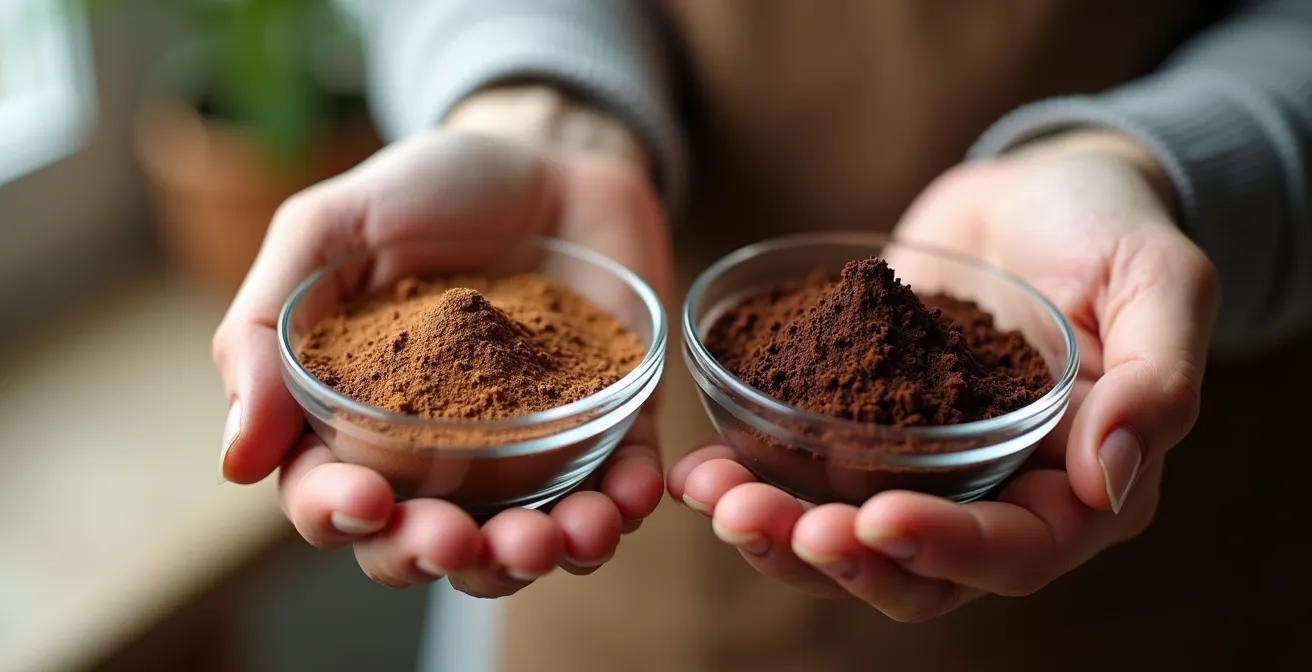
When shopping, you must become a label detective. The difference is stark, and choosing correctly ensures your comforting drink is also a powerfully healthy one. Here is a simple guide to help you find a flavanol-rich product:
- Look for “Natural” or “Non-Alkalized”: These are the key terms indicating that the flavanols have been preserved.
- Avoid “Processed with Alkali” or “Dutch-Processed”: These phrases are a clear sign that the product has lost most of its beneficial compounds.
- Check the Color: Natural cocoa is a lighter, warmer brown. Heavily alkalized cocoa is often very dark, almost black.
- Seek Quality Indicators: Premium brands committed to quality will sometimes list the flavanol content in milligrams on the packaging, a clear sign of a superior product.
By consciously choosing natural, non-alkalized cocoa, you ensure every energizing cup is also packed with the full spectrum of health benefits that nature intended. Start experimenting today and craft the perfect high-fat cocoa that fuels your body and comforts your soul this winter.