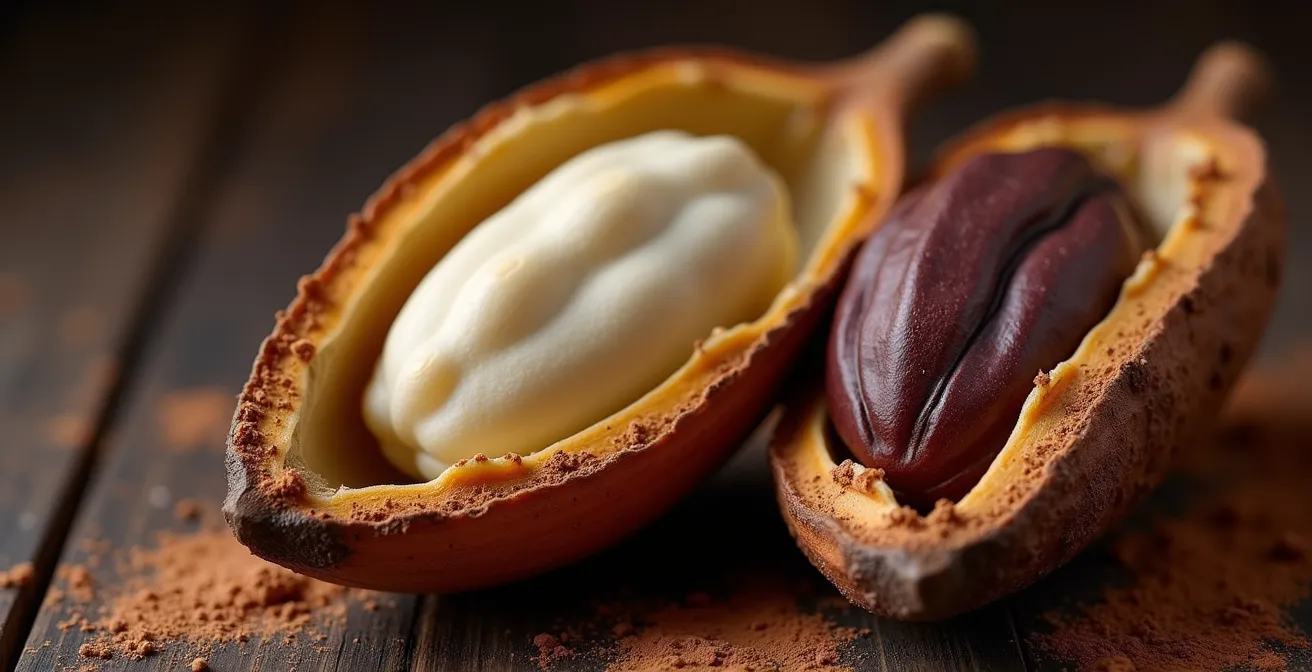
The value of elite cacaos like Criollo and Porcelana is not a matter of subjective preference; it is an objective function of genetic purity and managed scarcity.
- Their unique genetics result in a chemically lower bitterness and a higher, more discernible aromatic complexity.
- Extremely low yields and active preservation efforts create an investment-grade rarity that justifies their premium pricing.
Recommendation: Shift your perspective from treating fine chocolate as a confection to evaluating it as a luxury asset, appreciated for its provenance and quantifiable sensory profile.
For the discerning palate, there are moments of revelation. A single taste that instantly re-calibrates one’s understanding of quality, rendering all previous experiences secondary. In the world of chocolate, this moment often arrives with the first encounter of a true Grand Cru cacao. We are not speaking of the mass-market “premium” bars that line supermarket shelves, their value often derived more from marketing budgets than from the bean’s actual merit. The term “fine flavor” has been diluted, applied liberally to any product that rises slightly above the commodity baseline.
The conversation around quality is frequently misdirected, focusing on cocoa percentage or superficial origin branding. But what if the true measure of a chocolate’s worth lies not in its packaging, but in its genetic fingerprint? What if its superiority could be demonstrated not just through poetic tasting notes, but through chemistry? This is the chasm that separates industrial chocolate from the hallowed halls of Criollo and Porcelana. Their status as the “Holy Grail” is not myth; it is a direct result of their unadulterated lineage, a quantifiable sensory profile, and an economic model built on scarcity and value, not volume.
This analysis will deconstruct the hierarchy of fine cacao, providing the framework to understand and articulate its value. We will explore the balanced profile of Trinitario, ascend to the rarefied air of Porcelana, and dissect the scientific and economic logic that cements their legendary status. This is the knowledge that separates the consumer from the connoisseur.
Summary: Why Criollo and Porcelana Represent the Apex of Cacao
- Why Is the Term “Trinitario” a Guarantee of Aromatic Balance?
- How to Explain to Your Clients That a Porcelana Bar Costs €25?
- Grand Cru vs. Bulk Cacao: What’s the Real Difference on the Palate for a Non-Initiate?
- The Mistake of Planting Only Productive Clones That Threatens Ancient Varieties
- Chuncho from Peru or Beni from Bolivia: What Is the Next Fashionable Grand Cru?
- Why Does the Industrial Model Deprive Farmers of 94% of the Added Value?
- Criollo vs. Trinitario: The Tasting Clues to Shine in Society
- Why Using an “Origin Madagascar” Couverture Radically Changes Your Chocolate Mousse?
Why Is the Term “Trinitario” a Guarantee of Aromatic Balance?
One cannot appreciate the pinnacle without understanding the foundation of fine flavor. Trinitario, a hybrid of the robust Forastero and the delicate Criollo, represents this essential benchmark. It is not the rarest, but its genius lies in its genetic compromise. It inherits the hardiness and yield of Forastero while retaining a significant portion of the complex aromatic potential of Criollo. This makes it the workhorse of the fine chocolate world, a reliable source of quality that vastly outperforms bulk commodity beans. While it may seem common in specialty circles, it’s crucial to remember that according to a recent market analysis, Trinitario and Criollo beans together make up less than 10% of the world’s cocoa production.
The term “balance” is key. Where pure Criollo can be exceptionally subtle and Forastero one-dimensionally harsh, Trinitario offers a broad, accessible spectrum of flavors. As noted by industry authorities, its hybrid nature gives it a unique position. This insight comes from the experts at Bar & Cocoa in their guide on cacao varieties:
The Trinitario being the least pure has the widest range of tastes and profiles of any other variety.
– Bar & Cocoa Experts, Varieties of Cocoa Beans Guide
This genetic diversity allows for remarkable regional expressions. For instance, the Trinitario strains in Madagascar, which possess a strong Criollo heritage, are famous for their high natural acidity and bright, red fruit notes. This isn’t a fluke of farming; it is a direct expression of the bean’s genetic potential. Trinitario is therefore not just a “type” of bean, but a guarantee of a certain level of aromatic complexity and balance—the entry point for any serious exploration of fine chocolate.
How to Explain to Your Clients That a Porcelana Bar Costs €25?
The justification for a €25 price tag on a bar of Porcelana chocolate begins not with taste, but with economics—specifically, the principle of enforced scarcity. Porcelana is a sub-type of Criollo, so genetically pure and fragile that its survival is a constant battle. Its name derives from the porcelain-like, pale, almost translucent appearance of its pods. This delicacy is matched by its exceptionally low yield and susceptibility to disease, making its cultivation a high-risk, low-volume act of preservation.
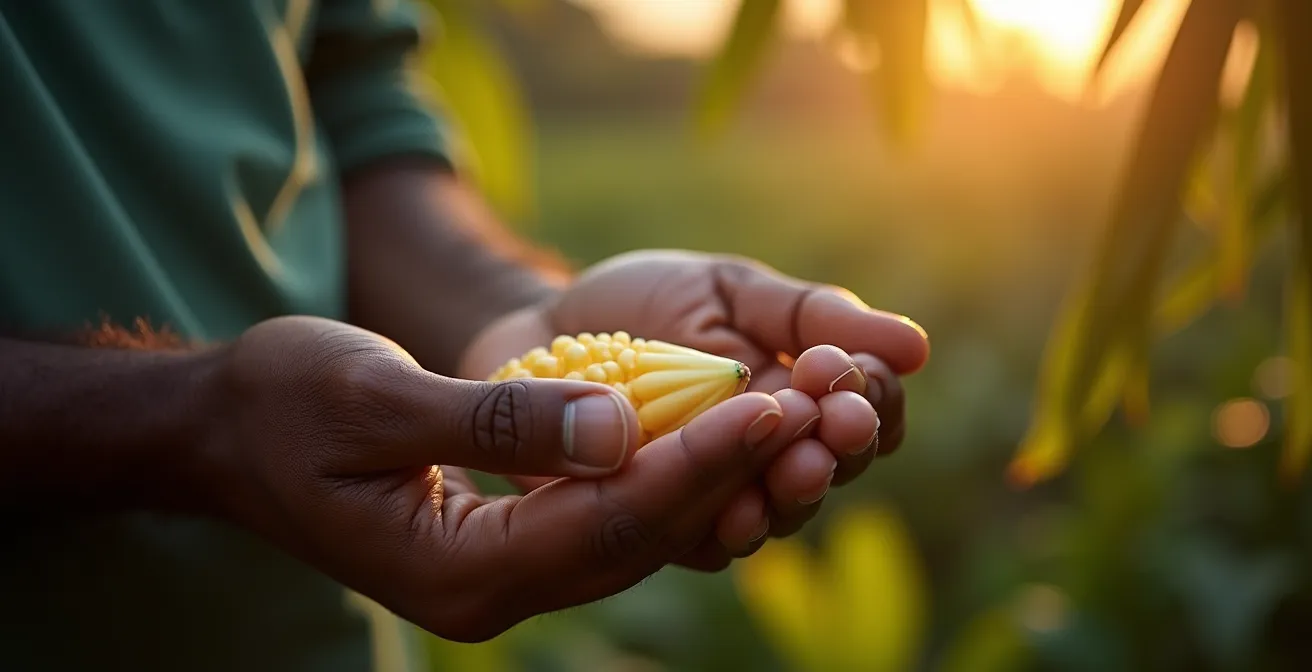
This is not a product that can be scaled. Its value is intrinsically linked to its rarity. The famed Italian chocolatier Cecilia Tessieri of Domori, who is credited with saving Porcelana from extinction, provides a stark example of this scarcity. Her estate produces only enough for approximately 20,000 bars annually for the entire global market. This is not a marketing strategy; it is a physical limitation. When a client purchases a Porcelana bar, they are acquiring a numbered piece of a minuscule annual harvest. They are buying a stake in the preservation of a living artifact.
The price, therefore, reflects several factors: the extreme risk and high labor costs of its cultivation, the minuscule supply that creates intense demand among connoisseurs, and the cost of the conservation efforts required to keep the variety alive. You are not selling a simple confection; you are brokering a piece of agricultural history. The €25 is the entry fee for an exclusive club of those who can appreciate and afford investment-grade rarity.
Grand Cru vs. Bulk Cacao: What’s the Real Difference on the Palate for a Non-Initiate?
For a palate unaccustomed to fine cacao, the difference between a Grand Cru Criollo and a standard bulk Forastero bar is not subtle; it is categorical. The distinction is rooted in chemistry. Bulk cacao is high in compounds like pyrazines and tannins, which the human palate perceives as harsh, one-dimensional “chocolatey” flavor and aggressive bitterness or astringency. It is designed for robustness and yield, not sensory elegance.
Criollo, conversely, is a product of its genetic purity. Its DNA naturally produces fewer of these bitter compounds. This low-pyrazine, low-tannin profile acts as a clean canvas, allowing the far more delicate and volatile flavor compounds—esters, which are responsible for fruity and floral notes—to become clearly perceptible. It is not that bulk cocoa lacks any complexity; it’s that its complexity is completely masked by a wall of bitterness. A chocolate science analysis confirms that Criollo’s low bitterness allows delicate notes to shine through, a quality impossible to find in industrial beans. The experience is one of clarity and nuance versus brute force.
This table breaks down the fundamental sensory differences, making the abstract tangible for any client. This data is based on a comparative analysis of cacao varieties.
| Characteristic | Grand Cru Criollo | Bulk Forastero |
|---|---|---|
| Tannin Level | Low | High |
| Bitterness | Very Low | High |
| Flavor Complexity | Nutty, caramel, vanilla notes | Single-note chocolate |
| Finish Duration | Long, evolving | Short, flat |
| Texture | Ultra-smooth, silky | Coarse, astringent |
Ultimately, the difference is in the narrative of the taste itself. A bulk chocolate makes a single, loud statement. A Grand Cru Criollo engages in a conversation, with an evolving beginning, middle, and an exceptionally long, clean finish.
The Mistake of Planting Only Productive Clones That Threatens Ancient Varieties
The greatest threat to the world of fine cacao is not disease or climate change, but a flawed economic logic. In the pursuit of efficiency and profit, the industrial model has incentivized the widespread planting of high-yield, disease-resistant cacao clones, most notably CCN-51. While productive, these clones produce beans that are monolithically bitter and lack any of the aromatic complexity that defines a Grand Cru. This focus on volume over value creates what is known as the commodity trap, pushing prices down and disincentivizing the cultivation of more difficult, but far more valuable, heritage varieties.
Every time a farmer rips out a grove of low-yielding, ancient Criollo to plant a productive clone, a piece of the world’s genetic heritage is lost forever. This genetic erosion is a quiet catastrophe, permanently shrinking the pool of potential flavors available to the world. It is a short-sighted strategy that prioritizes immediate tons of low-grade beans over the long-term value of a unique, irreplaceable agricultural asset. The market becomes flooded with interchangeable, mediocre cacao, while the truly exceptional becomes even rarer and more endangered.
Fortunately, there are pockets of resistance. In response to the near-extinction of its most prized asset, a counter-movement has emerged. A prime example is found in Venezuela, the cradle of Criollo. The establishment of the Estacion Experimental Chama germplasm bank serves as a vital sanctuary for pure Porcelana. This working plantation is not focused on commercial production, but on the propagation and preservation of the Porcelana strain, supplying seedlings to farmers who understand the long-term wisdom of cultivating a priceless asset rather than a disposable commodity. These efforts are the only bulwark against the tide of industrial homogenization.
Chuncho from Peru or Beni from Bolivia: What Is the Next Fashionable Grand Cru?
For the true connoisseur, the question is always “what’s next?” While Criollo and Porcelana are established royalty, the cutting edge of the fine cacao world is now found in the discovery—or rediscovery—of hyper-local, wild, and previously unknown varieties. These represent the new frontier of terroir and flavor. Two names currently dominate this conversation: Chuncho from Peru and Beni from Bolivia.
The Chuncho variety from Peru is a story of rediscovery. This ancient bean, long thought to be lost, was found again in remote valleys in 2011. In its purest form, Bar & Cocoa research notes that it is now regarded by some as the world’s rarest cacao. Its flavor profile is distinct, often exhibiting notes of florals and dried fruits, with a unique creaminess. Its value comes from its compelling backstory and an aromatic signature that is entirely its own, a new chapter in the library of fine flavor.
The Beni from Bolivia represents a different kind of exclusivity: it is a truly wild cacao. Harvested from cacao “islands” within the Beni region’s diverse ecosystem, these beans grow without any human intervention. This lack of cultivation creates a flavor profile of untamed complexity, shaped purely by its unique environment—a concept nearly impossible to replicate on a farm. Wild cacaos like Beni are gaining immense recognition because they offer a taste of pure, unadulterated terroir. They are not just grown, but foraged, adding a layer of romance and unpredictability that positions them as prime candidates for the next must-have Grand Cru status among elite chocolatiers and collectors.
Why Does the Industrial Model Deprive Farmers of 94% of the Added Value?
The starkest indictment of the industrial commodity chocolate model is not its mediocre flavor, but its fundamentally imbalanced economic structure. The “farm-gate” price for bulk cacao is subject to volatile global markets, and farmers typically receive a tiny fraction of the final retail price of a chocolate bar—often cited as being around 6-7%. This system creates a vicious cycle of poverty, forcing farmers to prioritize quantity over quality and preventing any investment in the sustainable practices required for fine flavor cacao.
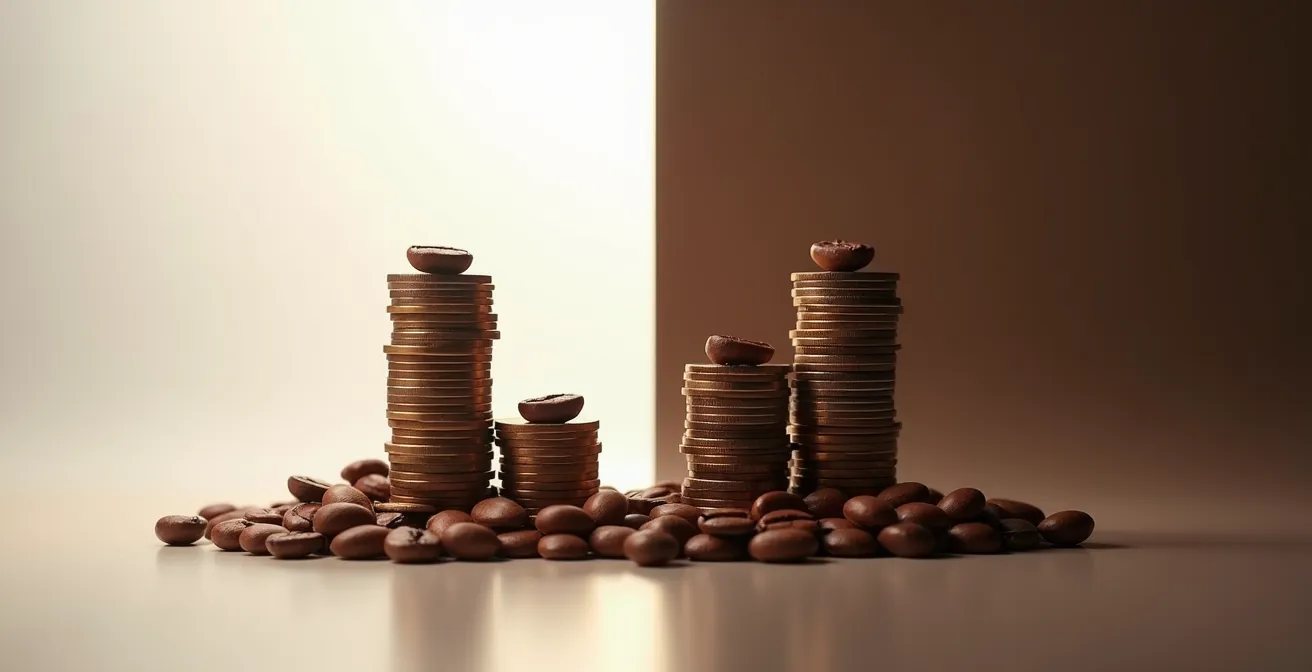
The Grand Cru model operates on a completely different philosophy: direct trade. By eliminating the long chain of intermediaries (local buyers, exporters, processors, distributors), chocolatiers and brokers can work directly with farmers or cooperatives. This direct relationship allows for the payment of a significant premium, rewarding quality and sustainable practices rather than sheer volume. This is not charity; it is a sound business investment in securing a supply of superior raw material. The difference in farmer income is staggering. Data from direct-trade specialists like CriolloQuetzal shows that through their model, farmers can receive up to 50% of the final value of the product.
This “value chain asymmetry” is the core issue. The industrial model extracts value at every step, leaving the producer with the bare minimum. The direct trade model for fine cacao, by contrast, understands that the farmer is the most critical partner in creating an exceptional product. By ensuring their financial stability, the model guarantees the meticulous care and attention to detail—from harvest to fermentation—that is non-negotiable for producing investment-grade cacao. The 94% figure is not just a statistic; it represents a systemic failure that the world of fine chocolate actively works to correct.
Criollo vs. Trinitario: The Tasting Clues to Shine in Society
Distinguishing between fine cacao varieties on the palate is the ultimate sign of a true connoisseur. While both are in the “fine flavor” category, telling a Criollo from a Trinitario is a matter of recognizing specific structural and aromatic cues. It is a skill that elevates appreciation from simple enjoyment to informed analysis. Trinitario, as a robust hybrid, typically presents a brighter acidity and a more direct, clean flavor profile. Its finish is well-defined but often shorter.
Criollo, however, offers a different, more profound experience. Its most defining characteristic, as described by the experts at Gourmet Boutique, is its almost complete lack of bitterness, which gives way to a unique creaminess and a profile that can evoke “bread, butter, and jam.” The texture, due to an ultra-fine particle size achieved during processing of this specific bean, is exceptionally smooth. But the ultimate tell-tale sign is the finish.
The taste profile is said to resemble bread, butter, and jam. Its texture and smoothness are unmatched.
– Gourmet Boutique Experts, Criollo Cacao Bean Analysis
To develop this skill, a structured approach to tasting is required. The following checklist outlines the key points of comparison to focus on during a tasting, allowing you to identify the subtle but crucial differences between these varieties.
Action Plan: Professional Cues for Cacao Variety Identification
- Notice the finish duration: Criollo exhibits a freakishly long, evolving finish, while Trinitario has a cleaner, more defined ending. Time how long you can taste the notes after the chocolate has melted.
- Identify texture differences: Pay attention to the mouthfeel. The ultra-fine particle size achievable with Grand Cru Criollo creates a silkier texture that coats the palate longer than most Trinitarios.
- Recognize flavor progression: Analyze the ‘Three-Act Structure’. Note the Attack (first impression), the Mid-Palate (where complex secondary flavors emerge), and the Finish (the evolving aftertaste). Criollo’s acts are often more distinct and prolonged.
- Note the absence of bitterness: Actively search for astringency or harshness. Criollo’s low tannin content creates its unique creaminess and lack of aggressive bite, a key differentiator.
- Connect specific notes to origins: With experience, associate notes with place. For example, classic Venezuelan Criollo often shows distinct hazelnut and toasted bread crust notes, distinguishing it from other regions.
Key Takeaways
- Genetic Purity is Key: Criollo’s low-tannin, low-pyrazine profile is a scientific, not subjective, reason for its lack of bitterness and superior flavor.
- Scarcity is Both Real and Managed: The value of varieties like Porcelana is protected by extremely low yields (e.g., 20,000 bars/year) and active conservation efforts.
- The Value Chain Matters: The industrial model captures over 90% of value, while direct trade for Grand Cru varieties can return up to 50% to farmers, preserving both quality and livelihoods.
Why Using an “Origin Madagascar” Couverture Radically Changes Your Chocolate Mousse?
The choice of couverture is the most critical decision a pastry chef can make, and substituting a generic couverture with a single-origin Grand Cru like one from Madagascar is not an incremental improvement; it is a fundamental transformation of the final product. The impact is most evident in a preparation like a chocolate mousse, where the chocolate must contend with the muting effects of dairy fat and sugar.
A standard couverture often requires the addition of other flavorings, like vanilla or excess sugar, to make an impact. A Madagascar-origin couverture, however, is a complete flavor system in itself. As noted in analyses of culinary chocolate applications, its profile is so intense and complex on its own that it allows chefs to radically reduce or even eliminate other flavorings. This results in a purer, more direct expression of the chocolate itself. The dessert becomes less sweet and more focused.
The science behind this lies in Madagascar’s unique genetic profile. The beans, primarily Amelonado and Trinitario strains with strong Criollo heritage, naturally produce a signature high acidity and bright, red fruit notes. In a mousse, this acidity is not a flaw; it is a powerful culinary asset. It cuts through the richness of the cream and egg yolks, preventing the dessert from becoming heavy or cloying. It brings a balance and a refreshing quality that is simply unattainable with a low-acid, one-dimensional commodity chocolate. Using a Madagascar origin couverture is not about making a “better” mousse—it is about creating an entirely different, more sophisticated and balanced dessert.
The journey from a simple consumer to a true connoisseur of chocolate is one of education. It requires moving beyond marketing and embracing the tangible realities of genetics, economics, and sensory science. The next step is to begin building your own sensory library. Procure single-origin bars from these elite varieties and train your palate to recognize the signatures of true value.