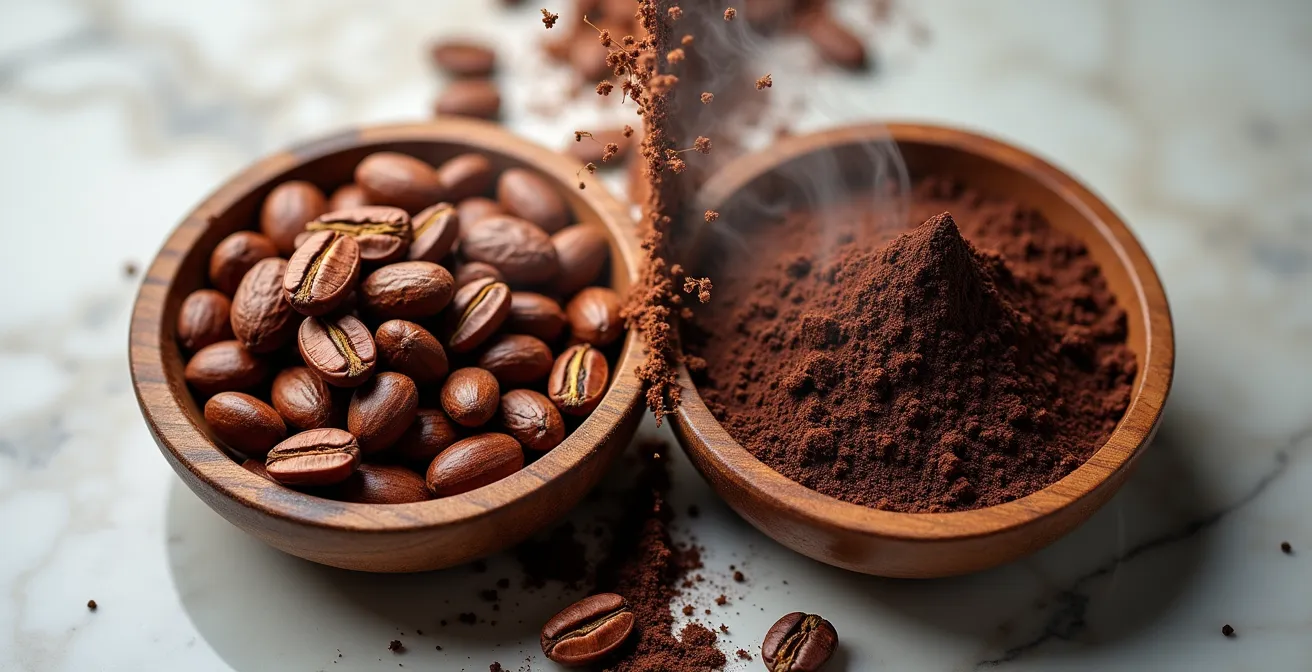
The key to unlocking cocoa’s cardiovascular benefits lies not in the cocoa percentage, but in minimizing flavanol destruction during its journey from bean to bar.
- Alkalization, or “Dutching,” is the single most destructive process, eliminating the majority of beneficial compounds.
- High-heat roasting and consuming cocoa with dairy products significantly reduce flavanol content and absorption.
Recommendation: For maximum health impact, choose minimally processed, natural (non-alkalized) cocoa powder or high-cacao bars and consume them at least an hour apart from dairy or protein-heavy meals.
For health-conscious individuals and bio-hackers, dark chocolate has long been celebrated as a permissible indulgence, a treat that comes with tangible cardiovascular benefits. The common advice is straightforward: opt for a high cocoa content, typically 70% or more. While this is a good starting point, it only scratches the surface of a much more complex biochemical reality. The true potency of cocoa lies in its flavanols, delicate antioxidant compounds responsible for its health-promoting effects. However, these compounds are extremely vulnerable to degradation.
What if the expensive 85% dark chocolate you’re consuming has been processed in a way that obliterates the very nutrients you seek? The percentage on the label becomes a hollow metric if the flavanols have been destroyed by heat or chemical treatments. The conversation must shift from simply “how much” cocoa to “how well-preserved” the cocoa is. This requires a deeper understanding of the entire production chain, from the bean’s origin to the moment it’s consumed.
This guide moves beyond generic advice to provide a scientific framework for maximizing your flavanol intake. We will deconstruct the critical processing steps, exposing how conventional methods can strip cocoa of its power. By understanding the mechanisms of flavanol loss—from alkalization and roasting to the surprising impact of what you eat it with—you can learn to make strategic choices that truly harness cocoa’s potent, vasoprotective properties for measurable health outcomes.
To navigate this complex topic, this article breaks down the essential factors that determine the true flavanol content of your chocolate. The following sections will guide you through the science of cocoa processing, absorption, and optimal selection.
Summary: Decoding Flavanol Preservation in Cocoa
- Why does ‘Dutched’ cocoa contain 60% fewer antioxidants than natural?
- How many squares of 85% to get a measurable vasoprotective effect?
- Cru or torréfié : quel impact réel sur la teneur en magnésium et fer ?
- L’erreur de boire du lait avec son chocolat noir qui bloque l’absorption des nutriments
- Colombie ou Vietnam : quel terroir produit naturellement les fèves les plus riches en polyphénols ?
- Chocolat industriel ou artisanal : lequel préserve le mieux les polyphénols ?
- Poudre brute ou carré noir : quelle forme apporte le plus de flavanols pour le cœur ?
- How to Satisfy Chocolate Cravings with Just One Square a Day?
Why does ‘Dutched’ cocoa contain 60% fewer antioxidants than natural?
The dramatic loss of antioxidants in “Dutched” or alkalized cocoa is due to a specific chemical treatment designed to alter its flavor and color. This process involves washing cocoa beans in an alkaline solution, which neutralizes their natural acidity. While this creates a milder, less bitter taste and a darker color, it has a devastating effect on the bean’s delicate flavanol content. These polyphenols are highly sensitive to changes in pH, and the alkaline environment chemically degrades them.
The impact is not minor. Scientific analysis reveals the extent of the damage. For example, specific research published in the confectionery industry shows a catastrophic loss of key compounds, with epicatechin—one of the most potent flavanols—being reduced by up to 88% at high temperatures. This means that while the product is still technically “cocoa,” its primary functional benefit for cardiovascular health has been largely eliminated.
In stark contrast, specialized producers are focusing on methods that actively preserve these compounds. By carefully selecting non-alkalized cacao and managing every step of the process, it’s possible to create cocoa powders with lab-verified high flavanol levels. These natural, unsweetened powders retain the full spectrum of polyphenols, making them a functionally superior choice for anyone seeking the true health benefits of cocoa. The choice between Dutched and natural cocoa is therefore a choice between a flavor-modified ingredient and a functional superfood.
How many squares of 85% to get a measurable vasoprotective effect?
Determining a precise number of squares is challenging because the flavanol content can vary dramatically even among bars with the same percentage. However, clinical research provides a clear signal regarding the effective daily dosage of cocoa flavanols needed to achieve a vasoprotective effect—that is, the ability to improve blood vessel flexibility and function. This effect is primarily driven by flavanols boosting the body’s production of nitric oxide, a molecule that helps relax blood vessels and improve blood flow.
To achieve these benefits, studies like the landmark COSMOS (COcoa Supplement and Multivitamin Outcomes Study) have investigated the impact of daily flavanol supplementation. The results are significant and point toward concrete health outcomes, moving beyond mere speculation.
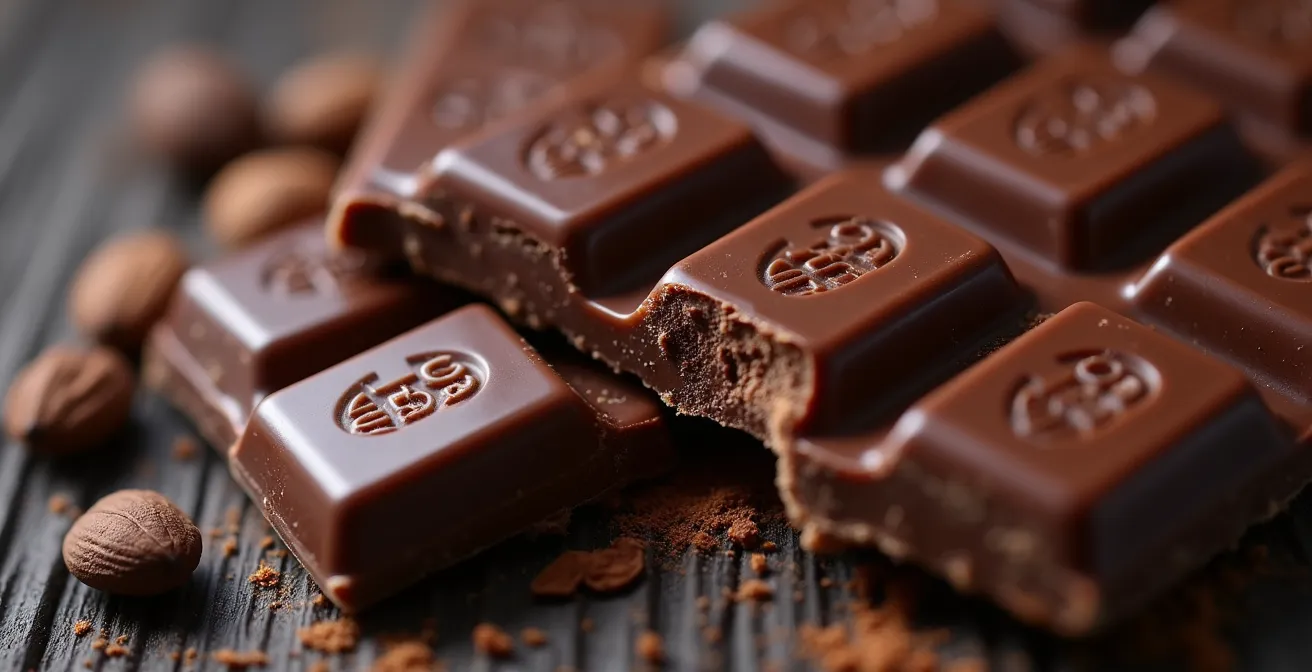
In analyzing the trial’s outcomes, Dr. JoAnn Manson of Brigham and Women’s Hospital noted promising signals for disease prevention. As reported by NPR, the study observed a remarkable 27% reduction in cardiovascular disease deaths among participants taking a daily cocoa extract supplement. While a supplement is more concentrated, this underscores the potent biological activity of flavanols when consumed consistently at a sufficient dose (typically around 500 mg of flavanols per day in studies). A 30g portion of high-quality, minimally processed 85% chocolate can provide this amount, but the key is the quality of the processing, not just the percentage.
Raw or roasted: what is the real impact on magnesium and iron content?
While both roasting and leaving cocoa raw affect its mineral profile, the most significant and well-documented impact of heat is on its fragile flavanol content. Minerals like magnesium and iron are relatively heat-stable, but the beneficial polyphenols that cocoa is prized for begin to degrade rapidly when exposed to high temperatures. This makes the roasting step one of the most critical variables in preserving the functional properties of the final product.
Scientific investigation into processing shows a clear temperature threshold. For instance, processing temperature studies indicate that flavanol loss accelerates significantly when temperatures exceed 70°C (158°F). Conventional industrial roasting often reaches 120-150°C (250-300°F) to develop a classic “chocolatey” flavor, a practice that prioritizes taste over nutritional potency. This is why “raw” cacao, which is typically sun-dried and processed at low temperatures, generally retains a much higher concentration of these vital compounds.
For those looking to maximize benefits, managing heat is paramount, even during preparation at home. Here are some key principles:
- Avoid Boiling Water: When making hot cocoa, let boiled water cool to around 80°C (175°F) before mixing to prevent shocking and degrading the flavanols.
- Low-Heat Roasting: If processing beans at home, keep roasting temperatures below the 70°C threshold.
- Prefer Sun-Drying: Whenever possible, opt for products made from sun-dried beans over those subjected to high-heat mechanical drying.
- Proper Storage: Store cocoa powder or bars in a cool, dry, airtight container away from light to prevent oxidation and degradation over time.
The mistake of drinking milk with your dark chocolate that blocks the absorption of nutrients
One of the most common and counter-intuitive mistakes is consuming dark chocolate with dairy products like milk. While the combination is a classic pairing for taste, it biochemically sabotages the primary health benefit. The proteins in milk, particularly casein, have a strong affinity for polyphenols. When consumed together, casein molecules bind to the cocoa flavanols in the stomach, forming a complex that the body cannot easily absorb. Consequently, these valuable antioxidants pass through the digestive system without ever entering the bloodstream, rendering them biologically inert.
This interaction effectively nullifies the vasoprotective effects you seek. You might be eating the highest-quality, most flavanol-rich chocolate in the world, but if you wash it down with a glass of milk or enjoy it in a milky latte, you are not reaping the cardiovascular rewards. To ensure you are actually absorbing these powerful compounds, it is crucial to separate your chocolate consumption from dairy intake.
Maximizing the bioavailability of flavanols requires a strategic approach to consumption. It’s not just about what you eat, but when and how you eat it. The following steps provide a clear protocol for optimizing absorption and getting the most out of every gram of high-quality cocoa.
Action Plan: Maximize Flavanol Bioavailability
- Consume dark chocolate or cocoa on an empty stomach, or at least 60-90 minutes away from protein-heavy meals, to avoid absorption competition.
- Avoid consuming chocolate with any dairy products (milk, yogurt, cheese) to prevent the casein from binding to and neutralizing the flavanols.
- Pair chocolate with sources of Vitamin C, such as berries or a small glass of orange juice, which can enhance the bioavailability of polyphenols.
- Choose a cocoa powder that is explicitly labeled “natural” or “non-alkalized” to ensure you are starting with the highest possible flavanol content.
- Consider pairing chocolate with foods rich in quercetin, like apples or onions, as studies suggest a synergistic antioxidant effect.
Colombia or Vietnam: which terroir naturally produces the most polyphenol-rich beans?
The question of which country’s terroir produces the most polyphenol-rich beans is complex, as the flavanol content is influenced by a combination of genetics, soil composition, climate, and post-harvest practices. Just as with wine grapes, the concept of “terroir” is critically important in the world of fine cacao. It’s not enough to know the country of origin; the specific varietal of the bean is a primary determinant of its chemical profile.
The three main genetic families of cacao are Criollo, Forastero, and Trinitario. Criollo beans are the rarest and most prized, known for their complex flavor profiles and generally higher polyphenol content, but they are difficult to grow. Forastero beans are hardier and make up the bulk of the world’s chocolate production, but typically have a simpler flavor and lower flavanol levels. Trinitario is a hybrid of the two, balancing flavor complexity with robust growth.
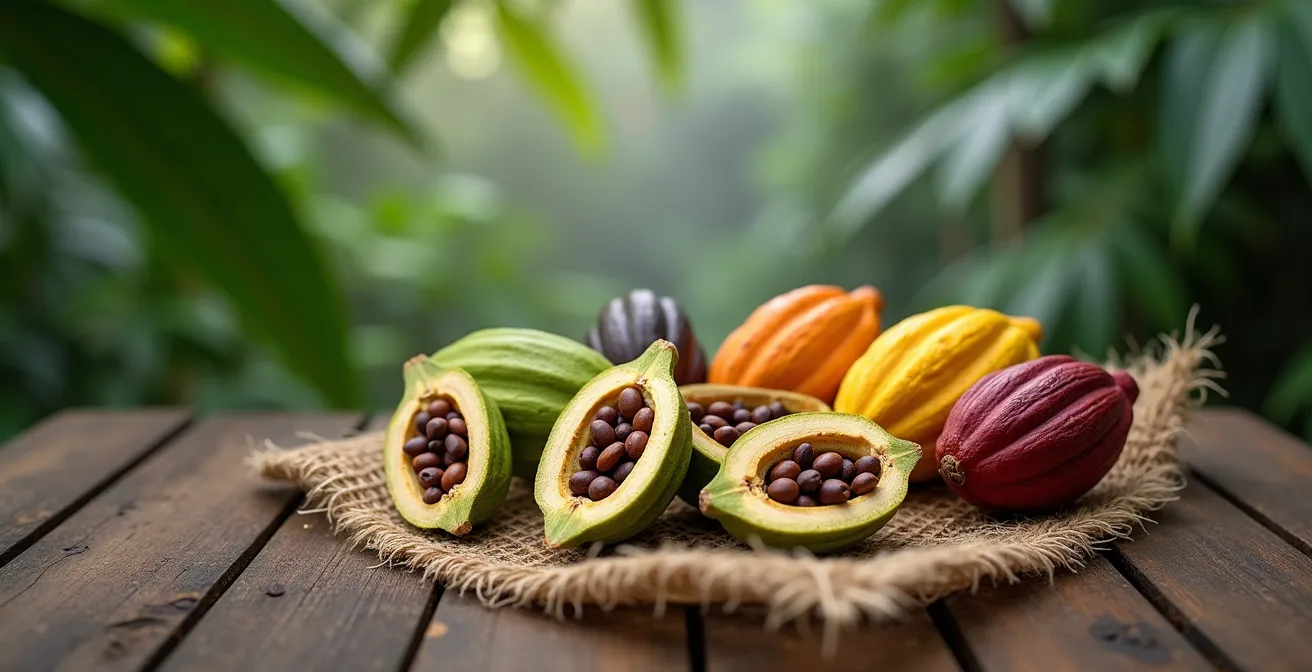
While broad generalizations can be misleading, regions in South America, particularly in Ecuador, Peru, and parts of Colombia, are renowned for their “Nacional” or “Fino de Aroma” cacao, which often includes Criollo and high-quality Trinitario varietals. These beans are sought after by artisanal chocolate makers precisely for their superior flavor and nutritional profiles. Conversely, bulk production in regions like West Africa often focuses on hardy Forastero beans for industrial supply. For a bio-hacker, investigating the origin and varietal of the beans used in a chocolate product is an advanced but worthwhile step in sourcing the most potent raw material.
Industrial or artisanal: which better preserves polyphenols?
Artisanal, or “bean-to-bar,” chocolate makers almost universally preserve more polyphenols than their industrial counterparts. The reason is a fundamental difference in philosophy and process. Industrial chocolate production is optimized for scale, shelf stability, and a consistent, homogenous flavor profile. This often involves high-heat roasting, alkalization, and the blending of beans from various sources, all of which are detrimental to flavanol content.
As the research team at California Cultured explains in their analysis of the COSMOS trial, the delicate nature of these compounds makes them highly susceptible to destruction during conventional processing. They state that “cocoa flavanols are often destroyed by a number of steps in conventional cocoa processing, like fermentation, drying, roasting, and in some cases, alkalization.” Each step presents another opportunity for degradation.
In contrast, artisanal makers often work in small batches, sourcing single-origin beans and carefully controlling each step to preserve the unique character of the cacao. They tend to use lower roasting temperatures and avoid alkalization entirely, prioritizing the bean’s natural flavor and nutritional integrity. The potential for preservation through careful handling is immense. While it refers to a specific product, the fact that proprietary extraction processes achieve up to 24 times more concentrated flavanols than standard cocoa powder highlights the massive loss that occurs in conventional methods. For those seeking maximum health benefits, choosing products from artisanal makers who are transparent about their sourcing and low-temperature processing is a far more reliable strategy.
Powder or dark bar: which form delivers more flavanols for the heart?
When comparing pure cocoa powder to a dark chocolate bar, the powder generally delivers a more concentrated dose of flavanols for the heart, with fewer additional calories from sugar and fat. A chocolate bar, even a high-percentage one, is a composite food. It contains cocoa solids (where the flavanols are), cocoa butter (fat), sugar, and often emulsifiers like soy lecithin. While it can be a significant source of flavanols, these additions dilute the concentration.
Natural, unsweetened cocoa powder, on the other hand, is composed almost entirely of cocoa solids. This makes it a more direct and efficient vehicle for flavanol delivery. The key, as with all cocoa products, is ensuring it is “natural” and not “Dutch-processed.” As a practical dosing strategy, studies suggest that 1-3 tablespoons (5-15 grams) of high-flavanol cacao powder daily is an effective range for obtaining optimal benefits. This form is versatile for use in smoothies or other preparations where you can control all other ingredients.
The following table, based on available data, provides a clear comparison of flavanol content across different product types, helping to illustrate the efficiency of each form. As this comparative analysis shows, while dark chocolate is a good source, dedicated supplements and pure powders offer the most concentrated flavanols.
| Product Type | Flavanol Content | Serving Size | Practical Considerations |
|---|---|---|---|
| Natural cocoa powder | ~45mg/tbsp | 1 tablespoon | Natural unsweetened cocoa powder contains more flavanols than Dutch-processed. |
| Dark chocolate 70-85% | 100-2000mg/100g | 20-30g portion | Contains added sugar and calories; content varies widely. |
| CocoaVia supplement | 500-750mg | 1 serving | Concentrated extract form for targeted dosing. |
Key Takeaways
- Alkalization (“Dutching”) is the primary destroyer of cocoa’s beneficial flavanols and should always be avoided.
- Controlling heat during processing and home preparation is critical; temperatures above 70°C significantly degrade polyphenols.
- Consuming cocoa with dairy products negates its health benefits due to protein binding that blocks flavanol absorption.
How to Satisfy Chocolate Cravings with Just One Square a Day?
Satisfying a chocolate craving with a single, potent square of dark chocolate is not about deprivation; it’s about shifting from mindless consumption to a mindful ritual. When you engage all your senses, you can derive immense satisfaction from a small amount, making the experience more profound and the health benefits more targeted. This practice transforms chocolate from a simple treat into a moment of focused appreciation, enhancing both pleasure and satiety.
The key is to select a very high-quality, high-cacao chocolate (75% or higher) and treat it with the reverence of a fine wine. This approach, often called a “chocolate meditation,” slows down the process and allows your brain to fully register the complex flavors and aromas, leading to a feeling of satisfaction that a larger quantity of lower-quality chocolate could never provide. The following ritual can help you cultivate this healthy relationship:
- Observe: Look at the square’s glossy surface and rich color.
- Listen: Break it and listen for the sharp, clean “snap,” a sign of good tempering and high cocoa butter content.
- Inhale: Hold it near your nose and inhale deeply, identifying the complex aromas—fruity, nutty, earthy, or floral.
- Savor: Place the square on your tongue and let it melt completely without chewing. Notice how the flavors evolve and coat your palate.
This mindful approach is endorsed by health experts. As noted by Johns Hopkins Medicine, experts recommend minimally processed dark chocolate with at least 70 percent cacao content. By focusing on quality over quantity and savoring the experience, a single square becomes more than enough to satisfy a craving while delivering a beneficial dose of flavanols.
To truly leverage these findings, your next step is to critically evaluate the cocoa products in your pantry. Start by identifying and replacing any “Dutched” or alkalized items with a high-quality, natural cocoa powder to begin maximizing your daily flavanol intake.