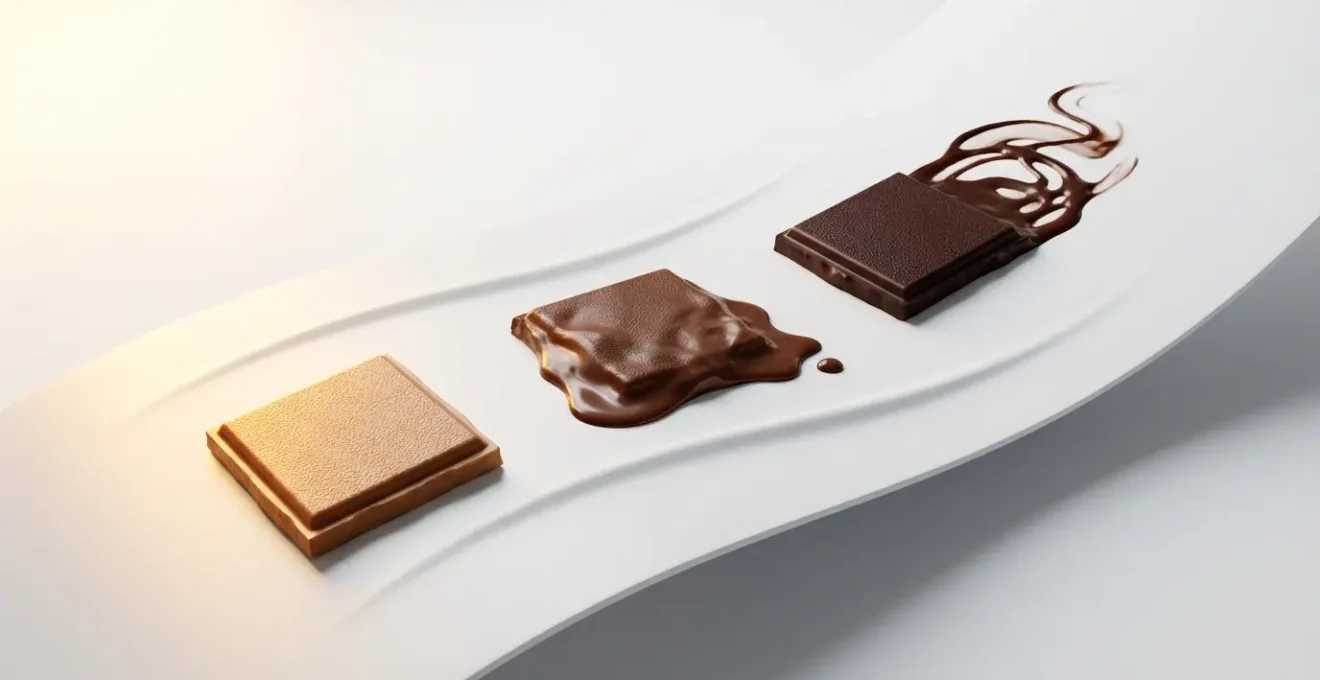
Professional chocolate tasting is an exercise in temporal cartography, mapping how chemical compounds unfold in the mouth over minutes, not just identifying static notes.
- The initial 3 seconds reveal the quality of fermentation through its acidic or sweet signature, a direct result of the bean’s processing.
- A long, evolving finish (5+ minutes) is a key indicator of quality, driven by the slow release of heavy compounds like polyphenols.
Recommendation: To move from casual taster to analyst, adopt a strict tasting cadence with palate cleansers to prevent “flavor carryover” and begin documenting the evolution of flavor over time.
For the true connoisseur, the advice to simply “let a piece of chocolate melt on your tongue” feels incomplete. It captures the ‘what’ but misses the ‘how’ and, most importantly, the ‘when’. Tasting fine chocolate is not a singular event but a dynamic narrative that unfolds over time. It’s an act of sensory analysis, a form of temporal cartography where the taster maps the sequential release of chemical compounds, from the first bright burst of acidity to the long, lingering echo of its finish. This journey reveals everything about the bean’s origin, the farmer’s skill, and the maker’s intent.
Most guides focus on static flavor wheels, but the expert’s palate is a stopwatch. The real story is told in the transition between the attack, the mid-palate, and the finish. It’s about understanding why some notes appear instantly while others emerge minutes later. This process isn’t magic; it’s chemistry. It’s the controlled breakdown of sugars, the volatilization of aromatic esters, and the slow, complex binding of tannins with the proteins in your saliva.
This guide moves beyond the surface-level advice. We will deconstruct the flavor journey second by second, exploring the chemical signals that define each phase. We will learn to identify the markers of quality, spot the tell-tale signs of processing flaws, and distinguish the true signature of terroir from a processing artifact. By the end, you will have the framework to not just taste chocolate, but to read it, map it, and build a sophisticated flavor library in your mind.
To navigate this complex sensory landscape, this article provides a structured map. We will break down the chronology of the tasting experience, from the initial impact to the final memory, equipping you with the techniques used by professional sensory analysts.
Summary: Decoding the Chronology of Chocolate Flavor
- Acidity or sweetness: what do the first 3 seconds tell us about the quality of the cocoa?
- How to identify notes of fruit or spice once the sugar has melted?
- Why should a good chocolate linger in the mouth for more than 5 minutes?
- The error of tasting too quickly, which mixes the attack of the next with the finish of the previous
- Warm water or green apple: which neutralizer resets the counters?
- Why does volcanic soil give smoky notes to a cocoa from Papua New Guinea?
- Why does your chocolate scratch your throat instead of reminding you of citrus?
- How to Build a Chocolate Flavor Library in Your Mind?
Acidity or sweetness: what do the first 3 seconds tell us about the quality of the cocoa?
The first three seconds of a tasting are a crucial diagnostic moment. This initial impression, known as the “attack,” is not just a simple taste but a direct signal of the fermentation quality. A well-controlled fermentation process is the foundation of complex flavor. When managed correctly, it develops the essential flavor precursors in the cocoa bean. In contrast, flawed fermentation immediately reveals itself through sharp, unbalanced, or off-putting sensations.
The primary indicator during the attack is the balance between acidity and sweetness. A pleasant, bright acidity—reminiscent of soft fruits—suggests a healthy lactic and acetic fermentation phase. This is a hallmark of high-quality processing, where the bean’s inherent potential is preserved. Conversely, a sharp, vinegary spike or an aggressive sourness points to over-fermentation, where excessive acetic acid has developed. The science of sensory analysis confirms the importance of this chemical balance; research from a 2024 sensory study demonstrates that a fermentation environment with a pH between 4.75 and 5.19 is optimal for producing a strong, desirable chocolate flavor, while a lower pH reduces the development of these crucial precursors.
A professional technique to isolate these initial notes involves placing a small piece of chocolate on the center of the tongue while pinching your nose. This momentarily blocks your sense of smell, allowing you to focus purely on the fundamental tastes of sweetness, bitterness, and acidity. After a few seconds, releasing your nose and drawing air through the chocolate (a technique called ‘cucking’) volatilizes the initial aromatic compounds, revealing “impact aromas.” In a great chocolate, these are bright and floral; in a poorly processed one, they can be musty or hammy. This immediate feedback is the first entry on your temporal flavor map.
How to identify notes of fruit or spice once the sugar has melted?
Once the initial attack of sweetness or acidity subsides, the journey enters the mid-palate. This is where the true complexity of a fine chocolate begins its chemical unfolding. As the cocoa butter melts at body temperature, it releases a new wave of aromatic compounds. These are the less volatile, fat-soluble molecules that carry the signature notes of the cocoa’s origin and processing—the fruits, spices, nuts, and florals that define its unique personality.
Identifying these nuanced flavors requires an active tasting technique. Simply letting the chocolate melt is passive; to truly unlock the mid-palate, you must encourage the release of these trapped aromas. Professional tasters often gently “chew” the melting chocolate three to four times. This isn’t aggressive chewing but a gentle pressing of the tongue against the palate to break down the structure and increase the surface area exposed to warmth and saliva. This action, combined with a gentle “slurp” of air, accelerates the volatilization of these heavier compounds, carrying them to the olfactory receptors at the back of the throat.
This is the moment where a Madagascar bar might reveal its characteristic notes of red berries, or an Ecuadorian bar might unveil a bouquet of floral jasmine. The Dandelion Chocolate company, in its single-origin tasting classes, has refined this process. They guide participants through a flight of bars from different regions, teaching them to use these techniques to pinpoint the moment the mid-palate notes emerge, distinguishing the bright fruit of their Uganda bar from the deep, nutty profile of their Colombian offering.
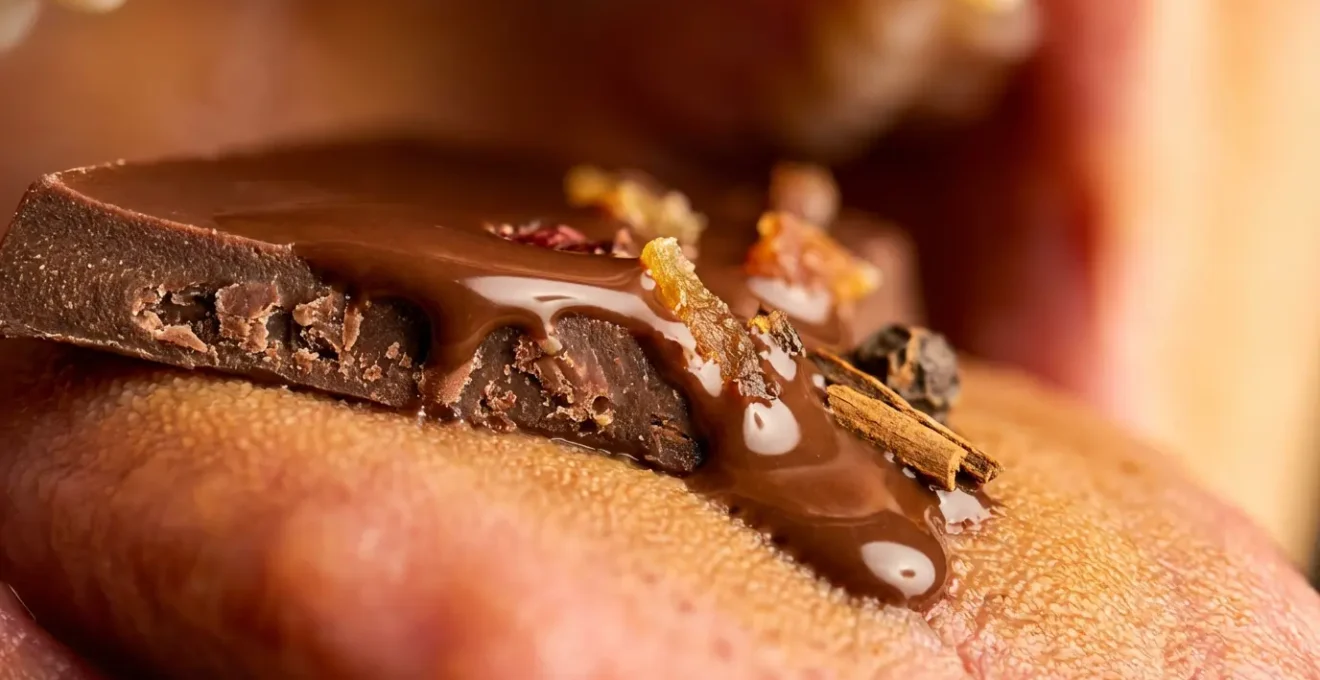
This textural transformation is key. As the solid cocoa butter turns to liquid, it’s literally liberating the flavor story held within. Your role as a taster is to be present for this revealing moment, actively engaging with the chocolate to ensure no note goes undetected. It is the transition from a solid sensation to a complex aromatic experience that defines the richness of the mid-palate.
Why should a good chocolate linger in the mouth for more than 5 minutes?
The final phase of the flavor journey, the “finish,” is arguably the most telling indicator of a chocolate’s quality. While the attack provides a quick snapshot and the mid-palate delivers complexity, the finish reveals the depth and structure of the cocoa. A truly exceptional chocolate doesn’t simply disappear; it leaves a long, evolving, and pleasant echo that can persist for five minutes or more. A short, abrupt finish or, conversely, one that is unpleasantly cloying or waxy, is a sign of inferior beans or poor craftsmanship.
The science behind a long finish lies in the heaviest, least volatile compounds within the cocoa. As the more fleeting aromatic notes dissipate, what remains are the polyphenols, including tannins and alkaloids like theobromine. These larger molecules bind to the proteins in your saliva, creating a sensation of structure and a lingering, gentle bitterness or astringency that can evolve over several minutes. This is not the aggressive bitterness of burnt beans, but a complex, pleasant aftertaste that cleans the palate while leaving a distinct flavor memory.
The finish is dominated by the heaviest, least volatile compounds like polyphenols and alkaloids. Normal amounts of tannins intensify chocolate flavor, especially at the finish.
– Chocolate University Online, Terrific Tannins, Terrible Tannins article
This lingering complexity is a hallmark of well-fermented, high-quality cocoa beans that have been expertly conched (a process of refining that smooths texture and develops flavor). A poor finish, on the other hand, often feels greasy, indicating an excess of low-quality cocoa butter or additives, or it might be harshly astringent, suggesting a flaw in the fermentation process.
The difference between a high-quality, long finish and a poor, short one is a critical distinction for any serious taster. The following table, based on professional tasting criteria, highlights the key characteristics to look for. This information is crucial for accurately mapping the final, and most revealing, part of the flavor journey, as detailed in professional chocolate tasting guidelines.
| Quality Indicator | Good Finish (5+ minutes) | Poor Finish |
|---|---|---|
| Duration | Long, evolving complexity | Short or excessively persistent |
| Sensation | Pleasant echo inviting another taste | Greasy coating, excessive astringency |
| Evolution | Dynamic flavor development | Static, unchanging bitterness |
| Aftertaste | Clean dissipation with flavor memory | Waxy film requiring cleansing |
The error of tasting too quickly, which mixes the attack of the next with the finish of the previous
One of the most common and critical errors made by novice tasters is an impatient cadence. Moving too quickly from one sample to the next inevitably leads to “Palate Overlap” or, more accurately, “Flavor Carryover.” This occurs when the long, complex finish of the first chocolate is still active on the palate when the attack of the second chocolate begins. The result is a muddled, inaccurate sensory reading where it becomes impossible to distinguish the delicate initial notes of the new sample from the lingering polyphenolic echo of the previous one.
This mistake can completely obscure the character of a fine chocolate. Imagine tasting a robust, tannic chocolate with a five-minute finish, and then, only 30 seconds later, trying to evaluate a delicate bar with subtle floral top notes. The lingering astringency and deep cocoa notes from the first sample will completely overwhelm the faint floral aromas of the second. The sensory map becomes corrupted. In their sensory training programs, experts at World Wide Chocolate identified this flavor carryover as the primary error among aspiring tasters, noting that a minimum one-minute palate reset is required between samples for accurate analysis, especially when tasting multiple varieties.
To avoid this, a professional tasting requires a deliberate and structured cadence. It is not a race but a methodical exploration. A disciplined approach involves dedicating several minutes to each sample, allowing its full narrative to unfold from attack to the end of its finish. This “sensory refractory period” is as important as the tasting itself. It allows your palate to reset and ensures that each new chocolate is evaluated on a clean slate. Advanced tasters even practice ‘mental subtraction’—consciously identifying the specific notes that are lingering and mentally separating them from the next sample’s initial impression.
Warm water or green apple: which neutralizer resets the counters?
After fully experiencing a chocolate’s finish, and before moving to the next sample, resetting the palate is a non-negotiable step to prevent the “flavor carryover” discussed previously. A palate cleanser’s job is to neutralize lingering tastes, cut through residual fats from cocoa butter, and return your sensory baseline to zero. While many options exist, professional tasters primarily rely on a few specific tools, each with a distinct mechanism of action.
The most common and neutral choice is lukewarm water. The warmth is critical; cold water can numb the taste buds and cause the residual cocoa butter to solidify, creating a waxy film. Warm water, conversely, helps to gently melt and wash away remaining fats and sugars without introducing any new flavors. Another popular and effective option is a slice of a tart green apple, like a Granny Smith. The apple’s malic acid and crisp texture are exceptionally good at cutting through the richness of cocoa butter, effectively scrubbing the palate clean. Its own flavor is bright, simple, and dissipates quickly. Finally, unsalted, plain crackers or simple bread can also be used to absorb oils and provide a neutral texture to reset the mouthfeel.
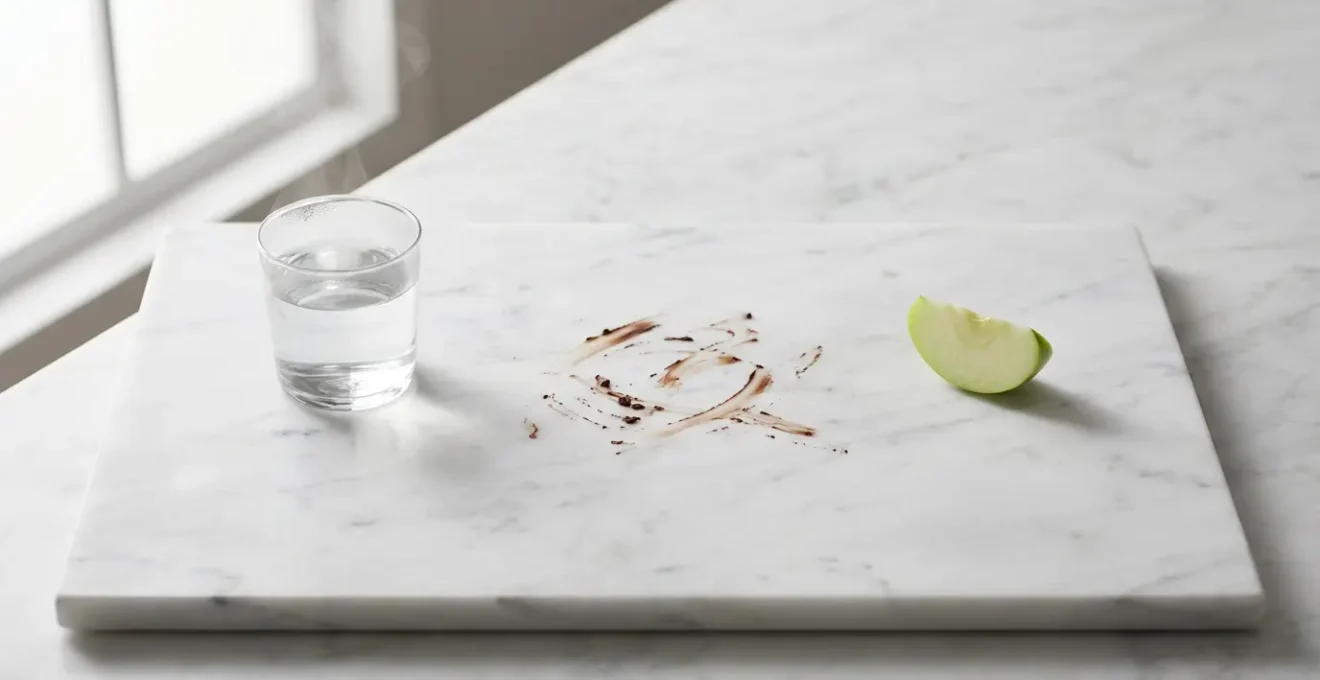
The choice of cleanser can depend on the intensity of the chocolates being tasted. For a flight of delicate milk chocolates, warm water may be sufficient. After a series of high-percentage, intensely fatty dark chocolates, a green apple might be necessary to fully clear the palate. It’s a matter of selecting the right tool for the job to ensure each chocolate is given a fair and independent evaluation.
As outlined in tasting guides from producers like Maui Chocolate, understanding the mechanism of each cleanser allows a taster to make a strategic choice. The goal is always a clean slate for the next sensory map.
| Cleanser Type | Mechanism | Best For | Limitations |
|---|---|---|---|
| Warm Water | Neutral solvent for sugars and acids | General palate reset | Can leave palate feeling diluted |
| Green Apple | Malic acid cuts through cocoa butter fats | Heavy/fatty chocolate | Leaves trace acidity |
| Plain Crackers | Absorbs oils, provides neutral texture | Between strong flavors | May leave starchy residue |
| Room Temp Water | Allows proper chocolate melting | Initial cleanse only | Less effective than warm |
Why does volcanic soil give smoky notes to a cocoa from Papua New Guinea?
A common romantic notion in the world of fine food is that of “terroir”—the idea that the soil and climate impart a unique flavor signature to a product. When tasters detect “smoky” notes in cocoa from Papua New Guinea (PNG), a region known for its volcanic soil, they often attribute this characteristic directly to the land. However, this is a classic case of mistaking a processing artifact for a geological signature. The ability to distinguish between the two is a mark of an advanced palate.
While the volcanic soil in PNG does contribute to the cocoa’s flavor profile, it doesn’t manifest as smoke. The soil is rich in minerals and sulfur compounds, which the cocoa tree absorbs through its roots. These compounds act as flavor precursors that, after fermentation and roasting, can create unique “flinty,” earthy, or mineralic notes. This is the true terroir—a subtle, complex signature that speaks of the land itself. You can find similar mineral signatures in other products from volcanic regions, such as wines from Mount Etna or coffee from Antigua.
The prominent smoky flavor associated with PNG cocoa, however, has a much more direct and less romantic origin. As revealed by expert analysis from sources like the comprehensive flavor atlas C-spot, this smokiness primarily comes from traditional, rustic post-harvest drying methods. Many smallholder farmers in the region lack modern drying equipment and instead dry their cocoa beans over open wood fires. The smoke from these fires permeates the beans, imparting a sharp, acrid flavor that can easily be mistaken for a natural characteristic.
For the sensory analyst, the task is to deconstruct these flavors. The smoke from wood-fire drying is a top-level, often dominant flavor, while the true volcanic minerality is a more subtle, foundational note. Learning to separate the influence of human hands from the voice of the land is a key skill in accurate flavor mapping.
Why does your chocolate scratch your throat instead of reminding you of citrus?
A frequent and unpleasant experience for those exploring dark chocolate is a harsh, scratching sensation at the back of the throat, often accompanied by a taste reminiscent of vinegar. This is a significant flaw and a clear signal on your flavor map that something went wrong during fermentation. This aggressive sensation is the polar opposite of the bright, pleasant citric notes that a well-fermented chocolate can exhibit.
The culprit is an excess of acetic acid. During the initial phase of cocoa fermentation, yeasts convert sugars into alcohol. Subsequently, bacteria convert that alcohol into acetic acid, a crucial step that kills the cocoa bean’s germ and begins developing flavor precursors. However, if this phase is poorly managed—for instance, if the temperature gets too high or the fermentation is prolonged—the bacteria produce an overabundance of acetic acid. This acid is not fully evaporated during the drying process and remains in the finished chocolate, causing that characteristic sharp, vinegary taste and throat-scratching feeling. As scientific analysis from 2021 fermentation dynamics research shows, a fermentation pH dropping below 4.5 leads to this excess acid, whereas an optimal pH creates pleasant citric and fruity notes.
The harsh, throat-scratching ‘vinegar’ sensation is an excess of acetic acid, a hallmark of poor, over-heated, or prolonged fermentation. Astringency is a tactile sensation, not a taste, caused by tannins binding with proteins in saliva.
– Chef’s Resource, Chocolate Tannins Analysis
It’s important to distinguish this acidic flaw from bitterness or astringency. Bitterness is one of the five basic tastes. Astringency, often found in high-cacao chocolate, is a tactile, drying, or puckering sensation caused by tannins. While a balanced level of both can be pleasant, the throat-scratching effect of acetic acid is always a defect. Recognizing this signal allows a taster to identify a flaw in the chocolate-making process long before the bar was ever molded, tracing it back to a specific error during fermentation.
Key Takeaways
- Tasting is temporal: The evolution of flavor over time, from the 3-second attack to the 5-minute finish, is the most important data for a sensory analyst.
- The finish reveals quality: A long, complex, and evolving finish is a direct indicator of high-quality beans and expert craftsmanship, driven by stable compounds like polyphenols.
- Distinguish terroir from technique: An expert palate can separate the geological signature of the soil (minerality) from processing artifacts (smoke from drying, acid from fermentation).
How to Build a Chocolate Flavor Library in Your Mind?
Becoming a skilled chocolate analyst is not about having an innately “good palate”; it’s about systematic training and building a structured sensory memory system. Like a linguist learning a new language, a taster must learn, categorize, and memorize a vocabulary of flavors, aromas, and textures. The goal is to move from simply saying “this is fruity” to being able to identify it as “raspberry, not cherry” and linking that specific note to a region, a maker, or a particular processing style. This is your mental flavor library.
Building this library requires moving beyond casual tasting and adopting a methodical, almost scientific, approach. It involves active comparison and structured documentation. For example, creating a reference board with actual ingredients—a raspberry, a toasted hazelnut, a piece of cinnamon bark—and tasting them alongside a chocolate can create powerful, direct sensory associations. Another powerful tool is creating a 2D flavor map, plotting each chocolate on axes like “Fruity-to-Earthy” and “Sweet-to-Bitter” to visualize its position relative to others.
The Ecole Chocolat’s “Mastering Chocolate Flavor” program formalizes this process. Over several weeks, students are guided to build an “interconnected map” by systematically tasting and documenting chocolates from diverse origins. They learn to link specific flavor profiles to genetics, terroir, and processing choices, turning isolated tasting experiences into a cohesive and retrievable web of knowledge. This transforms tasting from a hobby into a professional analytical skill.
Action Plan: Building Your Chocolate Sensory Memory System
- Create a reference ingredient board: Place actual samples (raspberry, hazelnut, cinnamon, honey) next to the chocolate you are tasting for a direct, side-by-side sensory comparison.
- Build a 2D flavor map: Draw X (Fruity-to-Earthy) and Y (Sweet-to-Bitter) axes on paper and physically plot where each chocolate falls to create a visual library.
- Use structured journaling: Go beyond simple notes. Score each chocolate’s Attack, Mid-Palate, and Finish for both Length and Complexity on a 1-10 scale.
- Draw timeline graphs: For each tasting, sketch a simple graph showing how flavor intensity and specific notes (e.g., fruit, nut, spice) evolve from the 0-second mark to the end of the finish.
- Practice the ‘Taste with Color’ technique: Actively associate flavors with specific colors (e.g., red berry notes with a deep red, earthy notes with a dark brown) to enhance memory retention through synesthesia.
Now that you possess the cartographer’s tools, the true journey begins. Start applying these structured techniques to every piece of fine chocolate you taste. Document the journey, map the evolution, and build the connections between flavor, origin, and process.