Contrary to popular belief, mastering your chocolate cravings isn’t about willpower—it’s about upgrading your sensory experience to make one square more satisfying than a whole bar.
- Cognitive distraction, like scrolling on your phone, scientifically dulls your perception of taste, leading you to eat more without feeling satisfied.
- High-quality artisanal chocolate contains more complex flavor compounds and less sugar, triggering satiety signals in your brain more effectively than industrial chocolate.
Recommendation: The next time you crave chocolate, turn off all screens, take a single piece of the best quality chocolate you can find, and focus entirely on the process of savoring it.
It’s a familiar story: you’re trying to be healthy, but an intense, undeniable craving for chocolate strikes. The internal battle begins. You tell yourself “just one piece,” but before you know it, half the bar is gone, replaced by a mix of fleeting pleasure and lingering guilt. We’re often told to fight these urges, to distract ourselves, or to simply avoid keeping chocolate in the house. But what if this approach is fundamentally flawed? What if the secret isn’t to fight the craving, but to lean into it with intelligence and awareness?
As a behavioral eating psychologist, I can tell you that the power to feel deeply satisfied with a single square of chocolate lies within you. It’s not a matter of deprivation but of elevation. It’s about transforming a mindless habit into a mindful ritual. This isn’t about restriction; it’s about unlocking a richer, more profound level of enjoyment that a whole bar, eaten distractedly, could never provide. The key is to understand the neurosensory mechanics of satisfaction and use them to your advantage.
This guide will walk you through the precise strategies to retrain your brain and palate. We will explore why your environment sabotages your satisfaction, how to decode what your body is truly asking for, and the specific techniques that make a single square of chocolate a peak sensory experience. By the end, you’ll see your chocolate craving not as an enemy to be vanquished, but as an opportunity for a moment of pure, guilt-free pleasure.
Summary: The Art and Science of One-Square Satisfaction
- Why does turning off screens change the perception of chocolate satiety?
- Emotional craving or energy need: how to decode your desire for cocoa?
- Why does a €6 artisanal chocolate satisfy you more than a €2 industrial bar?
- The mistake of eating chocolate on an empty stomach that triggers a new craving 1 hour after
- End of a meal or snack: what is the strategic moment for the “sugar-stop” square?
- How to exhale through your nose while eating to unlock hidden aromas?
- The dosage mistake that makes your drink undrinkable after 3 sips
- How to Build a Chocolate Flavor Library in Your Mind?
Why does turning off screens change the perception of chocolate satiety?
The single greatest obstacle to feeling satisfied is distraction. When you eat your square of chocolate while scrolling through your phone, watching TV, or working at your desk, you are robbing yourself of the experience. Your brain, busy processing other information, simply cannot dedicate enough resources to fully register the complex sensations of taste, texture, and aroma. It’s like listening to a beautiful symphony with earmuffs on; you might catch a faint melody, but you miss the richness and depth.
This isn’t just a psychological theory; it’s a measurable physiological phenomenon. Research has consistently shown that cognitive distraction numbs our senses. One recent study confirmed that high distraction levels reduced the perception of both taste intensity and pleasure. In essence, your brain is so preoccupied that it turns down the volume on your taste buds. As a result, you don’t get the “satisfaction signal” you’re looking for, which often leads to reaching for another piece, and then another, in a futile attempt to find the pleasure your brain isn’t available to process.
By simply turning off your screens and dedicating two minutes of undivided attention to your chocolate, you allow your brain to fully engage. You are creating the space necessary for the sensory signals to be received loud and clear. This focused attention is the foundational step in amplifying the pleasure and satisfaction derived from that single, perfect square. It’s the most powerful, yet simplest, change you can make to transform your relationship with chocolate.
Emotional craving or energy need: how to decode your desire for cocoa?
Not all chocolate cravings are created equal. Learning to differentiate between an emotional urge and a physical need is a crucial skill in managing your desires without guilt. An emotional craving often feels like a sudden, overwhelming demand for a very specific type of comfort—usually a sweet, processed chocolate. It erupts when you feel stressed, sad, or bored, acting as a learned coping mechanism. A physical need for energy, on the other hand, is a slower, more gradual signal that could be satisfied by a variety of foods, not just chocolate.
It’s important to approach this with curiosity, not judgment. Your body isn’t “bad” for having these cravings; it’s simply sending you signals based on past experiences and current states. The key is to become a gentle detective of your own internal world. Before you reach for chocolate, take a breath and ask: “What am I truly feeling right now?” Is it a pang of hunger in your stomach, or a pang of loneliness in your heart? Recognizing this distinction empowers you to address the root cause, rather than just the symptom.
The following table can help you identify the nature of your craving. By understanding the source, you can choose a response that truly nourishes you, whether that’s a mindful square of chocolate, a balanced snack, or a non-food activity like a short walk or a conversation with a friend.
| Emotional Cravings | Physical Energy Need |
|---|---|
| You reach for chocolate when you feel stressed or overwhelmed, rather than when you’re actually hungry. | Slower, growing hunger that would be satisfied by various foods. |
| Sudden and intense for a specific type of chocolate. | Gradual onset with flexibility in food choices. |
| You experience guilt or shame after eating, yet repeat the same pattern. Your mood fluctuates with chocolate availability. | No guilt after eating; your mood is stable regardless of chocolate access. |
Why does a €6 artisanal chocolate satisfy you more than a €2 industrial bar?
It might seem counterintuitive, especially when watching your budget, but investing in a more expensive, high-quality artisanal chocolate is one of the most effective strategies for feeling satisfied with less. The difference between a €2 industrial bar and a €6 craft chocolate isn’t just price; it’s a fundamental difference in formulation, ingredients, and, most importantly, sensory complexity.
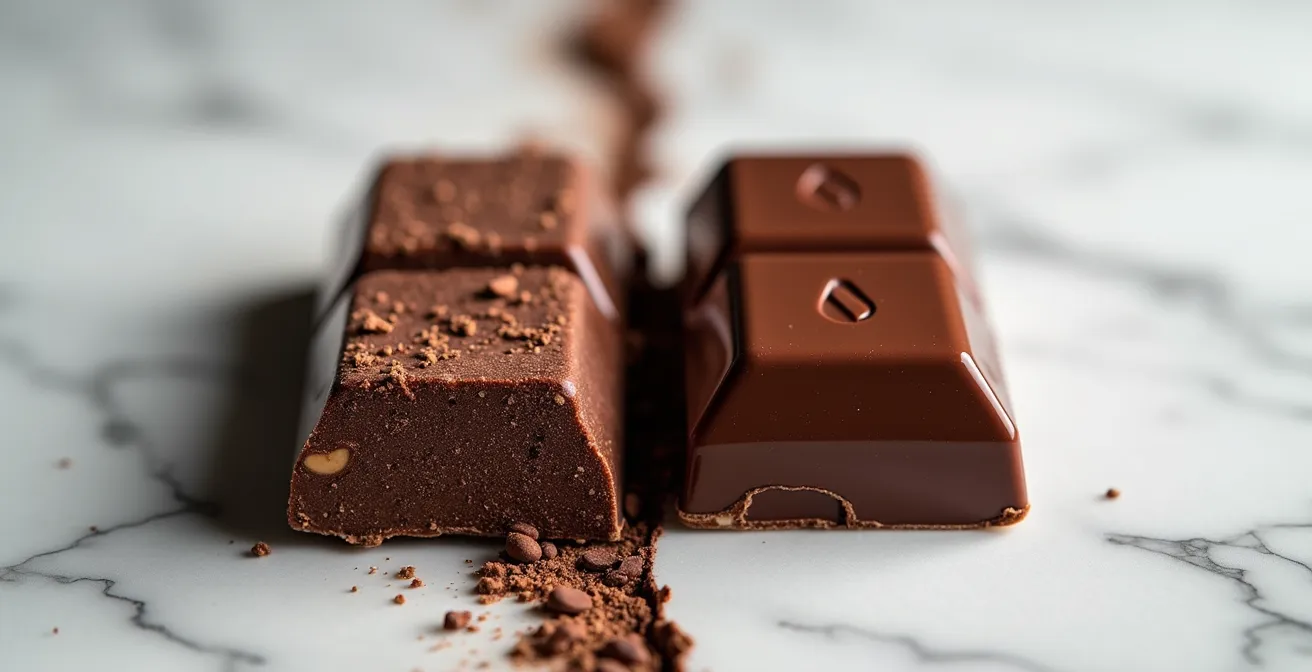
Industrial chocolate is often designed for “moreishness.” It’s typically high in sugar and vegetable fats and lower in actual cocoa solids, with a simple, overwhelmingly sweet flavor profile that encourages you to keep eating. Artisanal chocolate, by contrast, is crafted for complexity. It uses high-quality cocoa beans with unique flavor notes (fruity, nutty, earthy, floral), a higher percentage of cocoa solids, and minimal sugar. This complexity engages your brain on a much deeper level. Instead of a single, loud note of sweetness, you get a symphony of flavors that unfolds as the chocolate melts.
This isn’t just a matter of taste; it’s chemistry. Quality dark chocolate is packed with beneficial compounds. For instance, Brazilian scientists found that high-quality dark chocolate can have four times more flavonoids than red wine. These compounds contribute to the bitterness and astringency that act as a natural “stop” signal for your palate. You’re not just buying chocolate; you’re buying a more intense and satisfying experience that naturally encourages moderation. The richness and complexity signal to your brain, “We have received the pleasure, the mission is complete,” in a way a simple, sugary bar never can.
The mistake of eating chocolate on an empty stomach that triggers a new craving 1 hour later
Have you ever eaten a piece of chocolate to quell hunger, only to find yourself ravenous and craving more sugar an hour later? This is a common and frustrating cycle, and it’s rooted in how your body processes sugar. When you’re hungry, your body signals a need for quick energy, and the refined sugars in most processed chocolate seem like the perfect solution. The problem is that this “solution” is a biological trap.
Most commercial chocolate has a high glycemic index, meaning it causes a rapid spike in your blood sugar. You get a quick burst of energy and a temporary feeling of satisfaction. However, this spike is followed by an equally rapid crash as your body releases insulin to manage the sugar overload. This crash leaves you with low blood sugar, feeling tired, irritable, and—you guessed it—craving another quick-energy hit. This is the vicious cycle of the sugar spike and crash, and it’s the reason why eating chocolate on an empty stomach often backfires.
The solution is to be strategic. Never use chocolate as a meal replacement or a first line of defense against true hunger. Instead, pair it with foods that blunt the blood sugar response. By combining your square of chocolate with protein, fiber, or healthy fats, you slow down the absorption of sugar, preventing the dramatic spike and subsequent crash. This makes the experience more satisfying and sustainable. Consider these smart pairings:
- A handful of almonds or plain cashews: The protein and healthy fats provide sustained energy and promote a feeling of fullness.
- A small portion of full-fat Greek yogurt: The protein and fat buffer the sugar, and it provides a creamy, satisfying texture contrast.
- A slice of hard cheese: The rich, savory fat and protein content is excellent for taking the edge off cravings and stabilizing blood sugar.
End of a meal or snack: what is the strategic moment for the “sugar-stop” square?
Timing is a powerful, yet often overlooked, tool in mastering your chocolate cravings. The moment you choose to eat your square can dramatically alter its effect on your body and mind. While a mid-afternoon chocolate break might seem appealing, the most strategic time to enjoy it is at the end of a balanced meal. When you eat chocolate after a meal that includes protein, fiber, and fats, you’ve already laid the foundation for satiety and stable blood sugar. The chocolate then acts not as a source of fuel, but as a psychological “full stop”—a delicious punctuation mark that signals the end of eating.
Consuming your square in this way transforms it into a dessert ritual, a moment of pure pleasure that concludes the meal on a high note. This practice can be incredibly powerful for your mental well-being. In fact, one study found that subjects who consumed 1.5 ounces of dark chocolate daily reported feeling calmer and more content. By integrating it strategically, you are using the chocolate to enhance your sense of well-being rather than to chase a fleeting energy rush.
This effect is amplified when the act of eating is done mindfully, without distraction. The focused attention on the post-meal treat solidifies the feeling of satiety in your brain, making you less likely to think about food again for a long time. As researchers from the British Journal of Nutrition point out, the link between attention and long-term satisfaction is clear:
Non-distracted participants reported a reduction in their desire to eat the eaten food relative to the uneaten food (food-specific satiety), whereas distracted participants maintained a desire to eat all foods. Moreover, this difference between distracted and non-distracted participants was evident 5 and 10 min after the eating episode had terminated.
– British Journal of Nutrition, Effects of distraction on the development of satiety
How to exhale through your nose while eating to unlock hidden aromas?
To elevate a single square of chocolate from a simple treat to a profound sensory experience, you need to engage your sense of smell in a more sophisticated way. Most people think of smelling as what you do when you inhale. However, the majority of what we perceive as “flavor” comes from retronasal olfaction—the process of smelling aromas that travel from the back of your mouth up into your nasal cavity as you chew and exhale.

This is the secret technique of professional tasters, and it’s surprisingly simple to learn. After taking a small bite and letting the chocolate melt on your tongue for a moment, close your mouth and gently exhale through your nose. This action pushes the volatile aromatic compounds released by the warming chocolate directly over your olfactory receptors. Suddenly, you’re not just tasting “chocolate”; you’re detecting hidden notes of cherry, coffee, tobacco, or vanilla that were previously inaccessible. You are, in effect, smelling from the inside out.
This practice is a core component of what is sometimes called “chocolate meditation.” It’s a form of mindfulness where the chocolate becomes the focal point for all your senses. You slow down, you pay attention, and you use simple techniques like retronasal breathing to unlock the full spectrum of flavor. By doing this, you are extracting the maximum amount of pleasure and complexity from the minimum amount of chocolate, achieving a deep sense of sensory satisfaction that a mindless mouthful could never deliver.
The dosage mistake that makes your drink undrinkable after 3 sips
The principles of mindful satisfaction don’t just apply to solid chocolate; they are equally important for hot chocolate, which can often be a hidden source of excessive sugar and calories. The common mistake is one of dosage: using too much sweet, low-quality powder or syrup in an attempt to achieve a rich flavor, resulting in a cloyingly sweet drink that becomes overwhelming after a few sips and leaves you in a sugar crash.
The key, once again, is to prioritize quality over quantity. A truly satisfying hot chocolate relies on the intensity of high-quality cocoa, not the volume of sugar. Using a smaller amount of a rich, dark, organic chocolate drink mix or even melting a square of 70%+ dark chocolate into hot milk will yield a far more complex and enjoyable beverage. The goal is a drink that feels like a warm, comforting hug, not a sugary assault on your system.
Furthermore, preparation matters. Many people make their hot chocolate too hot, which scorches the delicate flavor compounds and numbs your taste buds. The perfect temperature allows the flavors to bloom without being aggressive. Below is a comparison of different hot chocolate preparations to guide your choice, followed by an action plan for crafting the perfect cup.
| Method | Calories | Satisfaction Level |
|---|---|---|
| Double Chocolate Drink, Clipper Organic – rich dark chocolate drink, sweetened with sugar. | 98 | High – Worth the calories |
| Standard hot chocolate with water | 80-120 | Medium |
| Hot cocoa with hot non-fat milk. Milk’s protein will keep you feeling full and satisfied longer. | 120-150 | High – Protein keeps you satisfied |
Your Action Plan for the Perfect Mindful Hot Chocolate
- Heat your milk or water to an optimal 60-65°C (140-150°F). This is hot enough to melt the chocolate but not so hot that it scalds the flavor.
- Choose your chocolate wisely. Use a smaller quantity of a high-quality dark chocolate (70%+) or a premium, low-sugar cocoa powder.
- Practice patience. Add the chocolate to the warm liquid and allow it to melt slowly, stirring continuously to create a smooth, velvety emulsion. Never let it boil.
- Engage your senses. Pour into your favorite mug, notice the rich aroma, and take your first sip with the same mindful attention you’d give a solid square.
- Serve and savor immediately. Enjoy the drink at a comfortable drinking temperature to fully appreciate its complex flavors.
Key Takeaways
- Attention Amplifies Pleasure: Your focused, undistracted attention is the most crucial ingredient for satisfaction. Turn off screens to turn on your senses.
- Quality Over Quantity: Artisanal chocolate with high cocoa content is chemically and sensorially more complex, providing natural “stop” signals your brain can’t ignore.
- Strategic Timing Prevents Cravings: Enjoying your chocolate square after a balanced meal stabilizes blood sugar and provides psychological closure, preventing the spike-and-crash cycle.
How to Build a Chocolate Flavor Library in Your Mind?
The ultimate goal of this journey is to move from being a passive consumer of chocolate to an active, appreciative taster. The most powerful way to do this is to consciously build a “flavor library” in your mind. This means actively identifying, naming, and remembering the different flavor notes you perceive. This practice not only enhances the pleasure of each tasting but also deepens your appreciation and makes you far more sensitive to quality.
This process transforms chocolate from a monolithic “sweet treat” into a world of incredible diversity. You begin to notice the difference between a Madagascan chocolate with its bright, red fruit notes and an Ecuadorian one with its earthy, floral profile. Building this library is an empowering act of self-awareness that requires nothing more than curiosity and a little structure. By keeping a simple journal, you create a personal map of your sensory explorations.
It’s also worth noting, with a spirit of self-compassion, that some cravings might have a deeper biological root. For example, chocolate is high in magnesium, and some research suggests a link between intense chocolate cravings and magnesium deficiency. A recent study suggests that up to 75% of people are not meeting their recommended intake. This doesn’t mean every craving is a deficiency, but it’s a gentle reminder to be kind to yourself. Sometimes, your body is simply asking for nutrients in the only language it knows. The following steps will guide you in starting your own tasting journal.
- Invest in the Experience: Spoil yourself. Go to a specialty store and buy one or two bars of high-quality, single-origin chocolate that pique your curiosity. This is an investment in your sensory education.
- Create a Ritual: Before you taste, create a calm space. Sit at a table, close your eyes, and take five deep, slow breaths. Settle your mind and prepare to receive the experience.
- Taste Mindfully, One Bite at a Time: Take a small bite and let it melt slowly. Use the retronasal breathing technique. Pay attention to the thoughts, feelings, and of course, the flavors that arise.
- Document Your Discoveries: In a notebook, note the brand, origin, and cocoa percentage. Then, challenge yourself to identify and write down 3-5 distinct flavor notes you perceive. Is it nutty, fruity, spicy, earthy? Be as specific as you can.
- Compare and Contrast: The best way to build your library is through comparison. Taste two different chocolates side-by-side to more easily detect the unique characteristics of each one.
Your journey begins not with restriction, but with a single, deliberate choice. Treat yourself to one exceptional bar of chocolate this week, follow these steps, and discover the immense satisfaction that has been waiting for you in just one perfect square.