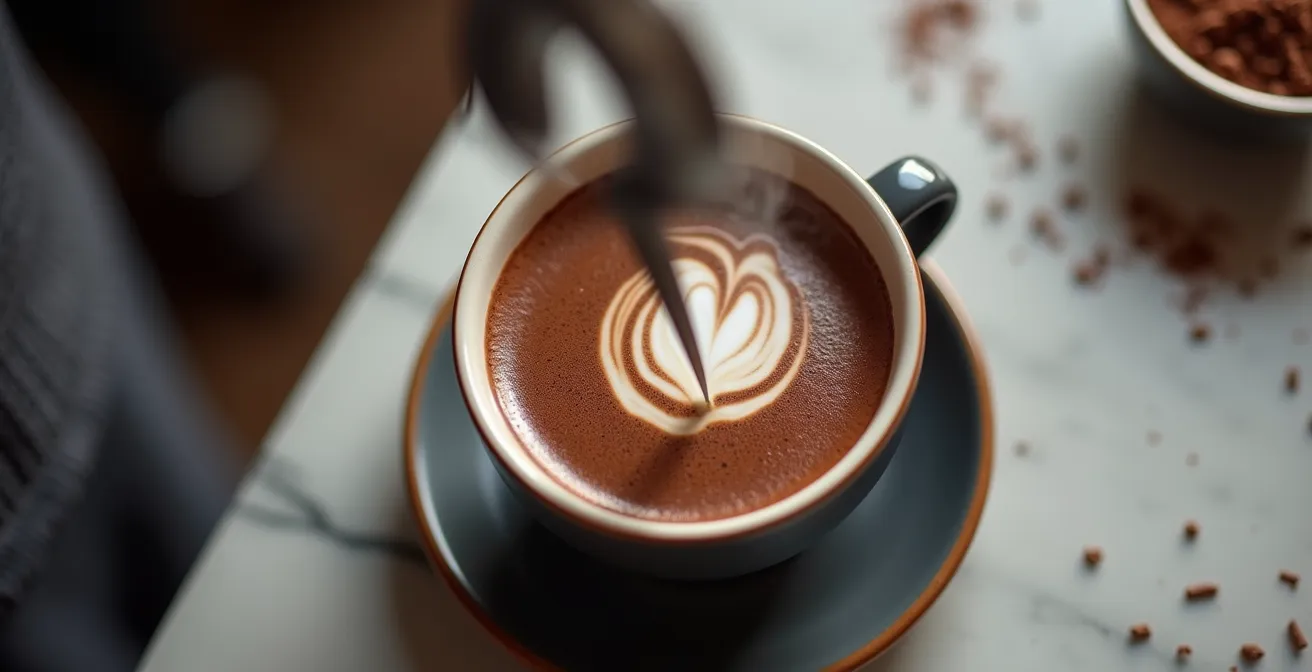
The secret to luxuriously thick hot chocolate isn’t adding more powder or a starch-based thickener; it’s mastering the science of fat and protein.
- Superior texture comes from creating a stable “microfoam” with a steam wand, which controls how milk proteins unfold and trap air.
- Fat, from both high-quality cocoa butter and whole milk, is the essential vehicle for a velvety mouthfeel and rich flavor delivery.
Recommendation: Focus on emulsifying high-fat ingredients at precise temperatures (50-65°C) for a decadent result that no starch can ever replicate.
Every winter, the quest begins for the perfect hot chocolate: a drink that’s not just sweet and warm, but deeply comforting, with a rich, velvety texture that coats your tongue. Too often, the result is a thin, watery disappointment. The common advice is to reach for a thickener like cornstarch, but that’s a shortcut that dulls flavor and creates a slightly gummy, artificial mouthfeel. It’s a crutch, not a solution. As baristas, we know the path to a truly luxurious hot chocolate doesn’t lie in the pantry, but in understanding the chemistry of the ingredients themselves.
Forget everything you think you know about simply stirring powder into milk. We are about to elevate this humble drink into a sophisticated experience. The real magic lies in mastering the interplay of fats and proteins. It’s about emulsification, temperature control, and understanding how different elements interact on a molecular level. This is where we move beyond a simple recipe and into the craft of beverage science. The goal is a texture so smooth and decadent it feels like melted velvet, achieved through technique, not additives.
So, what if the key wasn’t about *adding* an ingredient, but about *unlocking* the potential of the ingredients you already have? This guide will walk you through the barista’s approach. We’ll explore why a steam wand is superior to a saucepan, how different milks and fats create dramatically different results, and when to introduce flavors for maximum impact without bitterness. Prepare to transform your hot chocolate from a simple treat into a masterpiece of liquid luxury.
This article delves into the science and techniques used by professionals to achieve the ultimate hot chocolate. Explore the detailed sections below to master every aspect of this comforting classic.
Summary: The Barista’s Guide to a Perfect Starch-Free Hot Chocolate
- Why does steam give a silkier texture than a saucepan?
- Oat milk or whole milk: which one carries cocoa flavors best?
- Cinnamon and chili: when to add for subtle diffusion without bitterness?
- The cooling error that creates an unpleasant film on the cup
- Morning or evening: why lighten the cocoa butter dose after 4 PM?
- Whole milk or plant-based cream: which medium maximizes the creaminess of the fat?
- Floral or woody notes: which vanilla to choose for a full-bodied dark chocolate?
- Why High-Fat Cocoa Is the Ultimate Winter Comfort Drink for Energy?
Why does steam give a silkier texture than a saucepan?
The difference between a good and a great hot chocolate often comes down to one word: microfoam. When you heat milk in a saucepan, you’re simply raising its temperature. The result is often scalded, with large, unstable bubbles. A steam wand, on the other hand, does two things simultaneously: it heats and aerates the milk with surgical precision. This process is known as “stretching” and “texturing.”
The high-pressure steam injects microscopic air bubbles into the milk while simultaneously unfolding the milk’s proteins (caseins and whey). These denatured proteins then wrap around the tiny air bubbles, creating a stable, uniform, and incredibly fine foam. This is microfoam—a dense, liquid-paint-like texture that is impossible to achieve with a simple whisk. It’s this structure that gives the hot chocolate its signature silky, velvety mouthfeel, making it feel thicker and more luxurious without any added starches.
The key is temperature control. Scientific studies on milk proteins show that the most stable foam is created when milk is heated within the 50-60°C (122-140°F) range. According to research on milk behavior under heat, the partial denaturation of whey proteins above 60°C actually weakens the foam’s structure. A steam wand allows a barista to hit this sweet spot perfectly, creating a stable emulsion that holds its texture, whereas a saucepan can easily overheat the milk, leading to a collapse of the foam and a thinner final product.
Oat milk or whole milk: which one carries cocoa flavors best?
The choice of milk is not just about dietary preference; it’s a critical decision that affects both flavor and texture. The debate often centers on whole milk versus popular plant-based alternatives like oat milk, and the science behind their performance is fascinating. The answer lies in their fundamental structures: one is based on fat globules, the other on fiber.
Whole milk is the classic choice for a reason. Its richness comes from butterfat, which acts as a solvent for the flavor compounds in cocoa. These fat globules coat the tongue, providing a lingering, luxurious mouthfeel and a fuller, more rounded perception of the chocolate’s taste. As the Barista & Co Research Team notes, proteins are also essential for texture:
Proteins are crucial for foam formation and stability. As milk heats up, proteins unfold and trap air bubbles, creating a frothy structure
– Barista & Co Research Team, The Science Behind Perfect Microfoam
Oat milk, by contrast, achieves its creaminess not from fat, but from soluble fibers called beta-glucans. When heated, these fibers create a viscous, thick texture that can mimic dairy. However, this fibrous structure interacts with cocoa differently. It can sometimes absorb and slightly mute the more delicate, volatile flavor notes of high-end chocolate. While excellent for creating body, it doesn’t carry the fat-soluble aromas with the same richness as whole milk. Analysis shows that whole milk contains around 3.25% fat, a perfect vehicle for cocoa, while oat milk relies on its unique fiber matrix.
This microscopic difference is key to understanding the final mouthfeel and flavor expression in your cup.
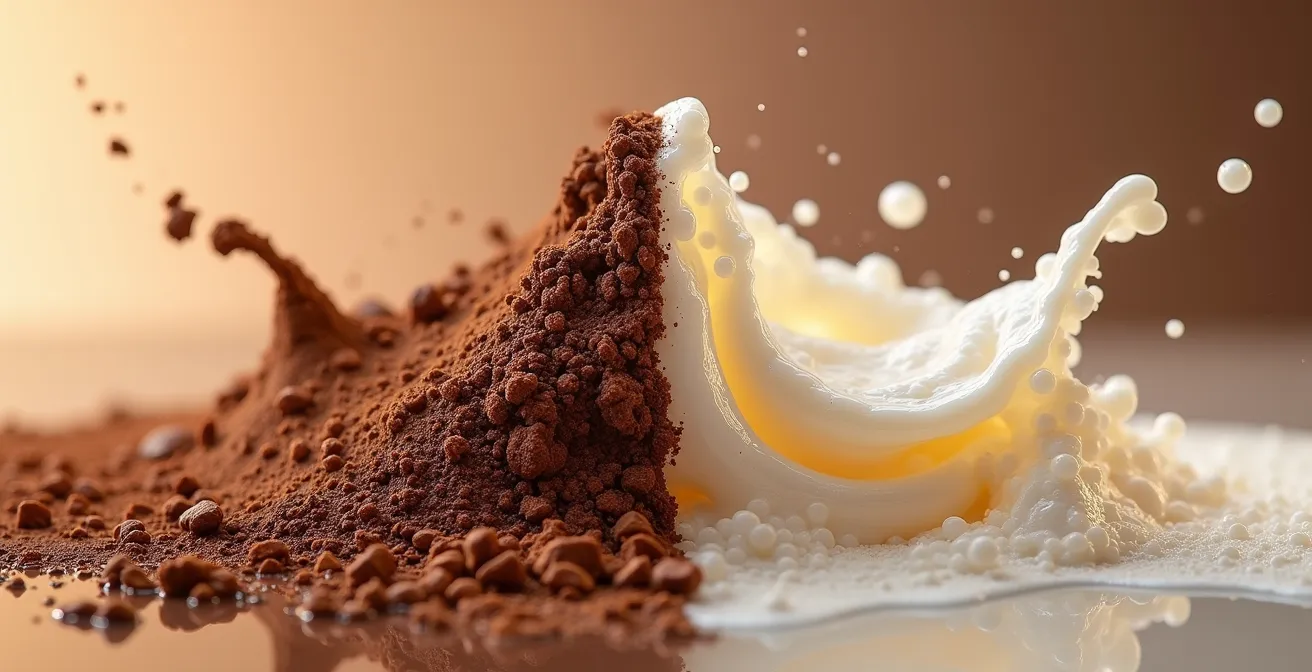
As you can see in this magnified view, the way cocoa particles disperse in whole milk’s fatty emulsion is fundamentally different from their interaction with oat milk’s fibrous structure. For the most decadent and flavorful experience, the fat in whole milk remains the champion carrier for complex cocoa notes.
Cinnamon and chili: when to add for subtle diffusion without bitterness?
Infusing spices like cinnamon and chili can elevate a hot chocolate from comforting to transcendent, but timing is everything. Add them too early or at too high a temperature, and you risk extracting bitter compounds that will overpower the delicate notes of the cocoa. The professional technique focuses on a gentle infusion that captures the aromatics without the astringency.
The main culprits of bitterness are tannins, which are present in cinnamon bark and other whole spices. These compounds are highly soluble in hot water. In fact, scientific analysis indicates that above 70°C (158°F), water-soluble tannins can extract three times faster, leading to a harsh, puckering sensation. To avoid this, spices should be introduced at a moderate temperature and removed before the milk gets too hot.
A light toasting of whole spices before they hit the milk can also make a significant difference. This process awakens the volatile essential oils, bringing their fragrant aromas to the forefront. This means you can achieve a more potent flavor with a shorter infusion time, further reducing the risk of bitterness. The goal is a subtle, layered complexity, not a sharp, spicy bite. By following a precise temperature-controlled process, you ensure that the spices complement the chocolate rather than compete with it.
Action Plan: The Professional Spice Infusion Technique
- Activate the Aromas: Lightly toast your whole cinnamon stick and dried chili in a dry pan for about 30 seconds until fragrant. This awakens the essential oils.
- Gentle Introduction: Add the toasted spices to your cold milk and begin heating. The goal is to infuse as the temperature rises, not to boil them.
- Mind the Temperature Threshold: Keep a close eye on the temperature, ensuring it stays below the 65°C (149°F) mark to extract pure flavor without the bitter tannins.
- Strategic Removal: Remove the whole spices from the milk *before* you add your chocolate. This gives you full control over the level of infusion.
- Ensure a Silky Finish: For a flawless texture, pour the infused milk through a fine-mesh sieve to remove any small particles before frothing.
The cooling error that creates an unpleasant film on the cup
There’s nothing more disappointing than preparing a beautiful, velvety hot chocolate, only to have it develop a dull, waxy skin on top as it cools. This isn’t a sign of poor-quality ingredients; it’s a classic error in thermal management and a lesson in the physics of fat. The culprit is the cocoa butter present in high-quality chocolate.
Cocoa butter is composed of different types of fat crystals, each with a different melting point. When you melt chocolate and blend it into hot milk, you create a beautiful, stable emulsion. However, as the drink cools, the cocoa butter begins to re-solidify, or crystallize. If the cooling happens too slowly or without agitation, the fat molecules separate from the liquid and rise to the surface, where they link up to form that unpleasant film.
Crystallography research confirms this phenomenon, showing that below 28°C (82°F), unstable cocoa butter crystals can reform on the surface in as little as five minutes. The key to preventing this is twofold: serving the drink while it’s still hot and stable, and incorporating a final, crucial technique if it must sit for a moment.
To avoid the dreaded skin, baristas use a technique called a “flash whisk” right before serving.
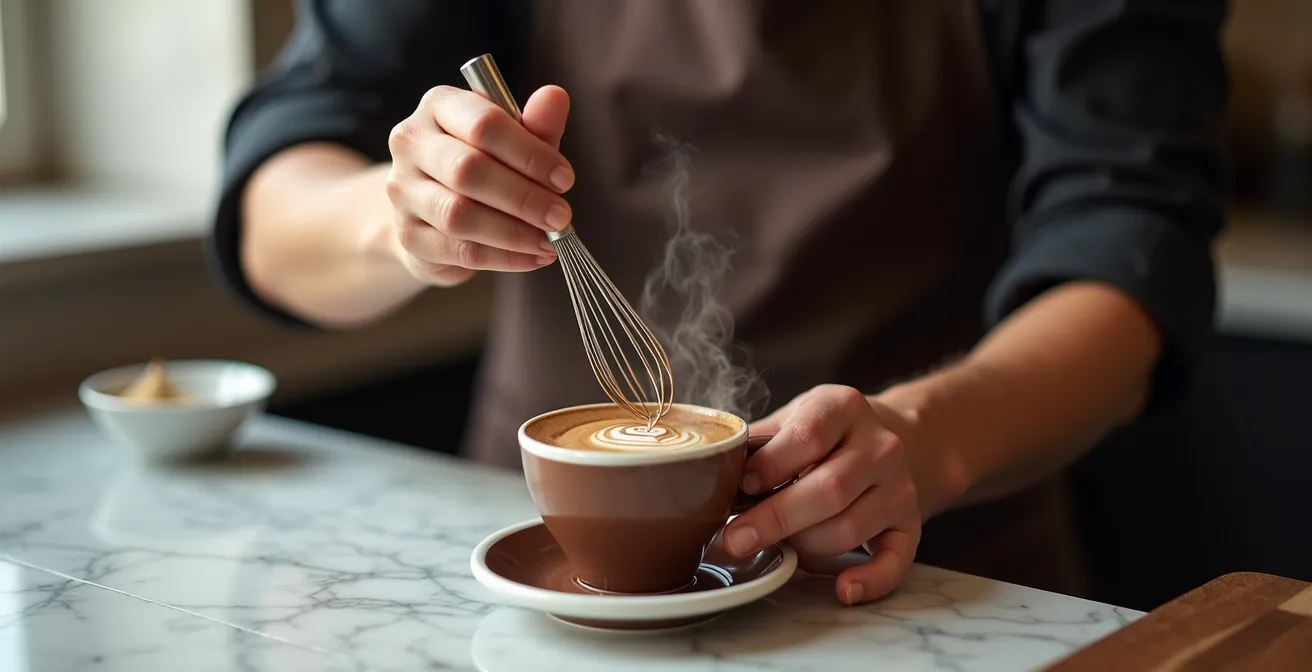
Just before handing the cup over, a quick, vigorous whisk re-emulsifies the fats that may have begun to separate, reintegrating them into the liquid and preserving that glossy, uniform surface. This simple, two-second action ensures the first sip is as perfect as the last, maintaining the integrity of the texture you worked so hard to create. For an extra layer of stability, a tiny pinch of soy or sunflower lecithin (a natural emulsifier) can be added during preparation to help keep the fats suspended for longer.
Morning or evening: why lighten the cocoa butter dose after 4 PM?
A rich, high-fat hot chocolate can be the perfect morning or midday boost, but enjoying the same decadent beverage in the evening might not be the best idea for a restful night. The reason lies in two key components of high-quality cocoa: its fat content and a natural stimulant called theobromine.
First, let’s talk about digestion. High-fat foods and beverages significantly slow down gastric emptying—the rate at which your stomach processes its contents. Consuming a hot chocolate with a heavy dose of cocoa butter in the evening can lead to a prolonged feeling of fullness and, for some, may even contribute to discomfort or acid reflux when lying down. It’s a matter of digestive load; what feels energizing during the day can feel heavy and disruptive at night.
Second, and more critically, is the effect of theobromine. This compound is a cousin to caffeine and is responsible for cocoa’s mood-lifting and gently stimulating effects. While it’s milder than caffeine, it has a surprisingly long duration in the body. Pharmacokinetic studies confirm that theobromine has a 6-10 hour half-life in humans, meaning it can interfere with the onset and quality of sleep long after you’ve finished your cup. For a relaxing evening drink, it’s wise to choose a cocoa with a lower cocoa butter percentage (and thus lower theobromine) or simply use a smaller amount.
Whole milk or plant-based cream: which medium maximizes the creaminess of the fat?
When the goal is ultimate creaminess, the discussion moves beyond simple milk to richer options like dairy cream or its plant-based counterparts. Here, we are diving deep into the science of fat itself—specifically, the size and melting point of fat globules, which dictate the final mouthfeel of your drink.
Homogenized whole milk and dairy cream provide a luxurious texture because their butterfat globules are incredibly small and uniform, typically less than 0.1mm. This microscopic size creates a massive surface area, resulting in a smooth, seamless emulsion that coats the palate evenly. The melting point of this butterfat is also a critical factor. It melts right around body temperature (32-35°C), which means it literally dissolves in your mouth, releasing flavor gradually for a truly decadent experience.
Plant-based creams, like those from coconut or cashew, offer a different kind of richness. Coconut cream, for instance, has much larger fat globules (0.3-0.5mm). While this provides a rich initial impression, it can sometimes feel slightly less integrated or “slick” compared to dairy. Furthermore, its fat has a lower melting point, leading to a faster, less lingering finish on the palate. Cashew cream offers a more neutral and smooth profile, making it a great all-rounder. Choosing the right one depends on the experience you want to create.
This comparative analysis highlights how different fats perform. A recent analysis of fat characteristics provides a clear breakdown:
| Fat Type | Melting Point | Mouthfeel | Flavor Release |
|---|---|---|---|
| Dairy Butterfat | 32-35°C | Luxurious melting | Gradual, coating |
| Coconut Fat | 24-26°C | Quick melt, rich | Fast finish |
| Cashew Cream | 28-30°C | Neutral, smooth | Balanced |
Ultimately, for maximizing that long-lasting, palate-coating creaminess, the unique properties of dairy butterfat remain the gold standard. However, understanding the characteristics of plant-based fats allows for intelligent substitution to achieve specific textural and flavor goals.
Floral or woody notes: which vanilla to choose for a full-bodied dark chocolate?
Once you’ve perfected the texture of your hot chocolate, the next level of artistry is advanced flavor pairing. Vanilla is a classic partner for chocolate, but not all vanilla is created equal. Choosing the right variety can either complement and elevate the cocoa’s profile or clash with it. For a full-bodied, intense dark chocolate, the choice between a floral Tahitian vanilla and a spicier Mexican vanilla is crucial.
The differences lie in their chemical makeup. As Dr. Sarah Mitchell explains in the International Journal of Food Science, the origin of the vanilla bean dictates its primary aromatic compounds.
Tahitian vanilla is rich in heliotropin providing floral and cherry notes, while Mexican vanilla offers spicier and woodier profiles due to its vanillin and coumarin content
– Dr. Sarah Mitchell, International Journal of Food Science
This means you should pair the vanilla to the chocolate’s inherent tasting notes. A dark chocolate with fruity or acidic notes (often from Madagascan or Peruvian beans) will be beautifully balanced by the floral, cherry-like profile of Tahitian vanilla. The vanilla’s bright notes will harmonize with the chocolate’s acidity, creating a vibrant, complex bouquet.
Conversely, a dark chocolate with earthy, nutty, or roasted notes (common in Ecuadorian or Brazilian beans) calls for the robust character of Mexican or Ugandan vanilla. Its spicier, woodier, and sometimes smoky undertones will ground the chocolate’s earthiness, adding depth and a warm, resonant finish. Using a whole bean infused gently in warm milk is always superior to an extract, as it provides a fuller, more rounded flavor without any alcoholic sharpness. To pair like a professional, follow these guidelines:
- For fruity, acidic chocolates (e.g., Madagascar origin): Use Tahitian vanilla for floral balance.
- For earthy, nutty chocolates (e.g., Ecuador origin): Choose Mexican vanilla for woody depth.
- For milder milk chocolates: Uganda vanilla adds a subtle, intriguing smoky complexity.
- Always infuse the whole, split bean in warm milk (50-60°C) for at least 10 minutes for full integration.
- Remove the bean before the milk exceeds 65°C to prevent any bitter compounds from extracting.
Key Takeaways
- Texture is Science: The secret to a velvety, thick hot chocolate without starch lies in mastering the emulsification of fats and the controlled denaturation of milk proteins, ideally using a steam wand to create stable microfoam.
- Fat is Flavor: Fat, whether from whole milk or cocoa butter, is the primary vehicle for delivering rich cocoa flavor and creating a luxurious, palate-coating mouthfeel. Its melting point and globule size are critical.
- Temperature is Everything: From infusing spices without bitterness (below 65°C) to creating stable foam (50-60°C) and preventing surface film, precise temperature control is the most important technique for a flawless result.
Why High-Fat Cocoa Is the Ultimate Winter Comfort Drink for Energy?
Beyond its incredible taste and texture, a well-made, high-fat hot chocolate delivers a unique combination of genuine warmth and sustained energy, making it the quintessential winter comfort drink. This isn’t just a psychological effect; it’s a physiological response driven by the powerful combination of fats and theobromine found in high-quality cocoa.
The “comfort” aspect comes from two sources. First, fat is a powerful satiety-enhancer. A drink rich in cocoa butter provides a feeling of fullness and satisfaction that a sugary, low-fat alternative simply cannot match. Second, theobromine acts as a vasodilator, meaning it widens blood vessels. This process increases blood flow throughout the body, creating a tangible sensation of warmth from the inside out. Research shows this effect is optimized when the cocoa is consumed at a warm temperature (around 60-65°C), enhancing both the thermogenic response and alertness.
The energy boost from high-fat cocoa is also distinct from a sugary rush. Fat provides a slow-release source of energy, offering sustained fuel rather than a quick spike and crash. Paired with the gentle, long-lasting stimulation from theobromine, the effect is one of calm, focused alertness. It’s an energizing drink that doesn’t make you jittery, but instead provides a steady, comforting lift—perfect for a cold afternoon or as a motivating start to a winter morning.
Your journey to the perfect hot chocolate starts now. By embracing the science of fats and proteins, you can leave the starch behind and unlock a level of richness and texture you never thought possible at home. Pick your favorite high-fat cocoa, grab your whisk or fire up your steam wand, and start applying these principles today to craft your own signature cup of liquid velvet.