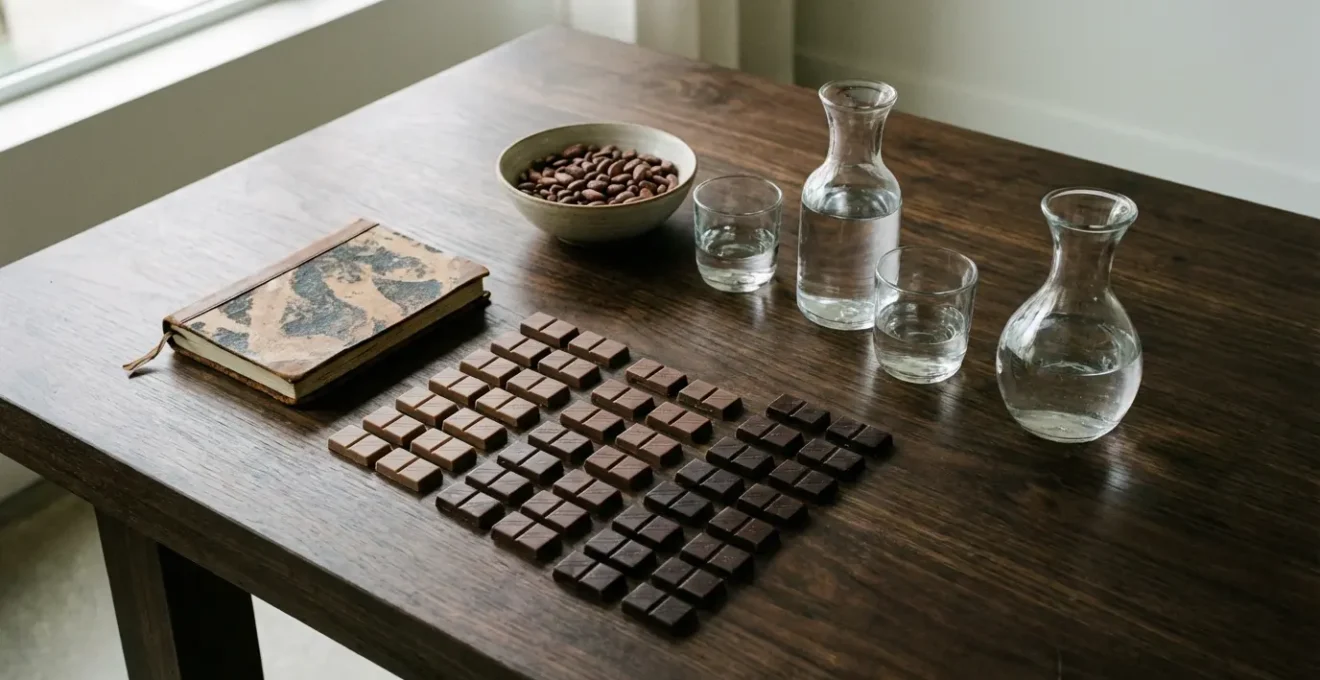
Becoming a chocolate connoisseur isn’t a matter of innate talent, but of adopting a systematic approach to cataloging flavors.
- Structure your tastings to isolate variables like terroir (vertical tasting) or maker style (horizontal tasting).
- Use established tools like a flavor wheel to develop a precise sensory language for your mental library.
Recommendation: Begin your journey by conducting a vertical tasting of three single-origin bars from the same maker to start mapping the influence of terroir.
Many aspiring connoisseurs face a common frustration: they invest in high-quality, single-origin chocolate, only to find their tasting notes amount to little more than “it’s good” or “it’s fruity.” You’ve likely heard the standard advice: let it melt slowly, use all your senses, and cleanse your palate. While these are valid starting points, they are merely the entry fee to a much deeper world. They teach you how to experience a flavor, but not how to understand, categorize, and recall it. This is the difference between simply visiting a library and knowing how to use its card catalog.
The true path to expertise lies not in having a more sensitive palate, but in building a structured, organized flavor library within your mind. This article will shift your perspective from passive tasting to active “sensory data collection.” We will bypass the generic tips and provide you with a librarian’s framework for tasting. It’s a method that allows you to deconstruct every bar of chocolate, identify its core components, and file it away in your memory with precision. You’ll learn to distinguish the signature of the chocolate maker from the authentic voice of the terroir.
This guide will walk you through the essential system for building your mental library. We will cover the core criteria for analysis, the methodologies for structuring your tastings, the tools for articulating your perceptions, and the key knowledge to identify the very genetics of the cacao you’re enjoying. Get ready to transform every tasting into a deliberate act of learning.
Summary: A Systematic Guide to Cataloging Chocolate Flavors
- What are the 5 criteria to note absolutely to progress in your analysis?
- Vertical or Horizontal: how to structure a tasting of 3 chocolates to learn?
- SCA wheel or chocolate wheel: which tool to put words to your sensations?
- The mistake of judging the packaging before the product in a blind tasting
- Criollo or Trinitario: the taste clues to shine in society
- When to organize a tasting to perceive the nuances of terroir?
- Why is the term “Trinitario” a guarantee of aromatic balance?
- When to organize a tasting to perceive the nuances of terroir?
What are the 5 criteria to note absolutely to progress in your analysis?
To build a flavor library, you first need a cataloging system. Simply writing “tastes like berries” is insufficient. A professional approach requires breaking down the experience into distinct, analyzable components. This structured note-taking is what separates a casual taster from a developing expert. It forces you to pay attention to details you would otherwise miss, creating a rich dataset for each “entry” in your library. Remember, experts have shown that chocolate contains upwards of 600+ aroma compounds, so a systematic approach is essential to navigate this complexity.
Your goal is to move beyond a single impression and document the journey of the flavor. Think of it less as a snapshot and more as a short film with a beginning, middle, and end. Each of these five criteria serves as a chapter in that film, providing a complete and comparable record for your mental library.
Action Plan: Your 5-Point Chocolate Analysis Checklist
- Flavor Trajectory: Map how the taste evolves from the initial melt through the final aftertaste. Note the precise sequence of flavor transitions (e.g., starts earthy, moves to red fruit, finishes with nutty notes).
- Texture Spectrum: Evaluate the melt rate, viscosity (how thick it feels), astringency levels (the drying sensation), and any residual graininess, which can be linked to the conching time.
- Purity & Defect Detection: Actively search for off-notes. Can you identify smoke, excessive acidity, staleness, or a cardboard-like taste that might reveal issues in fermentation, drying, or storage?
- Maker’s Signature vs. Terroir Expression: Try to distinguish between flavors that come from the bean’s origin (terroir) and those introduced by the chocolate maker’s specific techniques (like roast level or conching style).
- Aromatic Evolution: Track how the aromas change from the moment you break the bar (the “snap”) through its complete melting in your mouth. Note which scents are fleeting and which are persistent.
By consistently analyzing chocolate against these five points, you begin to build a detailed and searchable mental database, allowing you to make meaningful comparisons and truly grow your expertise.
Vertical or Horizontal: how to structure a tasting of 3 chocolates to learn?
A library is built not by randomly grabbing books, but by understanding how they relate to one another. Similarly, to learn effectively from tasting, you must structure your comparisons to isolate specific variables. Simply tasting three random bars will be an enjoyable experience, but a poorly designed experiment. The two foundational methods for structured tasting are vertical and horizontal tastings.
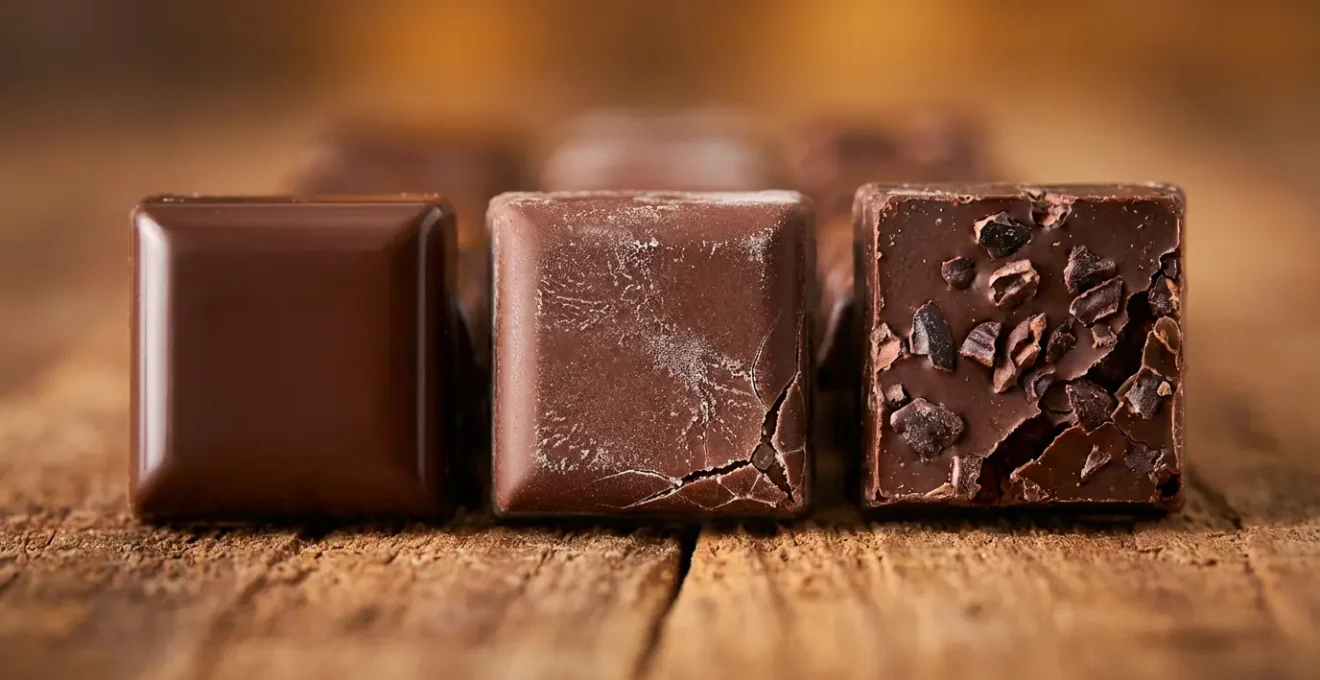
A vertical tasting allows you to explore terroir. You choose bars from the same maker but from different origins (e.g., Madagascar, Ecuador, Vietnam). Since the maker’s style (roast, conch time) is the constant, any significant flavor differences can be attributed to the bean’s origin. Conversely, a horizontal tasting helps you understand the maker’s signature. Here, you select bars from the same origin (e.g., all from Peru) but from different makers. The origin is the constant, so the variations you taste reveal each maker’s unique crafting philosophy. For instance, Dandelion Chocolate’s virtual classes guide participants through a flight of bars from different origins, a classic example of a vertical tasting designed to highlight terroir.
This methodical approach is the fastest way to build meaningful connections in your flavor library, as detailed in this comparative analysis from leading craft chocolate purveyors.
| Tasting Type | Setup | Learning Objective | Best For |
|---|---|---|---|
| Horizontal | Same origin, different makers | Isolate Maker’s Signature | Understanding processing impact |
| Vertical | Same maker, different origins | Isolate Terroir Expression | Discovering regional characteristics |
| Varietal | Same region & maker, different cacao types | Understand genetic influence | Advanced flavor profiling |
For a novice, starting with a vertical tasting is often the most enlightening, as it opens your eyes to the incredible diversity of flavors that the world’s cacao-growing regions have to offer.
SCA wheel or chocolate wheel: which tool to put words to your sensations?
You can’t catalog a book without a language. Similarly, building a flavor library requires a precise sensory vocabulary. It’s one thing to detect a note of red fruit; it’s another to distinguish between raspberry, cherry, and cranberry. This is where a flavor wheel becomes an indispensable tool. It provides a shared, structured language that moves your notes from vague impressions to precise descriptors.
While the Specialty Coffee Association (SCA) flavor wheel is famous, the chocolate industry has developed its own specialized versions. These wheels are designed to capture the unique spectrum of flavors found in cacao. They typically start with broad categories in the center (e.g., Fruity, Nutty, Floral) and branch out into increasingly specific descriptors towards the edge. This structure guides your brain, helping you narrow down a general sensation into a concrete word. As the team behind a leading professional lexicon states, it’s about creating a unified language for the industry.
It is the first serious attempt rooted in science to create a sensory language for the chocolate industry.
– Barry Callebaut R&D Team, Barry Callebaut Consumer Chocolate Sensory Wheel
Using a wheel during tasting is like having a librarian at your side, suggesting keywords. When you taste something, glance at the wheel. Does the “fruity” note feel more like “citrus” or “berry”? If “citrus,” is it “grapefruit” or “orange”? This process trains your brain to make finer distinctions. The most accessible wheels begin with a core set of terms; for example, one popular model starts with 27 primary descriptors across taste, aroma & mouthfeel, providing a solid foundation for any novice taster to begin building their vocabulary.
Don’t see the wheel as a test you must pass. Instead, view it as a dictionary to enrich your descriptions and make the “data” you collect for your flavor library more accurate and universally understood.
The mistake of judging the packaging before the product in a blind tasting
One of the greatest enemies of objective analysis is preconceived bias. The beautiful wrapper, the prestigious brand name, or the high price tag can all influence your perception before the chocolate even touches your tongue. This is why, to truly build an honest and accurate flavor library, you must learn to neutralize these biases. The most effective method for this is the blind tasting.
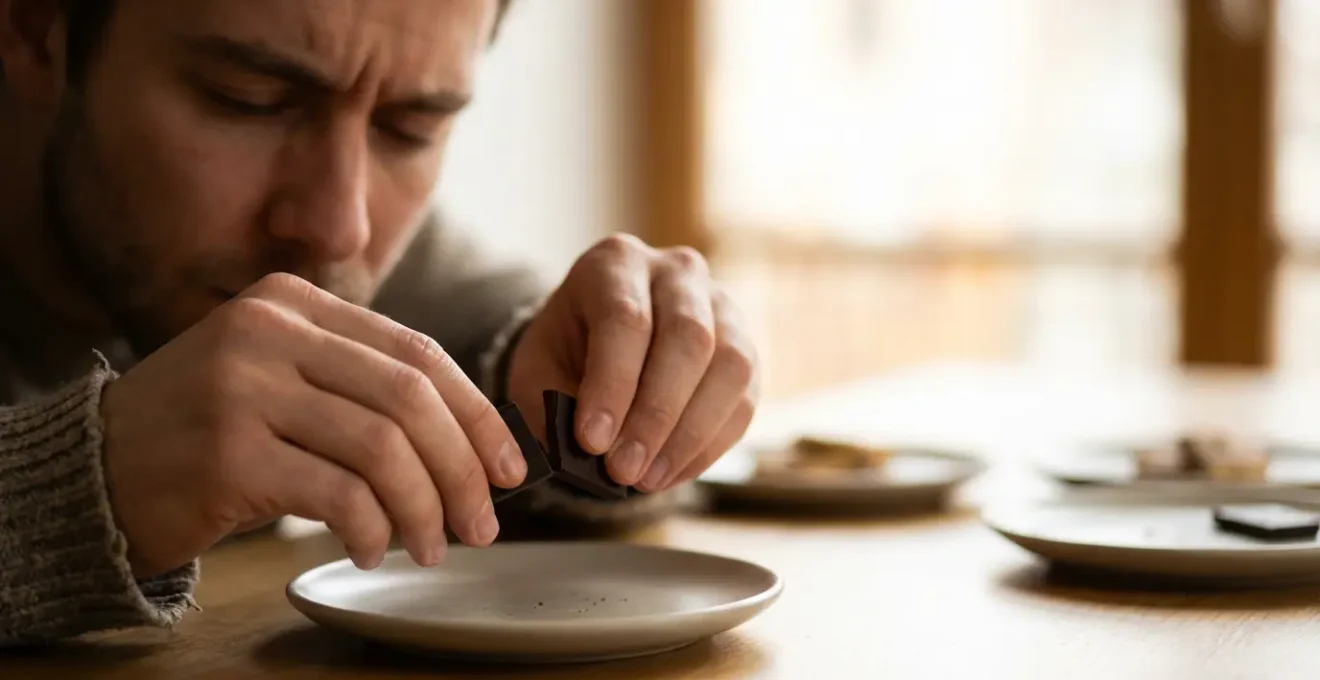
In a blind tasting, chocolate samples are presented without their packaging, identified only by a number or a letter. This forces you to rely on nothing but your senses. You are not tasting a brand; you are tasting a product. This practice strips away the power of marketing and allows the chocolate’s true character—the result of its terroir, varietal, and the maker’s skill—to speak for itself. You might be surprised to find that a less-hyped bar outperforms a famous one, or that you can identify a maker’s signature style without seeing their logo.
Even the appearance of the bar itself should be interpreted with care. As cocoa experts point out, the color and sheen are reflections of processing, not necessarily of quality. A slight whitish discoloration, known as bloom, is a result of temperature changes and is perfectly normal; it’s not a sign of spoilage. By focusing on the aroma, texture, and flavor trajectory, you gather pure data, untainted by expectation. This is the only way to ensure the entries in your mental library are factual reports, not biased stories.
Organizing a simple blind tasting with friends is a fun and profoundly educational exercise. It’s a powerful tool for sharpening your palate and ensuring the integrity of the knowledge you are so carefully building.
Criollo or Trinitario: the taste clues to shine in society
Once you’ve mastered structured tasting, you can begin to explore one of the most fascinating subjects in the chocolate world: cacao genetics. Just as a wine connoisseur distinguishes between a Pinot Noir and a Cabernet Sauvignon, a chocolate expert learns to identify the characteristics of different cacao varietals. The “big three” you will most often encounter are Forastero, Criollo, and Trinitario. Learning their typical flavor profiles adds a powerful layer of knowledge to your library.
Forastero is the workhorse of the cacao world, accounting for the vast majority of production. It’s known for being robust and disease-resistant, typically yielding a classic, strong, and sometimes one-dimensional “chocolatey” flavor with higher bitterness. It forms the base of most mass-market chocolate.
Criollo, on the other hand, is the rare and prized jewel. It’s delicate and difficult to grow, but its beans produce chocolates with exceptional aromatic complexity, low bitterness, and prominent notes of fruit, nuts, and spice. Finding a pure Criollo bar is a rare treat.
Trinitario is a natural hybrid of Criollo and Forastero, combining the best of both worlds: the complex flavors of Criollo with the hardiness of Forastero. This balance makes it a favorite among craft chocolate makers. The following table, based on data from craft chocolate specialists, provides a cheat sheet for your mental library.
| Variety | Flavor Profile | Bitterness Level | Market Share |
|---|---|---|---|
| Criollo | Fruit forward, aromatic, nutty notes | Very low | Less than 1-5% |
| Trinitario | Balanced fruity & chocolate notes | Moderate | Less than 10% |
| Forastero | Earthy, simple, classic chocolate | Higher | Over 80% |
| Nacional | Floral, creamy, unique signature | Low | Rare variety |
When you taste a bar and say, “This has very low bitterness and complex nutty notes; it’s likely a Criollo or has a high percentage of it,” you are no longer just tasting—you are demonstrating deep, library-backed knowledge.
When to organize a tasting to perceive the nuances of terroir?
Building a flavor library isn’t just about what and how you taste, but also *when* and under what conditions. Your palate is a sensitive instrument, and its acuity can be affected by time of day, what you’ve recently eaten, and your state of mind. To ensure you are collecting clean, reliable “data,” you must create an optimal tasting environment.
The first rule is to approach a tasting with a “clean palate.” This means you should avoid strong flavors for at least an hour beforehand. Coffee, garlic, spicy foods, or even minty toothpaste can linger and distort the delicate notes of a fine chocolate. The best time of day is often considered to be mid-morning, between breakfast and lunch, when your senses are alert and your palate is relatively neutral. Water (at room temperature) and simple, unsalted crackers or a piece of plain bread are the only recommended palate cleansers between samples.
Creating the right conditions is a key part of a serious tasting practice. Here are some key protocols to consider as you progress:
- Stage of Learning: Beginners can start anytime to get familiar, but intermediates should use controlled experiments (like vertical tastings) to test specific hypotheses about terroir.
- Daily Variation: Try testing the same chocolate at different times of the day (e.g., 11 AM vs. 4 PM) to understand how your own palate changes and when you are most perceptive.
- Time Evolution: For a deeper study, compare a freshly made bar from a new harvest against the same bar that has been aged for 6-12 months. This can reveal how flavors develop and mellow over time.
- Pre-tasting Protocol: The golden rule is to avoid any strong flavors—coffee, spices, mint, alcohol—for at least one hour before you begin your tasting session.
By controlling the tasting environment, you minimize external “noise” and ensure that the notes you record in your flavor library are a true reflection of the chocolate itself.
Why is the term “Trinitario” a guarantee of aromatic balance?
Within your growing flavor library, the Trinitario varietal deserves its own special section, labeled “Balance and Complexity.” Understanding why this varietal is so revered by craft chocolate makers provides a fascinating insight into the interplay of genetics and history. The term Trinitario is a guarantee of aromatic balance because it is, by its very nature, a genetic success story.
Trinitario was not discovered in the wild but was born out of a near-catastrophe in 18th-century Trinidad. The island’s plantations, which were growing prized but fragile Criollo cacao, were decimated by disease. To save the industry, robust Forastero trees were planted. Spontaneous cross-pollination between the surviving Criollo trees and the new Forastero stock gave rise to a new hybrid: Trinitario. This new varietal inherited the most sought-after qualities from both parents: the superior, complex flavor profile of Criollo and the disease resistance and high yields of Forastero. This happy accident of nature created a cacao that was both delicious and dependable.
Case Study: The Genetic Heritage of Trinitario
Born from the union of Criollo and Forastero, Trinitario is a fascinating hybrid that first emerged in Trinidad in the 18th century. This variety inherits the best qualities of both its parents, boasting some of the superior flavour of Criollo as well as the disease-resistance and high yield of Forastero.
This inherent balance is what makes Trinitario so appealing. It delivers a satisfying, rich chocolatey base from its Forastero heritage, while also presenting the nuanced and exciting aromatic notes—like fruit, flowers, or herbs—from its Criollo ancestry. It offers complexity without the extreme delicacy of a pure Criollo. This profile perfectly matches modern consumer desires; research from Barry Callebaut suggests that 70% of consumers want unique, exciting chocolate, and Trinitario delivers just that.
When you taste a Trinitario bar, you are not just tasting a single bean; you are tasting a rich history of survival, adaptation, and the beautiful fusion of two distinct lineages.
Key Takeaways
- Building a chocolate flavor library is a systematic skill, not an innate talent, centered on structured analysis.
- Use vertical (same maker, different origins) and horizontal (same origin, different makers) tastings to isolate variables and understand the influence of terroir vs. maker’s style.
- A flavor wheel is an essential tool for developing a precise, shared vocabulary to accurately catalog your sensory experiences.
When to organize a tasting to perceive the nuances of terroir?
We’ve established the analytical criteria, the tasting methodologies, the linguistic tools, and the genetic knowledge. Now, we return to the central question with a new depth of understanding. The moment to organize a tasting to truly perceive terroir is when you are ready to consciously apply this entire framework. It’s when you move from being a passive consumer to an active, inquisitive librarian of flavors.
Organizing a tasting is no longer about simply eating chocolate; it’s about staging a small, delicious experiment. It’s about setting up a vertical flight of bars from a single maker, cleansing your palate, and approaching each piece with your five-point analysis checklist in hand. It’s about having a flavor wheel nearby to help you articulate a fleeting sensation, and having the knowledge to wonder, “Are these bright, fruity notes characteristic of a Madagascan terroir, or perhaps the influence of a Trinitario bean?”
This is the culmination of your training. Every step we have discussed—from blind tasting to understanding varietals—is designed to prepare you for this moment. It is the moment you can finally filter out the noise of branding, maker style, and personal bias to isolate and appreciate the faint, beautiful signal of the land itself—the terroir.
Your journey to becoming a respected connoisseur has a clear starting point. The next logical step is to acquire three single-origin bars from a single craft chocolate maker and conduct your first vertical tasting. Begin cataloging your findings today.