Achieving vibrant fruity notes through anaerobic fermentation is not a matter of luck, but of precise biochemical control.
- The process relies on steering yeast activity in an oxygen-deprived environment to produce desirable aromatic compounds (esters).
- Uncontrolled conditions, especially high temperatures and excess oxygen, quickly lead to the overproduction of acetic acid (vinegar), ruining the batch.
Recommendation: Master this technique by diligently monitoring and controlling temperature and pH to guide the microbial succession, rather than simply letting it run its course.
For any chocolatier, the quest for unique flavour profiles is relentless. You’ve likely heard the buzz around “anaerobic” or “closed-box” fermentation, touted as the key to unlocking intense notes of banana, red fruits, or passion fruit in cocoa beans. This technique, which limits oxygen exposure during the initial fermentation stages, is indeed powerful. It represents a shift from traditional, open-air methods and promises a new palette of vibrant, complex aromas that command premium prices in the specialty chocolate market.
However, the common narrative often oversimplifies the process, presenting it as a magical recipe: seal the beans, and fruitiness will appear. The reality is far more nuanced and, for the unprepared, fraught with risk. Anaerobic fermentation is a delicate biochemical balancing act. The very same microbial pathways that can yield a symphony of desirable esters can, if mismanaged, lead to a batch tasting sharply of vinegar or, worse, developing putrid off-notes. The difference between success and failure lies not in the method itself, but in the mastery of its underlying principles.
The key is to move beyond simply following a recipe and begin thinking like a biochemical engineer. It’s about understanding and steering the microbial ecosystem responsible for flavour development. This guide demystifies the science behind anaerobic fermentation. We will dissect the mechanisms that produce those sought-after fruity aromas, explore the critical parameters you must control to achieve consistency, and identify the common errors that can turn a promising batch into compost. By mastering these variables, you can transform fermentation from a game of chance into a predictable tool for crafting exceptional chocolate.
This article provides a deep dive into the technical aspects of post-harvest processing. You will find a structured path to understanding and controlling each critical phase, from initial microbial activity to the final drying stage, enabling you to consistently produce high-quality, distinctively flavoured cocoa.
Summary: Mastering the Aromatic Profile of Anaerobically Fermented Cocoa
- Why do your beans develop aromas of banana or red fruit?
- How can you control the temperature of your boxes to avoid acetic acid?
- Open or closed fermentation: which to choose for delicate Criollo cocoa?
- The timing error that turns your cocoa batch into compost
- Variability problem: how to standardize your fermented aromatic profiles?
- Why does your chocolate sting the throat instead of evoking citrus?
- Smoky or mouldy: how to spot a drying defect before you even taste?
- How can you develop biscuit and nutty notes without burning your beans?
Why do your beans develop aromas of banana or red fruit?
Those coveted fruity notes are not a mystery but a direct result of specific chemical compounds called esters. In the initial, oxygen-deprived phase of anaerobic fermentation, yeasts dominate the microbial ecosystem. Thriving on the simple sugars in the cocoa pulp, they produce ethanol and, crucially, a wide array of esters. These volatile compounds are responsible for many of the fruity and floral aromas we perceive. For instance, isoamyl acetate is famous for its distinct banana scent, while ethyl acetate contributes a more general fruity note.
The process is a beautiful example of microbial succession. First, yeasts work in an anaerobic environment, breaking down the pulp and generating heat, ethanol, and flavourful esters. According to research published in 2022, yeasts produce over 50 different volatile organic compounds, including the very esters that define these unique profiles. This initial phase sets the stage for the entire flavour development journey. The illustration below captures the intense microbial activity transforming the cocoa pulp.
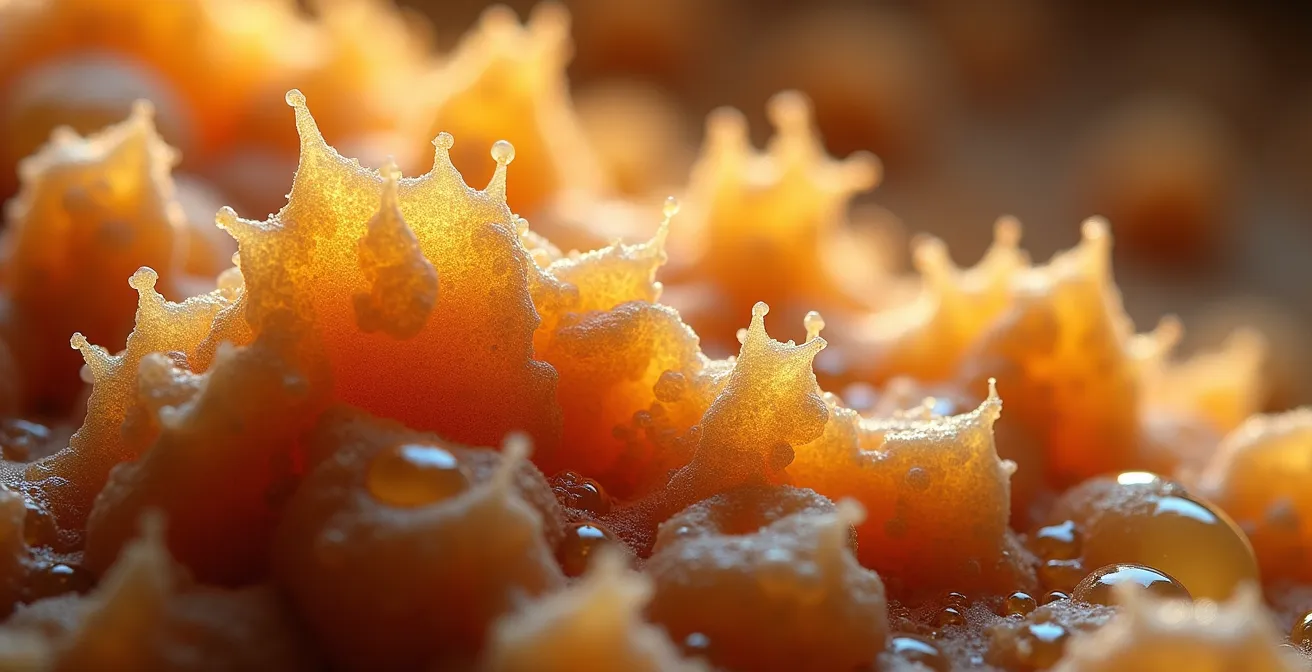
As you can see, this is a living, breathing process. The key to encouraging these fruity notes is to create and maintain the ideal conditions for these specific yeasts to flourish before other microorganisms, like acetic acid bacteria, take over. Fine-flavour cocoa from regions like Colombia offers a tangible example of this potential. As documented in a study on Necoclí and Arauca farms, controlled fermentation yields cocoa liquors with pronounced acidity and delicate sweet notes of caramel, citrus, and a variety of fruits, allowing them to reach high-value markets.
Ultimately, the development of these aromas is a direct function of a healthy, yeast-driven anaerobic phase. Controlling this first stage is the foundational step in steering your cocoa towards a desired fruity profile.
How can you control the temperature of your boxes to avoid acetic acid?
Temperature is the single most critical lever you can pull to control the outcome of your fermentation. The process is naturally exothermic, meaning it generates its own heat. The challenge is to manage this heat to favour desirable microbial activity while suppressing the undesirable. Excessive heat, specifically temperatures soaring above 48-50°C, is detrimental because it kills the beneficial yeasts responsible for fruity esters and creates a perfect environment for thermotolerant Acetic Acid Bacteria (AAB) to thrive, leading to a sharp, vinegary taste.
Effective temperature control depends on batch size and fermentation vessel. The goal is a slow, steady rise to a peak of around 45-47°C after about 96 hours. Here are the key strategies to achieve this, based on established protocols:
- Initial Monitoring: The process should start near ambient temperature (around 30°C). Track the temperature hourly for the first 48 hours to understand the curve of your specific setup.
- Insulation for Small Batches: For smaller quantities (under 100 kg), heat retention is the main challenge. Use insulating materials like banana leaves or jute sacks to cover the fermentation box and maintain a stable, warm environment for the yeasts.
- Turning for Large Batches: For larger batches (over 200 kg), heat dissipation becomes the priority. The core of the mass can overheat quickly. Implement a systematic turning schedule, typically every 24 to 48 hours, to aerate the mass, release excess heat, and ensure a more uniform temperature profile.
- Target Peak Temperature: As a recent study on cocoa fermentation dynamics highlights, the ideal maximum temperature should be reached around the 96-hour mark, peaking at 46-47°C.
- Data-Driven Intervention: Use data-logging probes placed at different depths within the mass. This provides a clear picture of the temperature curve and allows you to intervene (e.g., by turning the batch) if the temperature starts to exceed 50°C.
By actively managing temperature instead of passively letting it run, you shift from being a spectator to being the conductor of your fermentation’s microbial orchestra, ensuring the final product sings with fruity notes, not stings with acidity.
Open or closed fermentation: which to choose for delicate Criollo cocoa?
The choice between an open (aerobic) and closed (anaerobic) system is not just a matter of preference; it’s a strategic decision that depends heavily on the cocoa variety. For a delicate, low-tannin variety like Criollo, this choice is paramount. Criollo beans have a lower polyphenol content, which makes them less bitter but also more susceptible to oxidation and the development of off-flavours if not handled with care. A closed, or anaerobic, fermentation is generally the superior choice for preserving its subtle and complex aromatic potential.
The primary reason is the control over oxygen exposure. A closed system limits the activity of Acetic Acid Bacteria (AAB), which require oxygen to convert ethanol into acetic acid. By starving them of oxygen, you prevent the rapid buildup of acidity that can overwhelm the delicate floral and nutty notes inherent to Criollo. A comparative analysis of fermentation methods provides clear data on these differences.
| Parameter | Closed/Anaerobic | Open/Aerobic | Hybrid Approach |
|---|---|---|---|
| Temperature Peak | 43.1±3.2°C | 46.5±2.0°C | 45°C controlled |
| pH Drop | Gradual to 5.5 | Rapid to 4.8 | Moderate to 5.2 |
| Fruity Notes | High intensity | Moderate | Balanced |
| Oxidation Risk | Low | High for Criollo | Controlled |
| Duration | 48-72 hours | 96-120 hours | 36h closed + 48h open |
The table clearly shows that a closed system results in higher fruity notes and a much lower risk of oxidation. While open fermentation can achieve higher temperatures, this often comes at the cost of excessive acidity. As noted by researchers, this trade-off is often not worth it for premium beans.
Longer fermentation (63 ± 6 h) in wooden boxes with turning achieved the highest temperature of 46.5 ± 2.0 °C, and a more acidic cocoa liquor.
– Streule et al., MDPI Foods Journal, 2024
For the expert chocolatier, the hybrid approach often represents the best of both worlds: an initial anaerobic phase (36-48 hours) to develop fruity esters, followed by a short, controlled aerobic phase to develop complexity without generating excessive acidity. This method allows for precise steering of the flavour profile, protecting the delicate nature of Criollo beans.
In conclusion, while open fermentation has its place for robust varieties like Forastero, protecting the prized genetics of a Criollo bean demands the control and gentleness offered by a predominantly anaerobic or hybrid fermentation protocol.
The timing error that turns your cocoa batch into compost
One of the most devastating mistakes in cocoa processing is over-fermentation. The line between a perfectly fermented bean and a putrid, unusable mass is finer than many realize. Relying solely on a fixed duration—”I always ferment for six days”—is a recipe for disaster. The timing error that turns a valuable batch into compost stems from ignoring the clear biological signals that indicate fermentation is complete. When the process goes on for too long, the microbial succession moves into its final, undesirable stage: putrefaction.
After the yeast and lactic acid bacteria have done their work, and after the acetic acid bacteria have peaked, the environment inside the fermentation box changes. The sugars are depleted, and the pH begins to rise again as acids are consumed. This new environment welcomes spore-forming bacteria (like *Bacillus*) and moulds. These microorganisms begin to break down the proteins within the cocoa bean itself, producing ammonia and other foul-smelling compounds. At this point, the cocoa is no longer fermenting; it is rotting. The resulting beans will have a harsh, cheesy, or dung-like flavour that is impossible to remove.
So, how do you avoid this cliff-edge? The key is to monitor key process variables, not just the clock. The two most critical indicators are temperature and pH. A typical fermentation profile shows the temperature rising to a peak and then slowly declining. Simultaneously, the pH of the pulp drops from around 6.5-7.0 to a low of 4.5-5.0, then stabilizes. The end of a successful fermentation is marked by this stabilization. If you observe the pH beginning to rise again, it’s a critical warning sign that putrefactive processes are starting. This data-driven approach is the only reliable way to determine the optimal endpoint and is a cornerstone of achieving high-quality, consistent results.
In essence, don’t let your stopwatch dictate quality. Let your pH meter and thermometer guide you. They provide an objective measure of the bean’s biochemical state and are your best defense against the costly error of over-fermentation.
Variability problem: how to standardize your fermented aromatic profiles?
One of the greatest challenges for any artisan or professional chocolatier is consistency. Why did one batch produce incredible raspberry notes while the next, seemingly identical one, tastes flat or overly acidic? This variability often stems from the “wild” nature of spontaneous fermentation. The specific strains of yeast and bacteria present on the cocoa pods, in the air, and on the equipment can vary significantly, leading to unpredictable results. To move from inconsistent art to repeatable science, you must focus on standardization.
The most advanced method for achieving this is the use of starter cultures. Instead of relying on the random assortment of wild microbes, this technique involves inoculating the cocoa pulp with a specific, pre-selected blend of yeasts and bacteria known to produce desirable flavour profiles. This gives you direct control over the microbial succession from the very beginning. Far from being unnatural, this is a well-established practice in other industries like wine, beer, and cheese making. In fact, research demonstrates that a synthetic microbial cocktail of just 5 species can effectively mimic the complexity of a natural fermentation and yield good quality chocolate, proving the principle’s effectiveness.
Beyond starter cultures, the foundation of standardization is meticulous data logging and recipe creation. You cannot control what you do not measure. By systematically documenting every variable for every batch, you can begin to identify the patterns that lead to success. This includes recording bean variety and ripeness (using a Brix meter for pulp sugar content), batch weight, vessel type, ambient temperature and humidity, and, most importantly, creating a time/temperature/pH log with measurements taken at least every 12 hours. This data allows you to perform A/B tests, changing only one variable at a time to understand its precise impact on the final flavour profile. Over time, these logs become your proprietary fermentation “recipes,” enabling you to reliably replicate a specific aromatic outcome.
By combining the precision of starter cultures with the disciplined practice of data-driven recipe building, you can tame the inherent variability of fermentation and gain true mastery over your chocolate’s final character.
Why does your chocolate sting the throat instead of evoking citrus?
That sharp, burning sensation at the back of the throat—a common flaw in developing chocolates—is almost always the signature of one culprit: excess acetic acid. While a certain level of acidity is desirable and contributes to a bright, citrusy flavour profile, too much of it creates a harsh, aggressive, and unpleasant “vinegar” character. This defect occurs when the balance of fermentation is tipped too far in favour of Acetic Acid Bacteria (AAB). These microorganisms are essential for a complete fermentation, but their activity must be managed, not allowed to run rampant.
AAB consume the ethanol produced by yeasts in the first phase and convert it into acetic acid. This reaction requires oxygen. Therefore, an overabundance of acetic acid is typically caused by introducing too much oxygen into the fermenting mass, or for too long. This can happen through excessive or too-frequent turning of the beans, or by using fermentation boxes that are too shallow, increasing the surface area exposed to air. When AAB dominate, they produce acetic acid faster than it can be either evaporated or absorbed and processed within the bean, leading to its accumulation.
This has direct consequences downstream. As studies indicate that cocoa with high acidity from excess acetic acid requires longer conching times to reduce these volatile compounds. This means more time, energy, and expense for the chocolatier to try and “fix” a problem that originated in fermentation. Even then, the harshness can often linger.
Cocoa liquor from Huila was also highly acidic, associated with the presence of acetic acid, even while it presented desirable cocoa, floral and fruity notes.
– Casas et al., Scientific Reports, 2021
This shows the fine line chocolatiers walk: achieving the complexity that AAB contribute without letting their primary byproduct, acetic acid, overwhelm the final product. The sting in the throat is a clear signal that the aerobic phase of fermentation was too aggressive.
The goal is not to eliminate acetic acid, but to control its production through careful management of oxygen and temperature, ensuring it remains a complementary note, not a dominant, stinging flaw.
Smoky or mouldy: how to spot a drying defect before you even taste?
Fermentation is only half the battle. The drying phase is where you lock in the flavours you’ve so carefully developed and prevent the emergence of new, disastrous defects. A poorly executed drying process can easily ruin a perfectly fermented batch of cocoa. Before you even get to the time-consuming steps of roasting, grinding, and conching, you can and should perform a sensory audit on the dried beans. Your eyes, hands, and nose are powerful tools for identifying defects like mould, smokiness, or trapped moisture.
Mouldy or musty aromas are a clear sign that drying was too slow or occurred in an environment with excessively high humidity, allowing fungi to grow. A smoky or “hammocky” taint is a tell-tale sign of contamination from an open-fire drying system, where smoke particles have adhered to the beans. Another common but less obvious defect is “case hardening.” This occurs when beans are dried too quickly at a high temperature. The outer shell hardens and dries, trapping moisture and volatile acids (like acetic acid) inside. These beans will feel heavy and, when cut, will reveal a slaty, purple interior instead of the desired cinnamon-brown. This trapped acidity will inevitably lead to a harsh, unpleasant chocolate.
To systematically identify these issues before investing more time and resources, you should conduct a rigorous quality check. This simple audit is a critical gatekeeping step in any serious chocolate-making operation.
Your 5-Point Audit for Spotting Drying Defects
- Perform Snap Test: A well-dried bean (6-7% moisture content) should break with a clean, audible snap when bent. If it bends or feels leathery, it’s still too moist.
- Check Interior Colour: Cut a sample of beans in half (a “cut test”). Look for a rich, cinnamon-brown colour with deep fissures. A purple or slaty interior indicates under-fermentation, while black streaks or a solid black colour suggest mould.
- Smell Unroasted Beans: The aroma should be pleasantly acidic, similar to a rich brownie or dried fruit. Any hint of mustiness, mould, smoke, or an overpowering vinegar smell is a major red flag.
- Check for Case Hardening: Feel the beans. If they seem unusually heavy for their size and have a very hard, almost glassy shell, they may be case-hardened. A cut test will confirm this by revealing a wet, slaty interior.
- Inspect for Mould: Visually inspect the beans for any fuzzy growth, which is often green or black (*Aspergillus*). Differentiate this from “cocoa bloom,” which are harmless fat crystals that can appear as a white, dusty film on the surface.
By making this quick audit a standard part of your workflow, you can catch fatal flaws early, ensuring that only the highest quality beans make it into your final product.
Key Takeaways
- Fruity and floral notes are primarily esters produced by yeasts in the initial, oxygen-poor phase of fermentation.
- Controlling temperature is critical; keeping the mass below 50°C prevents the death of beneficial yeasts and the overproduction of acetic acid (vinegar).
- The end of a successful fermentation should be determined by monitoring pH and temperature data, not by a fixed time, to avoid putrefaction.
How can you develop biscuit and nutty notes without burning your beans?
While fruity notes are developed during fermentation, the classic deep “chocolatey,” nutty, and roasted flavours are born in the roaster. However, their potential is created much earlier. Fermentation is not only about creating esters but also about developing the essential flavour precursors that will react during roasting. Without these precursors, no amount of roasting skill can create a complex, well-rounded chocolate. The development of these notes is a direct result of the Maillard reaction, a beautiful piece of chemistry that requires specific ingredients prepared during fermentation.
The key precursors are free amino acids and reducing sugars. During fermentation, enzymes break down the bean’s complex proteins into simpler amino acids and its carbohydrates into simple sugars. A well-managed fermentation ensures a rich supply of these building blocks. When you then apply heat during roasting, these amino acids and sugars react together in the Maillard reaction. This is the same process that browns toast and gives a steak its savoury crust. In cocoa, it generates hundreds of new aromatic compounds, most notably pyrazines, which are responsible for the nutty, roasted, earthy, and classic cocoa notes.
Therefore, a fermentation that is too short or inefficient will not break down enough proteins and sugars, starving the Maillard reaction of its necessary fuel. The resulting chocolate may taste flat, one-dimensional, or overly acidic, lacking the deep, foundational notes that we associate with great chocolate. The magic of developing biscuit and toasted notes lies in this two-step process: first, create the potential (precursors) during fermentation, and second, realize that potential with a carefully controlled roast profile.
Free amino acids, short-chain peptides and reducing sugars released during fermentation play a crucial role in the Maillard reactions during the roasting stage, generating mainly aldehydes and pyrazines… that confer cocoa, nutty, malt, fruity and flowery notes.
– Casas et al., PMC Scientific Reports, 2021
This highlights the profound link between these two distinct processing stages. A great roast begins with a great fermentation.
Start treating your fermentation not as an isolated step, but as the foundational act of flavour creation. Apply these principles of biochemical control and meticulous measurement to elevate your cocoa from good to truly exceptional, crafting chocolate with predictable depth, complexity, and character.