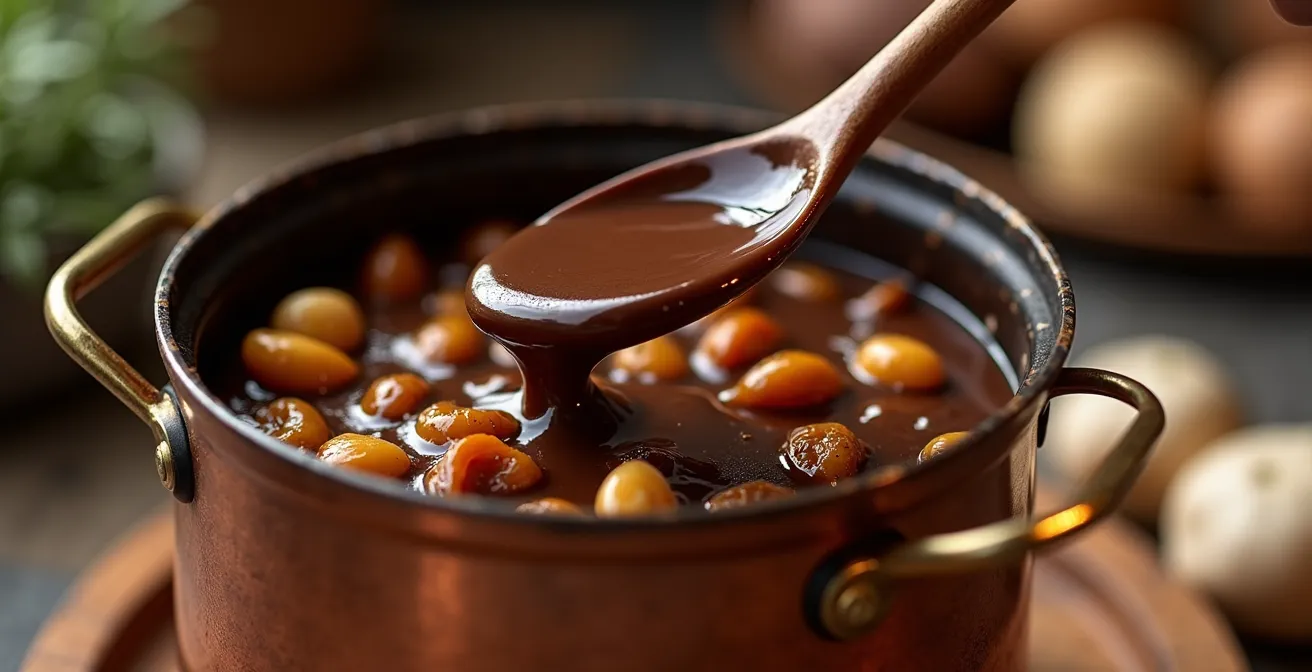
The secret to using chocolate in savory cooking isn’t the recipe, but understanding its role as a flavor catalyst and textural foundation.
- Its fats and solids bind sauces and build crusts, while its tannins balance acidity in complex dishes.
- Timing is critical: adding chocolate off-heat prevents bitterness and preserves its delicate, complex aromas.
Recommendation: Start by choosing the right chocolate for the job—high-cocoa, stone-ground, or natural powder—and think of it as a foundational spice, not a confection.
As a chef who has chased flavors across continents, I’ve learned one of the kitchen’s most profound truths: chocolate does not belong solely in the pastry section. We’ve been conditioned to think of it as a sweet indulgence, a star of desserts and confections. But its soul is far more complex. The Mayans and Aztecs, who first cultivated cacao, knew it as a bitter, powerful, and profoundly savory ingredient, a gift they called “food of the gods.”
Most guides will tell you to “add a square of dark chocolate to your chili,” but they rarely explain the magic that happens next. They mention it adds “depth,” a vague term that undersells its true power. The real journey for an adventurous cook begins when you stop seeing chocolate as a single note and start treating it as a versatile tool for building flavor architecture. It can bind, thicken, add bitterness, balance acid, and create an unforgettable crust. It’s a bridge between the smoky notes of a chili and the bright tang of a tomato, the richness of game meat and the sweetness of a reduction.
This guide is your passport to that world. We won’t just list recipes; we will deconstruct the techniques. We’ll travel from the classic sauces of France to the sun-drenched kitchens of Sicily and the vibrant markets of Mexico. We will explore the chemical alchemy that allows chocolate to transform a dish and learn the secrets that separate a muddled, heavy sauce from one that is complex, glossy, and alive with flavor. Prepare to rethink everything you thought you knew about chocolate.
In this culinary exploration, we will uncover the principles behind chocolate’s savory applications. The following sections will guide you through specific techniques, flavor pairings, and the common mistakes to avoid, empowering you to use cacao with the confidence of a seasoned chef.
Summary: From Agrodolce to Mole: A Chef’s Guide to Savory Chocolate
- Why does dark chocolate perfectly bind a grand veneur sauce for deer?
- How can cocoa nibs replace croutons for a bitter crunch?
- Vinegar and cacao: how to master the sweet and sour balance of a stew?
- The mistake of adding chocolate too early in a stew, leading to a burnt taste
- BBQ and cacao: what spice mix for a black crust on beef ribs?
- Mulato, Ancho, Pasilla: which chili trio works with the bitterness of cacao?
- How to pair an acidic chocolate from Madagascar with a sweet white wine?
- Why Stone-Ground Chocolate Is Essential for Authentic Mexican Mole Texture?
Why does dark chocolate perfectly bind a grand veneur sauce for deer?
In the hallowed halls of French haute cuisine, Sauce Grand Veneur is a monument to rich, complex flavors, traditionally served with game like venison. Its deep, peppery notes are balanced with the sweetness of fruit jelly. But the secret to its sublime, glossy texture and profound depth often lies in a single, unexpected ingredient: a square of high-quality dark chocolate. This isn’t for sweetness; it’s a technical masterstroke. The magic lies in the cocoa solids and cocoa butter.
When whisked into the warm sauce at the end of cooking, the cocoa butter melts, acting as a powerful emulsifier. It helps to bind the fats from the meat and butter with the wine and stock reduction, creating a perfectly homogenous, velvety consistency that coats the palate. The cocoa solids, meanwhile, contribute tannins that cut through the richness of the game, preventing the sauce from feeling heavy or cloying. It’s a classic example of chemical alchemy, where chocolate provides structure and balance, not just flavor.
Michelin-starred chefs have taken this even further. For instance, some fine-dining techniques involve using cold-smoked chocolate to add another layer of complexity. In a profile of his venison recipe, chef Claude Bosi explains his method of using smoked chocolate to achieve a superb consistency and an extra depth of flavor. The rich, bitter notes of the cacao beautifully offset the natural sweetness of the venison, proving that chocolate’s role here is foundational to the flavor architecture of the dish.
How can cocoa nibs replace croutons for a bitter crunch?
While melted chocolate provides smoothness to sauces, its raw form—cocoa nibs—offers a completely different dimension: textural counterpoint. Think of them as the sophisticated, grown-up cousin of the crouton or the toasted nut. Cocoa nibs are simply roasted and crushed cacao beans, the very essence of chocolate before any sugar or extra fat is added. Their flavor is intensely bitter, nutty, and slightly fruity, and their texture is delightfully crunchy.
This makes them an incredible tool for an adventurous cook. Sprinkling them over a dish introduces a surprising and satisfying crunch that also brings a jolt of complex bitterness. This bitterness is key; it can cut through richness, balance sweetness, and elevate simple ingredients. Imagine a creamy butternut squash soup, a goat cheese and beet salad, or even seared scallops. A scattering of cocoa nibs on top transforms the dish from pleasant to memorable, adding a textural and flavor contrast that keeps the palate engaged.
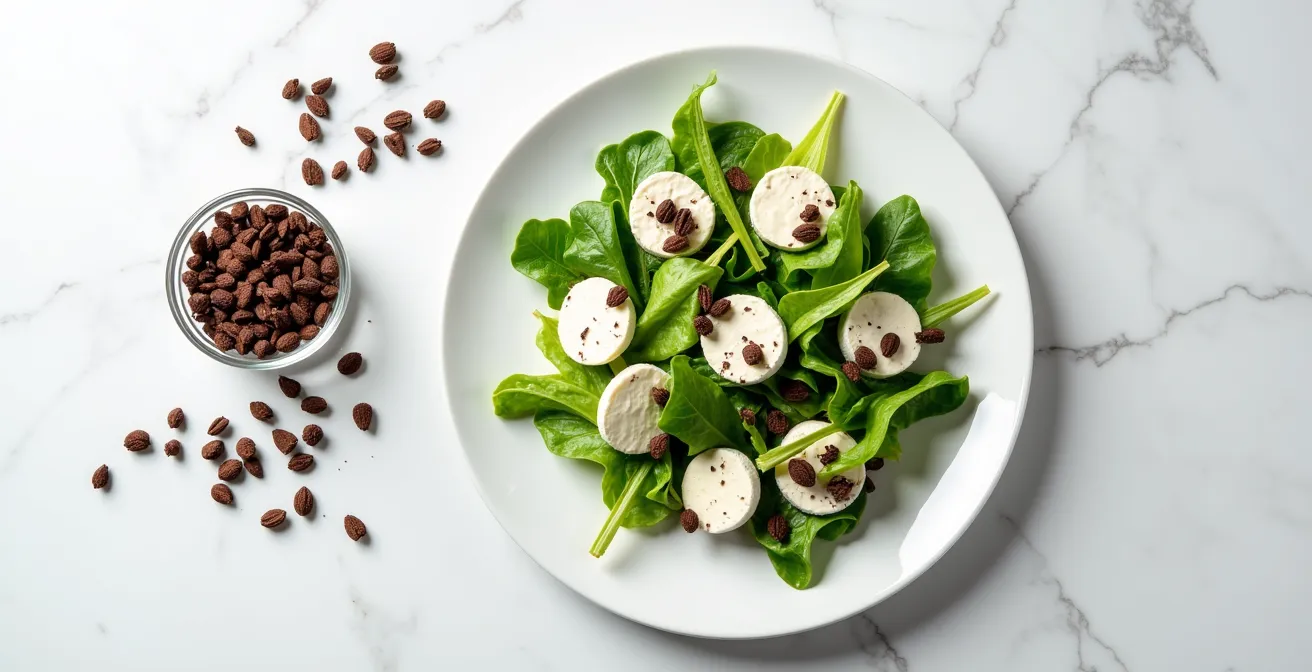
Unlike croutons, which can become soggy, cocoa nibs retain their firm texture even when mixed into a dressed salad or a warm dish. They also offer a more complex flavor profile than nuts, which are primarily fatty and toasty. The nibs’ inherent fruitiness can create an aromatic bridge to other ingredients, such as berries in a salad or the wine in a pan sauce. They are a declaration that texture is just as important as taste in the architecture of a great plate.
Vinegar and cacao: how to master the sweet and sour balance of a stew?
The concept of “agrodolce,” Italian for sweet and sour, is a culinary tradition that dates back centuries, particularly in Sicily. It’s a delicate dance of flavors, typically involving vinegar for the sour and sugar or honey for the sweet. But in its most profound and complex iterations, especially with rich game meats like rabbit or wild boar, a third element joins the dance: bitter chocolate. This is where the true mastery of flavor balancing is on display.
The chocolate isn’t there to make the dish sweet. Instead, its role is to provide a bitter, earthy baseline that tempers the sharpness of the vinegar and deepens the sweetness, creating a rounder, more harmonious flavor profile. It acts as the anchor that keeps the sweet and sour notes from becoming overwhelming. The key is choosing the right vinegar and the right chocolate, as their respective acidities and fruit notes must complement each other. For example, a sharp red wine vinegar might be paired with a fruity Madagascan chocolate, while a sweeter balsamic could call for a more intense, earthy Ecuadorian chocolate.
The following guide, based on traditional pairings, can help you navigate this delicious alchemy. Mastering these combinations is fundamental to creating a truly authentic agrodolce, as a deep dive into the sauce’s components reveals.
| Vinegar Type | Chocolate Match | Flavor Profile |
|---|---|---|
| Red Wine Vinegar | 70% Madagascan | Classic Sicilian pairing |
| Balsamic | 85% Ecuadorian | Adds more sweetness |
| White Wine Vinegar | 65% Fruity Chocolate | Delicate balance |
| Cider Vinegar | 72% Venezuelan | Fruitier notes |
This technique, as seen in traditional recipes for coniglio in agrodolce (rabbit in sweet and sour sauce), showcases a rustic elegance. The chocolate melts into the braising liquid, becoming an invisible but essential part of the sauce’s soul, proving that the most complex flavors often arise from the most surprising unions.
The mistake of adding chocolate too early in a stew, leading to a burnt taste
Here is a secret that separates the seasoned chef from the novice: in savory cooking, the moment you add chocolate is as important as the chocolate itself. Many an aspiring cook, attempting a rich venison stew or a complex mole, has made the same critical error: adding the chocolate too early. They toss it into the pot with the other ingredients, assuming it will melt and integrate during the long, slow simmer. The result? A disaster. The dish takes on an acrid, scorched flavor that ruins hours of work.
This happens because the delicate solids in chocolate cannot withstand prolonged, high heat. When boiled or simmered for too long, the cocoa solids burn and the fats can separate, leading to a grainy texture and a pervasive bitterness that is harsh, not pleasant. The subtle, fruity, and floral notes of a good dark chocolate are destroyed, replaced by the taste of charcoal. This is the cardinal sin of savory chocolate cooking.
The correct technique, learned in kitchens from Oaxaca to Lyon, is to treat chocolate as a finishing touch. It should be added off the heat, or at the very last moment of cooking over the gentlest possible heat. The residual warmth of the stew or sauce is more than enough to melt the chocolate perfectly. You should remove the pot from the stove, add your chocolate, and whisk until it is fully incorporated, creating that glossy, rich finish you’re looking for.
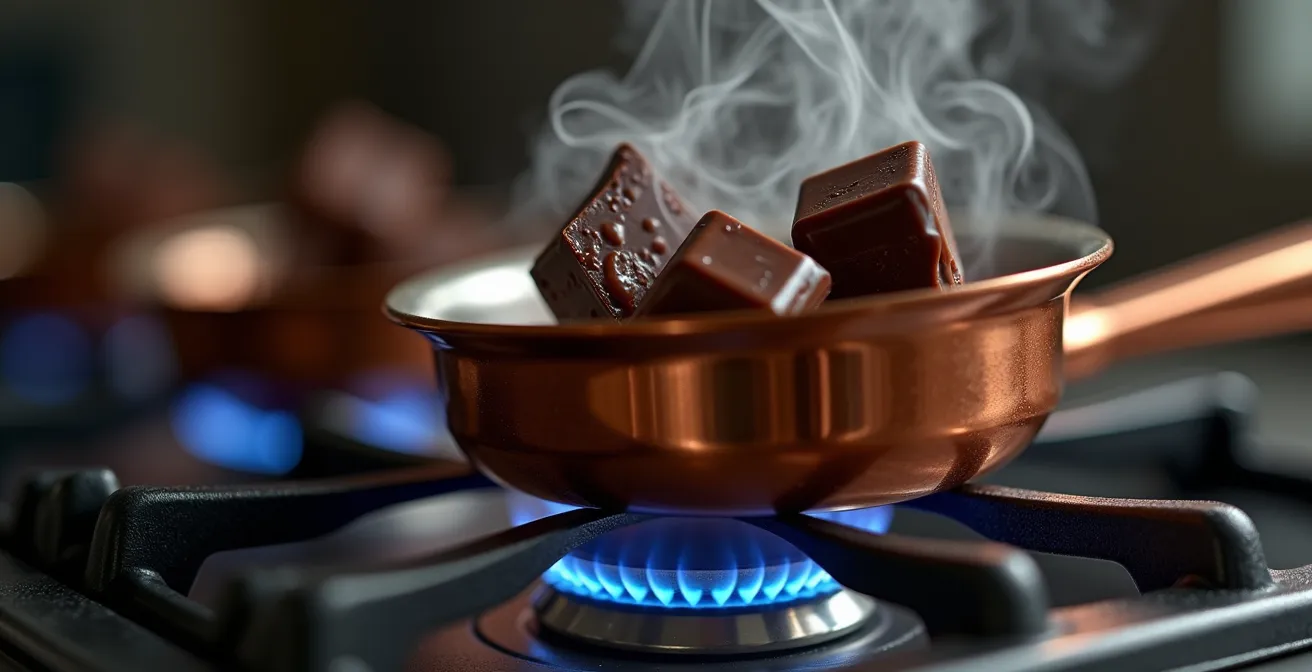
Your Action Plan: Preventing Chocolate Burn in Sauces and Stews
- Remove the sauce or stew from the heat source completely before introducing the chocolate.
- Whisk in the chopped chocolate vigorously to create a smooth, glossy sauce using only the residual heat.
- If reheating is absolutely necessary, use very gentle, low heat and never allow the sauce to boil.
- Always add chocolate as the very last ingredient before serving to preserve its delicate aromatics.
This simple rule is non-negotiable. By respecting the delicate nature of cacao, you preserve its complexity and ensure it enhances your dish rather than sabotages it. It is a lesson in patience and respect for the ingredient.
BBQ and cacao: what spice mix for a black crust on beef ribs?
The journey of savory chocolate takes a fascinating turn when we land in the heart of American barbecue country. Here, cocoa is not used for a liquid sauce but as a dry component in a “rub”—a spice mix that forms the all-important “bark” on slow-smoked meats. Adding unsweetened cocoa powder to a rub for beef ribs or brisket creates what I call the Maillard reaction’s shadow: a deep, dark, almost black crust that is visually stunning and packed with flavor.
The cocoa powder does several things. First, its dark color aids in the development of a dark crust far more quickly. Second, its mild bitterness adds an incredible layer of complexity that balances the sweetness of brown sugar often found in rubs and cuts through the intense richness of the beef fat. It doesn’t make the meat taste like chocolate; it makes it taste more intensely of itself, with a mysterious, earthy background note. A well-crafted cocoa-based rub might follow a formula like this:
- 3 parts smoky paprika: Forms the flavorful, colorful base.
- 2 parts savory blend: A mix of garlic powder and onion powder for the aromatic foundation.
- 1 part natural cocoa powder: The secret to color and bitter complexity.
- 1 part heat element: Cayenne or chipotle powder for a warm kick.
- Subtle background notes: A touch of mushroom powder for umami and brown sugar for caramelization.
Crucially, the type of cocoa matters. You must use natural cocoa powder, not Dutch-processed. Dutch-processing neutralizes cocoa’s natural acidity, which can result in a flat, almost soapy flavor in a rub. Natural cocoa’s slight acidity, on the other hand, works as a mild tenderizer and contributes to a superior bark formation. This distinction is vital for achieving the perfect crust, as a comparison of cocoa types for culinary use shows.
| Cocoa Type | pH Level | BBQ Application | Result |
|---|---|---|---|
| Natural Cocoa | Slightly acidic | Acts as a meat tenderizer | Superior bark formation |
| Dutch-Processed | Alkaline | Can taste flat or soapy | Less effective crust |
This application shows chocolate’s versatility in its most rugged form, contributing to one of the most beloved culinary traditions through color, bitterness, and chemical reaction.
Mulato, Ancho, Pasilla: which chili trio works with the bitterness of cacao?
No exploration of savory chocolate would be complete without a pilgrimage to its spiritual home: the Mexican mole. Mole is not a single dish but a universe of complex sauces, and at the heart of many of them is the sacred union of chilies and chocolate. The chocolate is not the star; it is the peacemaker, the ingredient that marries the diverse flavors of dozens of spices, nuts, seeds, and, most importantly, chilies.
The key to a great mole is not just one chili, but a blend, each contributing a unique note to the final symphony. The classic foundation, often called the “holy trinity” of mole chilies, is a perfect match for cacao’s bitterness.
The Holy Trinity of Mole Chilies
Mexican mole masters combine three essential dried chilies with chocolate to build a foundation of unparalleled complexity. The Ancho, a dried poblano, provides a mild heat with deep, sweet, raisin-like flavors that form the body of the sauce. The Mulato, a close relative of the Ancho, adds smoky, licorice-like complexity and contributes to the mole’s iconic dark color. Finally, the Pasilla, a dried chilaca, brings herbaceous, almost olive-like notes that resonate beautifully with cacao’s own fruity undertones, creating a perfect aromatic bridge.
This combination works because the chilies offer a spectrum of sweetness, smoke, and fruitiness that the chocolate’s bitterness can latch onto and amplify. The cacao rounds out the sharp edges of the chilies’ heat and weaves their distinct personalities into a single, coherent narrative. To build upon this foundation, one must respect the process:
- First, toast the dried chilies in a dry pan until they are fragrant to awaken their essential oils.
- Next, soak them in warm broth to rehydrate and soften them.
- Then, blend the chilies with the chocolate and other spices into a smooth, rich paste.
- For even more depth, supporting chilies like smoky Chipotle or bright Guajillo can be added.
This process, perfected over generations, is a testament to the power of chocolate as a unifying force, creating a sauce so complex it is considered a national treasure.
How to pair an acidic chocolate from Madagascar with a sweet white wine?
Our journey now takes us to the most refined and perhaps most challenging frontier of savory chocolate: pairing it with wine. This is where a cook truly demonstrates their understanding of flavor. While a robust red wine with a dark chocolate dessert is a common pairing, a more nuanced and daring combination involves pairing a high-acidity chocolate with a sweet white wine, such as a Sauternes or a late-harvest Riesling.
The key to success lies in a single principle: bridge, don’t fight. The goal is not to have the wine and chocolate compete, but to find common aromatic and structural ground. Chocolates from Madagascar are famous for their distinct terroir; they are known for a bright, pronounced acidity and vibrant notes of red fruits like cherry and raspberry. Pairing this with a dry, austere wine would be a clash. Instead, we turn to luscious sweet wines whose own characteristics can form an “aromatic bridge” to the chocolate.
A classic Sauternes, with its notes of apricot, honey, and nuts, has enough sweetness to balance the chocolate’s bitterness and enough body to stand up to its intensity. Its stone fruit notes will connect with the chocolate’s red fruit profile. Similarly, a German late-harvest Riesling, with its own brilliant acidity and notes of citrus and petrol, can create a fascinating pairing where both the wine’s and the chocolate’s acidity are highlighted and framed by sweetness. As experts on the matter often note:
Madagascar cacao is known for its bright, red fruit notes of cherry and raspberry, requiring wines with similar stone fruit or citrus notes like apricot and orange peel to create a harmonious aromatic bridge.
– TasteAtlas, Italian Dark Chocolates Guide
This kind of pairing can be part of a cheese course, where a piece of acidic chocolate is served alongside a creamy blue cheese and a glass of sweet wine, or as a deconstructed dessert. It is a sophisticated tasting experience that showcases a deep understanding of how acidity, sweetness, and aroma interact.
Key Takeaways
- Chocolate’s function in savory dishes is primarily technical: it acts as an emulsifier, a balancing agent for acidity, and a source of bitter complexity.
- The timing of when you add chocolate is crucial; it should almost always be added off the heat at the end of cooking to prevent a burnt, acrid taste.
- The type of cacao matters immensely: natural cocoa powder for BBQ rubs, high-percentage dark chocolate for sauces, and stone-ground chocolate for authentic mole texture.
Why Stone-Ground Chocolate Is Essential for Authentic Mexican Mole Texture?
We end our journey where it began: with the ingredient itself. We’ve seen how chocolate can bind, balance, and build flavor, but the final secret lies in its texture. In our modern world, we are accustomed to silky-smooth, conched chocolate that melts instantly on the tongue. But for many traditional savory applications, particularly authentic Mexican mole, this ultra-refined texture is not just unnecessary—it’s undesirable. The soul of a traditional mole is its rustic, slightly grainy texture, a characteristic that comes from using stone-ground chocolate.
Before the invention of modern conching machines, cacao was ground on a metate, a traditional stone grinder. This process creates a chocolate with larger, more irregular particles of cacao and sugar. When this type of chocolate is added to a mole, it doesn’t vanish completely. Instead, it dissolves slowly, releasing its flavor in stages and contributing a subtle, pleasing graininess to the sauce. This texture is a hallmark of authenticity; it tells a story of tradition and minimal intervention. A perfectly smooth mole often signals a departure from its roots.
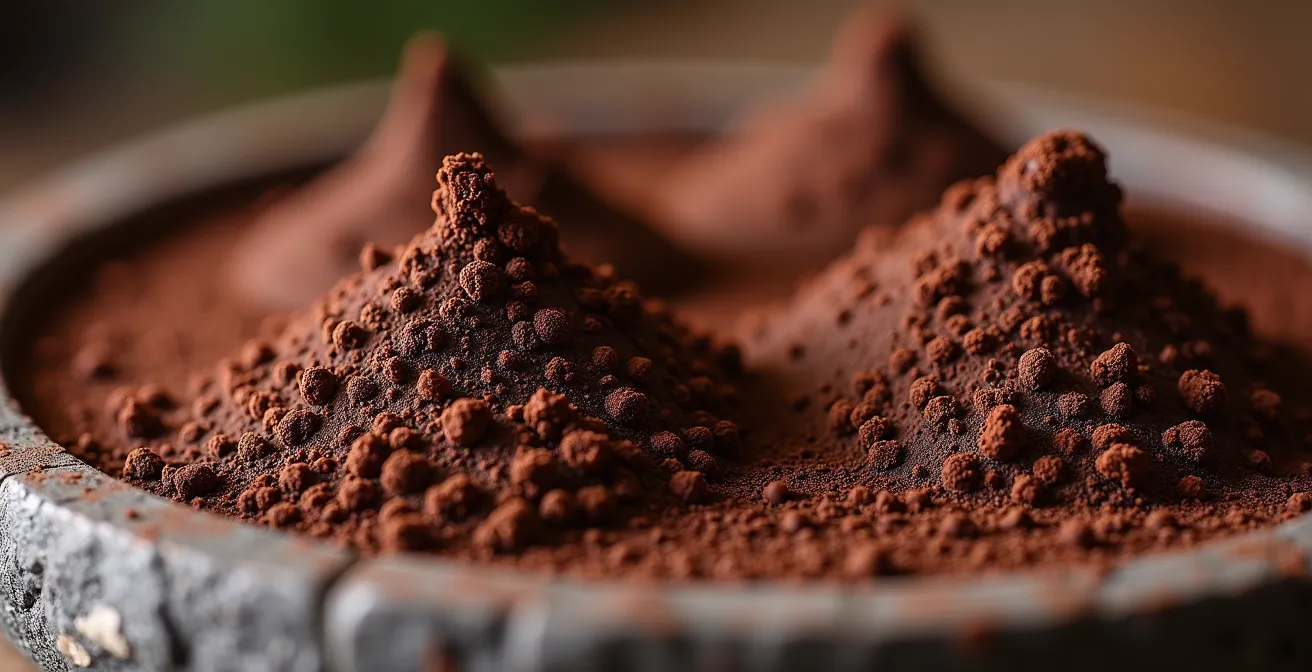
This minimal processing also preserves more of the cacao’s original, volatile flavor compounds. As some artisanal chocolate makers who avoid conching have found, this approach maintains the authentic, vibrant notes of the cacao bean’s terroir. To achieve this at home, you should seek out Mexican chocolate tablets, which are often less refined and contain visible sugar crystals. When using them:
- Break the chocolate into rough chunks rather than grating it finely.
- Add it to the warm, not boiling, mole base.
- Stir gently, just enough to melt and incorporate it, but not so much that you try to smooth it out completely.
- Embrace the resulting texture—it is a sign of authenticity, not a flaw.
Understanding this final piece of the puzzle—that texture is a flavor in itself—is what elevates a cook from someone who follows recipes to someone who truly understands the spirit of an ingredient. It’s the ultimate respect for the food of the gods.
Now that you are armed with the secrets of savory chocolate, the world is your kitchen. Don’t be afraid to experiment. Add a dusting of cocoa to your next beef bourguignon, sprinkle nibs on your morning avocado toast, or craft your own signature BBQ rub. Start your own journey today and unlock the profound, savory soul of chocolate.